I Don’t Ask What Their Disability Is. I Ask What They Need to Succeed
Every new school year begins with questions. Parents wonder whether their children will find their place. Teachers wonder how the class will come together. Organizations like ours prepare programs, train teams and set goals for the year ahead.
But this year, at Krembo Wings, we are also carrying another question: Will we have the resources to keep every branch active and give every child a place where they can belong?
When I visited the Krembo Wings branch in Ramat Aviv at the beginning of the year, I was reminded why the answer matters so urgently.
It is a particularly joyful branch. Its young leadership team seemed unable to stop smiling. By the end of the evening, my cheeks actually hurt because their smiles had become contagious. But underneath all that lightness was something serious and deeply impressive.
I watched the opening session of a leadership course for the branch’s older teenagers. They were asked to describe the ideal youth counselor: What kind of person should a counselor be? Which values should guide them? What responsibility do they carry toward the group and toward each participant?
Their conversation was thoughtful, demanding and honest. They spoke about patience, attentiveness, responsibility and the ability to see each person as they are. They were not repeating slogans adults had taught them. They were examining the kind of leaders they wanted to become.
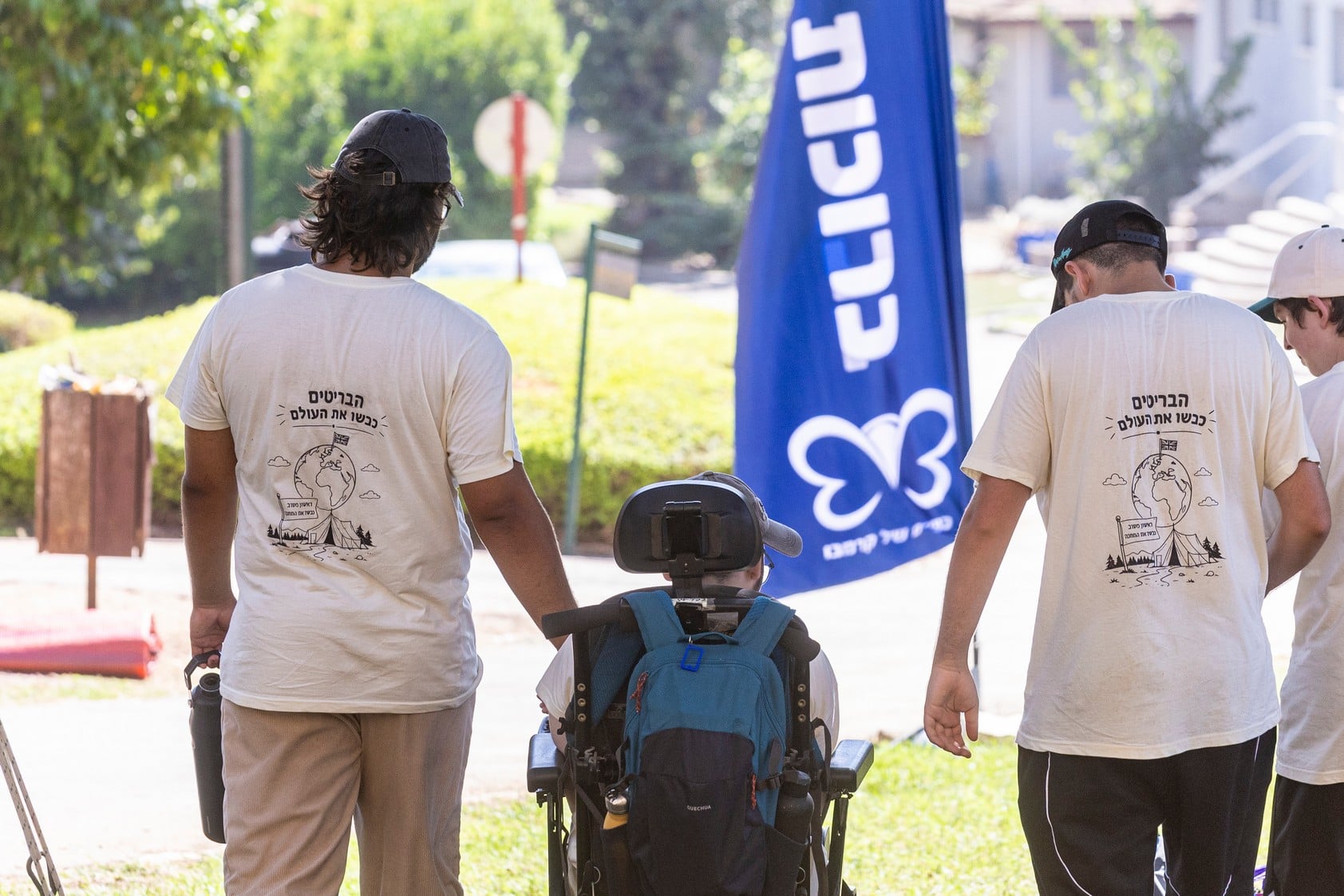
These were teenagers preparing to take real responsibility for other young people, with and without disabilities. Then one of the teenage leaders said something that captured the entire Krembo philosophy: “At our branch, we don’t ask what a participant’s disability is. I ask what they need to succeed.” It is a simple sentence, but it challenges the way much of society still thinks. We tend to begin with a diagnosis or a category, and only afterward consider the person standing before us.
She reversed the order. She was not ignoring disability. She was refusing to allow it to become the whole story. She understood that good leadership begins not with labeling a person, but with seeing them. What helps them participate? What makes them feel secure? What allows them to belong, contribute and lead?
And perhaps most importantly: What do they bring to the group that no one else can? This is what I keep learning from the young people of Krembo Wings.
We often speak about preparing the next generation for leadership. We build programs, write educational models and develop training courses. In Ramat Aviv, I saw our model come to life: thoughtful activities, clear structure and teenagers being prepared to take real responsibility.
But even the strongest educational model matters only when young people have a place in which to make it their own.
That place cannot be taken for granted. Across Israel, Krembo Wings serves approximately 8,000 children and teenagers with and without disabilities in 85 branches. More than 500 children are still waiting to join, and dozens of municipalities are asking us to open branches in their communities.
The demand is growing, but the resources are not growing at the same pace.
As the new year begins, some existing branches face significant funding gaps. Not because the need has disappeared, but because resources have not kept pace with it. Children are waiting, families depend on these branches and teenagers are ready to lead.
Behind every budget line is a weekly meeting a child looks forward to. It means friendship, an accessible activity and a community in which that child is known by name. When funding is missing, it is not an abstract organizational problem. It means that a child may lose one of the few places where they feel fully expected and welcome.
That is why what I saw in Ramat Aviv filled me with both hope and urgency.
The teenagers were not waiting for adults to tell them what leadership looks like. They were practicing it. They were learning how to notice another person, adapt, listen and take responsibility. They understood that leadership is not about standing at the front of the room. It is about making sure there is room for everyone.
At a time when Israeli society is carrying so much tension, pain and division, this kind of leadership is not a nice addition to a youth program. It is essential.
Our teenagers are growing up in a complex reality. They have experienced years of uncertainty, war and social fracture. We sometimes look at them with concern and ask how all of this will shape them.
But when I visit our branches, I find myself asking a different question: What if they are already showing us how to rebuild?
Young people with and without disabilities meet as equals. Not as one side giving and another receiving, but as members of one community, each arriving with their own abilities, needs and contribution. Teenagers receive real responsibility, and in carrying it, discover strength, empathy and leadership within themselves.
Adults often call young people the leaders of tomorrow. But these teenagers are already leading. They are replacing labels with curiosity, assumptions with listening and distance with human connection.
A new year has begun. We want to reach more children, deepen the quality of our work and help another generation grow up knowing that every person deserves not only to be included, but to belong and to matter.
But before we can grow, we must protect what already exists. We must ensure that the branches children rely on can continue operating throughout the year.
Hope needs more than admiration. It needs people who are willing to stand behind it.
The teenagers are ready. The children are waiting.