‘If I am not for myself, who will be for me’ still comes first
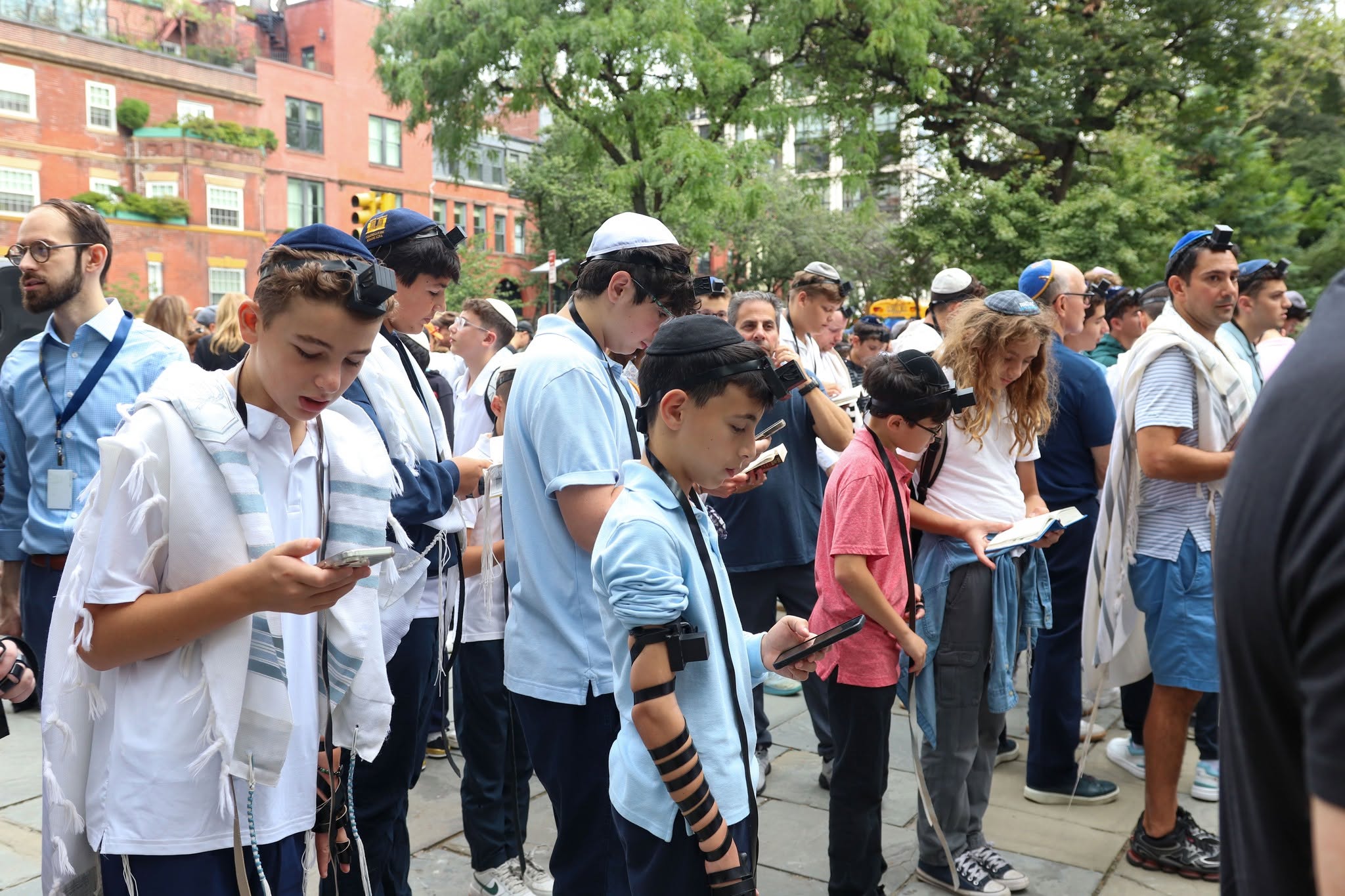
Although Esther Sperber and I stand on opposite sides regarding the SAR-Ramaz prayer vigil held near Gracie Mansion, our thinking overlaps in many ways. As a Riverdale rabbi for decades, I share her view that SAR is a community school par excellence, one of the finest anywhere. And like Esther, I feel the sacred responsibility, as a Jew, to stand up for universal causes, and I have tried to do so not only in writing but in action.
SAR, too, understands the importance of teaching its students universal responsibilities. It engages them in discussions of the Jewish commitment not only to our own people but to the wider world, including Arabs and other minorities living in Israel. To wit, SAR’s theme this year is Knesset Yisrael, which focuses on ahavat Yisrael and ahavat habriyot, loving Jews and loving humankind. Indeed, the video introducing the theme to the students closes with Hillel’s dictum, “If I am only for myself, what am I?”
But a cornerstone of spiritual activism is never to forget the words that come first: “If I am not for myself, who will be for me?” Concern for the larger world must be joined by concern for ourselves. A strong national consciousness does not contradict our universal responsibilities but is a prerequisite for them.
It is fair to ask whether the Ten Days of Repentance called for introspection rather than a public prayer vigil. I agree that these days demand introspection, but I don’t see a public vigil as opposed. Teshuva does not mean turning away from who we are; it means returning to it. At a moment when Jewish students are afraid, and when too many Jews are hiding their identity, standing up publicly as Jews is itself part of that return. To stand with Jewish pride during the Days of Awe was not a departure from teshuva but an expression of it.
In that spirit of hadar Yisrael, I believe the SAR-Ramaz prayer vigil was a great kiddush Hashem, a sanctification of God’s name. In many ways it paralleled the rallies that SAR and Ramaz students held on behalf of Soviet Jewry decades ago. The parallel is not a loose one but a direct one: both raised a voice of moral conscience, of Jewish conscience, against antisemitism.
Let me explain: we are not only a people; we are also a faith and a nation. These are our three pillars, and antisemitism is an attack on any one of them. The Amalekites of the world attacked our peoplehood. The Soviets attacked our faith, insisting they had nothing against Jews and simply did not want them to practice what they believed. Taking away our faith is antisemitism.
Today there is a new form: an attack on our nationhood. Its proponents say, in effect, that they are not against Jews, only against the Jewish people’s right to a state. As the Soviet assault on our faith threatened one pillar, so does Mayor Mamdani’s assault on our nationhood threaten another. It is one thing for him to disagree with Israeli policies. But when he refuses to affirm Israel’s right to exist as a Jewish state, that is anti-Zionism that amounts to antisemitism, no less dangerous than Soviet antisemitism.
Some point to Martin Buber and Brit Shalom, who argued for a binational state in the 1920s through the 1940s. But they were debating whether a Jewish homeland could be built at all. Today, roughly half the world’s Jews live in Israel, a sovereign state. To ask Jews to consider dissolving it is not a continuation of that conversation. It asks the Jewish people to give up its self-determination. That is the line. Debate over Israeli policies is legitimate. Denying the Jewish people a state of its own is not.
It must also be remembered that not everyone agreed with the participation of students in the Soviet Jewry movement. A minority suggested that children were being used as props. In hindsight, their demonstrations made a real difference; as Natan Sharansky has often said, we owe our freedom to “students and housewives.”
Looking out that morning at the students from Ramaz and SAR, I saw a group educated in a Zionism that will inspire some of them to serve in the IDF. Many of their older siblings, and perhaps their parents, uncles, and aunts, have already done so. Knowing that the mayor falsely accuses Israel and the IDF of genocide (while remaining silent about the real genocides worldwide), I was overcome with emotion.
Such language from the head of New York City not only puts a target on the backs of Jewish New Yorkers but is leveled at our children and grandchildren. It is leveled at the young holy souls attending SAR and Ramaz and other yeshivot, Solomon Schechters and other Jewish schools. It is leveled at the thousands of American lone soldiers, among them Michael Levin and Max Steinberg, who gave their lives defending Israel. And so, addressing the mayor, I called out, “How dare you accuse us of genocide.”
In one sense, standing up to the mayor is more difficult than standing up to the Soviet Union. Challenging the Soviets was easier: any backlash would come from thousands of miles away – so far away that protesters felt safe. The mayor of New York is close, and there is the fear that, from his nearby position of power, he could retaliate.
This is the fear that has followed us for millennia, the counsel of shah shtil: stay quiet, because speaking out will only make matters worse. The reverse is true. When one sees an antisemite, don’t run; if we run, antisemitism spirals out of control. The principle is simple: the more we speak out against antisemitism, the more we are protected, rather than rendered vulnerable. An important principle is to do no less for ourselves than we do for others. As we have unflinchingly stood up against racism, we can do no less against antisemitism.
In the spirit of Isaiah, who taught that the young will lead the way to redemption, the students, teachers, and leaders of SAR and Ramaz stood up with dignity and told the mayor that he is crossing the line when he refuses to affirm our right to a Jewish State and when he uses the word genocide against Israel.
With spiritual striving and dignified strength, our youngsters taught us – don’t be afraid to speak truth to power.
May they forever be blessed.