
I’m not doing Tisha B’Av this year
I don’t know that I can do Tisha B’Av this year.
Tisha B’Av is our great, annual immersion into self-pity, a wallowing in the calamities we have suffered. Starting with the Book of Lamentations recalling the destruction of the First Temple, we will go on to read dirges that recount the despoiling of Jerusalem by the Romans, our victimization by the Christian Church, the Russian pogroms and the Nazi Holocaust. It is a catalogue of horror — with the one caveat: that we survived and are still here.
It is not, say the rabbonim, the rabbis, a celebration of our survival, but a public confession that our survival is always contingent on God’s mercy, which we have precious little reason to expect, because we have sinned and continue to sin and do not deserve redemption except by God’s clemency.
It’s odd how that side of the story gets sidelined. We mourn our historic losses but we don’t look in any meaningful way at the behavior that we say caused them. At least, we say this but we say it ritualistically — as part of the formula for the day. A real Tisha B’Av would, I would have thought, put the historic stuff to one side and look at how we offend now, individually and as a people.
Even to suggest that, however, puts us on the defensive. Yes, of course our sinning millennia ago caused God’s anger and fully justified His retribution but not even in the Book of Eichah (Lamentations) does the author spell out what we did wrong except, very vaguely, in suggesting that we rebelled against His authority. The five chapters instead articulate the miserable state that our sins have reduced us to — brought low in dishonor, reduced to eating our children, our enemies glorying at our ignominy.
The focus is on our pain, but not on our guilt.
And no doubt, in synagogues and shtiebls across the world this year, we will go through the same readings, and feel a little hungry at 4 p.m., and check our watches to see how long it will be until we can break our fast. And then back to work.
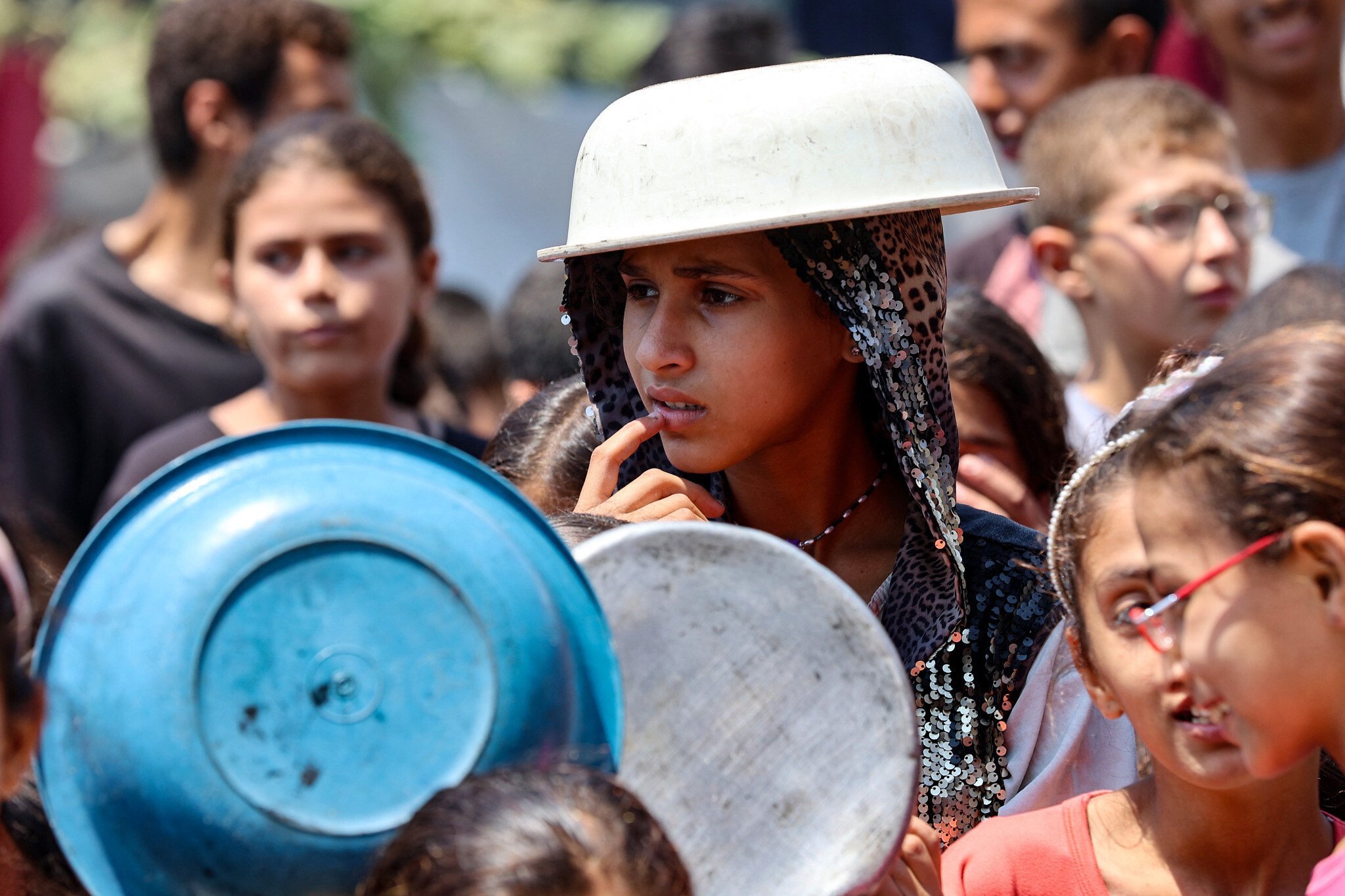
But will we read the Book of Lamentations as a blueprint for what we ourselves have done and, in particular, what we have reduced Gaza and its population to? They’re not our friends, by any means, but we have a duty of care for them — not because of Article 55 of the Geneva Convention, according to David Mencer, the spokesman for Benjamin Netanyahu’s Office, last week, but because Israel is a Jewish state and has a religious, moral obligation to look after those within its borders
No doubt Gaza has greatly sinned, no doubt her uncleanness clings to her skirts, no doubt her enemies are now her masters, but have we discharged our duty of care? “Their faces are blacker than soot, they are not recognized in the streets; their skin has shriveled on their bones, It has become dry as wood.
“They have become orphans, fatherless, their mothers are like widows. They must pay to drink their own water, pay for a little firewood. They hold out a hand to Egypt, to Assyria, for their fill of bread. Young men must carry millstones, their youths stagger under loads.”
Not our fault, says the Prime Minister’s Office. Hamas thugs raid humanitarian aid trucks; UN agencies refuse to make deliveries with only the IDF for security. True, true. And the UN aid distribution network is so politically compromised that it was necessary to start a rival organization — the Gaza Humanitarian Foundation — that has been holed below the surface by its opponents.
Understood. But whatever the obstacles, Israel still carries the can. And until the last couple of days, and only because of pressure from the US and, presumably, a massive turn in world opinion, it has been denying that there is a serious problem, denying that Gazans are starving, denying that it needed to do anything more than it was doing and failing to do successfully.
Until now, Israel has exercised justice over those we had an obligation to care for in the same way we read that God exercised justice over us in 586 BCE: “We have laid waste without pity all the habitations of Gaza; we have razed in our anger its strongholds. In blazing anger we have cut down its might. We have ravaged Gaza like flaming fire, consuming it on all sides.
“We have increased its mourning and moaning. We have made wall and rampart mourn. Its gates have sunk into the ground. We have smashed its bars to bits. Its leaders are in exile. Instruction is no more. Prostrate in the streets lie both young and old. Maidens and youths, fallen by the sword; we slew them on our day of wrath, we slaughtered without pity.
“Gaza’s elders sit silent on the ground; they have strewn dust on their heads, they are girded in sackcloth. Babes and sucklings languish in the squares of the city. They keep asking their mothers, ‘Where is bread and wine?’ as they languish like battle-wounded in the squares of the town, as their life runs out in their mothers’ bosoms.”
Well, some of us have said — and continue to say — they brought it on themselves. They carried out the worst atrocity on us since the Nazis. And this is payback time.
Maybe. But we have a duty of care, just as we hope in our prayers that God has a duty of care on us, in our iniquity. There is no sense during Tisha B’Av that we are deserving of mercy or that our sins are forgivable. The whole point of the day is that we were not worthy of redemption.
We can only hope that, having “acted like a foe, having laid us waste,” having “vented all His fury, having poured out His blazing wrath, having kindled a fire in Zion which consumed its foundations, having forgotten us utterly and forsaken us all this time, having rejected us and bitterly raged against us,” the Lord will at last find a way to take us back.
And if we have behaved as God has done — for many who have wanted to punish Gaza have borrowed the language of divine vengeance — how can we read the Book of Eichah, feel sorry exclusively for ourselves and not take action when the tongue of the suckling cleaves to its palate for thirst, and little children beg for food because no one gives them a morsel?
If we accept the idea of divine vengeance when targeted against us and pray for relief from the same quarters that sent it, then, having exercised a similar vengeance against those who “rebelled against us,” we have an obligation to provide relief and make good — not just try to provide relief and excuse ourselves when our efforts don’t succeed.
If we can get through Tisha B’Av and not read Eichah for that message, and then not act on it, then, like Jeremiah, I really don’t see what merit there is going through our religious ceremonies. They’re given to us to learn from and change us for the better, not leave us insulated in self-pity.