
Author of Just, Reasonable Multiculturalism (2021)
Important Lessons from Peace Negotiations
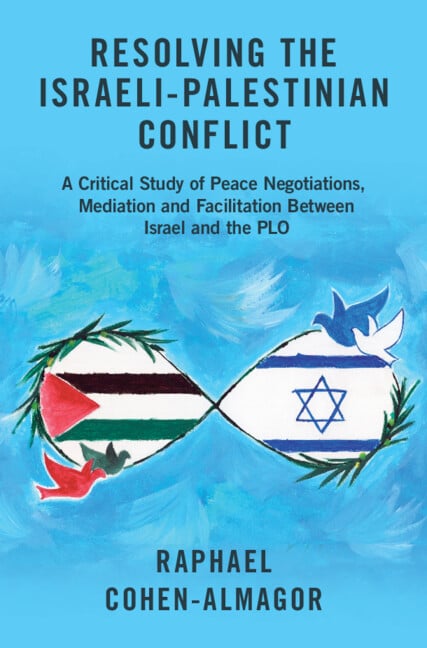
What are the most important lessons from past Israeli–Palestinian peace negotiations? For thirteen years, I researched and wrote Resolving the Israeli-Palestinian Conflict: A Critical Study of Peace Negotiations, Mediation and Facilitation between Israel and the PLO (Cambridge University Press, 2026). I examined archives in Israel, London, Washington and Oslo and conducted more than 100 interviews with leaders, policymakers, negotiators and diplomats. Several lessons stand out.
First, peace-makers must plan for spoilers. Israeli and Palestinian extremists have repeatedly sabotaged efforts at reconciliation. Yet leaders often pursued negotiations while treating violence as a separate problem to be handled later. It is not enough to say that there will always be spoilers, or that peace should proceed as though terror did not exist. A viable agreement must include a detailed security framework: how violent spoilers will be identified, how the parties’ security forces will cooperate, and what steps will prevent extremists from derailing implementation. Spoilers must be contained promptly; they must not be allowed to dictate the agenda. Negotiators must prepare not only for those who will make peace, but also for those determined to destroy it.
The history of diplomacy offers grounds for hope. Oslo established mutual recognition between Israel and the Palestine Liberation Organization; Camp David in 2000 brought the parties into intensive negotiations; and Ehud Olmert’s talks with Mahmoud Abbas came close to a comprehensive agreement. None produced a durable settlement. Alongside disputes over territory, Jerusalem, refugees and national identity, negotiators underestimated the political conditions needed to turn an agreement into lasting peace. Spoilers exploited situations and derailed all efforts to bring about peace.
Second, the parties must agree on the endgame. Oslo faltered in part because they attached different meanings to the process. Arafat and the PLO sought a Palestinian state; Prime Minister Yitzhak Rabin and his government envisaged something closer to ‘autonomy plus’. An agreement cannot endure if the parties are negotiating towards fundamentally different destinations. They need not agree on every detail at the outset, but they must establish a sufficiently clear shared vision of the political outcome they are pursuing. Ambiguity may help launch negotiations, allowing each side to explain the process to its own public in different terms. But if ambiguity becomes a substitute for resolving the central question of sovereignty, it postpones rather than solves the conflict.
Third, a summit cannot manufacture political readiness. Mediators can clarify choices, narrow differences and create incentives, but they cannot make compromise acceptable to leaders or publics who are not ready for it. Camp David in 2000 was convened prematurely. Fundamental questions remained unresolved, trust was weak, and the Palestinian side did not believe the time was ripe for a final-status agreement. The summit became a pressure cooker rather than the culmination of careful preparation.
The serious work happens before leaders meet: identifying interests and red lines, consulting constituencies, clarifying security requirements, building confidence and determining what each leader can realistically deliver. A summit should conclude a process in which most differences have already been narrowed, not substitute for that process.
Fourth, leaders must not assume that their counterparts think or act as they do. When Yasser Arafat warned that concessions could cost him his life, Ehud Barak invoked the assassinations of Anwar Sadat and Yitzhak Rabin, arguing that he too was taking risks for peace. The comparison did not persuade Arafat. Barak’s willingness to take personal risks did not mean Arafat could do the same. For Arafat, the stakes also involved honour and legacy. He feared that relinquishing Jerusalem would lead Palestinians and others in the Muslim world to regard him as a traitor. What one leader sees as courageous compromise, another may see as political or personal ruin.
Olmert made a related mistake in his negotiations with Abbas. They met 36 times but failed to reach agreement. Olmert was confident in negotiating directly and took personal responsibility for the outcome; he assumed Abbas shared similar confidence and preferred style. Abbas, though experienced, often relied on senior advisers and was less comfortable with one-to-one negotiations. Olmert also kept Tzipi Livni, a senior figure in his own camp, outside the substantive talks, helping to generate internal criticism. Negotiators must understand not only their counterpart’s positions, but also their decision-making style, constraints, support base and need for trusted advisers. They should ask who must be consulted, what domestic opposition a leader faces, and whether that leader can implement any agreement reached. Leaders should surround themselves with expertise rather than assume that personal confidence is enough.
Fifth, mediation depends on credibility, fairness and trust. A mediator must understand the conflict’s history and dynamics, adapt to changing circumstances, communicate in terms each side can accept, and identify practical openings for compromise. Some leverage may be necessary to move stalled negotiations, but the parties should retain ownership of the process; they should not be required to accept a mediator’s predetermined solution. A credible mediator may ask each side to make difficult concessions, while demonstrating a genuine commitment to bridging differences rather than favouring one party. Even-handedness does not mean pretending the parties have identical responsibilities or capabilities; it means applying principled, transparent standards and explaining the rationale for pressure.
Mediation also requires patience. Parties need time to test alternatives, address fears and misunderstandings, build confidence and narrow gaps. Negotiations are not merely an exchange of proposals; they are a sustained process of persuasion and problem-solving. Rushing to a summit before this work has been done can harden positions rather than resolve them.
Finally, leaders should resist assuming that the future will resemble the present. After October 7, 2023, it is difficult for many Israelis and Palestinians to imagine a peaceful future. But seemingly intractable conflicts can change when circumstances shift and leaders are prepared to take calculated risks, mobilise public support and implement agreements. In 1993, few expected rapid progress towards ending apartheid in South Africa or resolving the conflict in Northern Ireland. Yet both conflicts underwent transformative change.
Peace between Israel and the Palestinians is not beyond reach. It requires leaders committed to reconciliation, prepared to bear the political costs of compromise and capable of building public support for a just and sustainable agreement. Delay is not neutral: it can strengthen extremists, deepen mistrust and narrow the options available. The lessons of past failures are not that peace is impossible, but that it demands preparation, a shared endgame, credible mediation, a realistic understanding of the other side, and a serious plan to protect the process from those who would destroy it.
Related Topics
Related Posts