
In the Spirit of Ruth
Rachel Goldberg Polin, mother of slain hostage Hersh Goldberg Polin, taught us so much in her incredibly moving YU Commencement speech this week – with a message to this year’s graduates:

“You looked at what connects us. You said, ‘Your agony is my agony. Your pain is my pain. Your son is my mother’s son. And so your son is my brother.’ Like Ruth said in the Megilla that we will read… You said, ‘I will not leave you…. even after your son died, I bind myself to you. Your fate is my fate…’ We in Israel are at a crossroads. We are bruised and battle weary. Not just from the outside in. But from our inside rifts. That is beyond dangerous and it cannot be an option…. We people, we are not what we say, we are not what we think, and we are not even what we believe….In this life, we are what we do.”
Finding the Courage to Listen
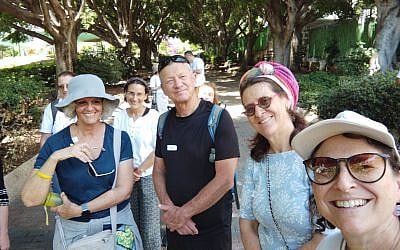
Against this backdrop, I’ll share some of what I was privileged to experience at a recent Mifgash (“Encounter”) that took place last Friday.
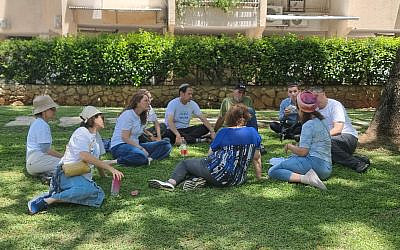
It was a meeting between a group of people from Kfar Saba (typically more to the left politically; and typically more secular) – and a group of people from Gush Etzion (typically more to the right politically; and typically more religious).
The Mifgash, the second in a series of 3 meetings, was organized by activists of Rivon Harevii (“The Fourth Quarter”), the Israeli grassroots movement dedicated – in my own words – to taking the poison out of Israel’s public discourse.
“We must pay the ultimate price – no matter how high that price is. We must bring home all 58 hostages as soon as we possibly can,” one person began.
“Yes, my heart is with the hostages, of course it is. But at the same time, I have 2 children who are combat soldiers. Every time there’s a cease fire, Hamas puts more bombs under the roads – and then I have to send my kids back in,” a second shared.
What sets the Rivon apart is not necessarily the talking – it’s the listening. Deep, empathetic listening. Not because we all share the same opinions, but because we recognize the humanity in those we might not see eye to eye with.
If we want to heal our country from the danger and damage of political polarization and internal strife, we have to start here. By finding the courage to really listen.
With Intent to Understand
Stephen Covey in his popular guide, The 7 Habits of Highly Effective People, is quoted as saying, “Most of us don’t listen with the intent to understand. We listen with the intent to reply.”
In the emotional (and frequently devastating) roller coaster of our current reality in Israel, almost any discussion – about politics, the hostages, the bereaved families, the army, the draft, the reservists, the wounded, the displaced communities – is triggering. Emotionally intense at the highest levels.
In this context, the ability to really and truly hear the “Other” is precious. It’s one of the very specific and valuable actions that all individuals here can do, to contribute directly to our nation’s resilience.
A Setting Aside of Oneself
What does it mean to be a good listener? Having a really successful conversation involves some serious listening skills. As summed up by conversation expert Celeste Headlee in a well-known TED-talk:
- Don’t multitask. Be present, be in the moment. Don’t be half in half out, don’t start thinking about other things.
- Don’t pontificate. If you want to state your opinion without any opportunity for growth – write a blog. You need to enter every conversation assuming you have something to learn. (M. Scott Peck was a famed therapist who said, “True listening requires a setting aside of oneself.” Sometimes that means setting aside your personal opinions.)
- Use open-ended questions, start with Who, What, When, Where, How.
- Go with the flow of the discussion. Thoughts will come into your mind, but let them come and go – while you continue to listen.
- If you don’t know, say that you don’t know. Err on the side of caution.
- Don’t equate your experience with theirs. If they are talking about hating their job, don’t you start talking about hating your job. It’s never the same. All experiences are individual, and it’s not about you. Conversations are not a promotional opportunity.
- Try not to repeat yourself. It’s condescending and really boring.
- Stay out of the weeds. People don’t care about the names, dates etc. They care about you and about what you have in common. Forget the details – leave them out.
- Listen. Listening is the number one most important skill that you can develop. Typically, we don’t listen to each other – because we’d rather talk. It takes effort and energy to pay attention to someone. But if you can’t do that, you’re not in a conversation.
- Be brief. (She quips: “A good conversation is like a mini skirt: Short enough to retain interest, but long enough to cover the subject.”)
These tips for managing an effective conversation reflect the type of discussions that the Rivon encounters aim to create. For example, a rule that’s followed in Rivon dialogue is that each person is expected to repeat the other person’s opinion (and to confirm that he or she understood correctly) before moving ahead with a reply.
Israel is at a Crossroads
The Rivon Harevii brings together people from across all sectors of Israeli society with the intention of finding innovative solutions to the monumental problems we are facing internally. The goal is to promote significant social and political change but through broad consensus.
The Rivon will be having its largest-ever annual conference on June 11 in Tel Aviv, and we’re expecting over 10,000 people to attend. Join us! To register, click here.
We’re Living in Times of Biblical Proportions

The heroine of the Shavuot holiday, Ruth the Moabite, is the ultimate outsider. A penniless Moabite, she follows her mother-in-law Naomi to Bethlehem – showing her love and exhibiting kindness, while gleaning stalks of wheat alone in the fields. Her acts of loyalty and quiet bravery rewrite Jewish history, as Ruth eventually marries the noble Boaz and becomes known as the great-grandmother of King David.
Key words peppering Ruth’s narrative include Kindness. Loyalty. Bravery. Courage.
These terms resonate so differently with me now – in light of the incredible heroism displayed by so many individuals on October 7 and beyond.
—
This post was written with prayers for the safety of the chayalim (soldiers), the return of the hostages, and the healing of the wounded. Note that the opinions shared here are my own and have not been reviewed or approved by the leadership of the Rivon.