


From Kibbutz to the global stage
India–Africa–Europe Trade Corridors Are Bringing New Economic Hope to Africa

India–Africa–Europe Trade Corridors Are Bringing New Economic Hope to Africa.
Israel’s recognition of Somaliland has the potential to reshape Africa and the Middle East, fostering economic growth and strategic alliances that until now were considered improbable.
This is not merely a localized diplomatic gesture, but a broad geostrategic shift. Somaliland offers a rare anchor of stability in the Horn of Africa—one that is not dependent on fragile regimes or internal power struggles, and that enables long-term infrastructure planning. Such stability is a prerequisite for continental-scale transportation, energy, and logistics projects. Although Somaliland is not yet widely recognized by the international community, it functions in practice as a stable state with governing institutions, defined borders, and the ability to enforce agreements—an uncommon advantage in the region.
The corridor emerging between the Port of Berbera, operated by the United Arab Emirates in Somaliland, and Ethiopia could be linked via the Blue Nile to the African Union–backed Lake Victoria–Mediterranean (VICMED) initiative, supported by the African Union (AU) and the African Development Bank (AfDB). The project aims to connect Lake Victoria to the Mediterranean through the White Nile, Khartoum, and the central Nile, onward to Cairo, Port Said, and Alexandria—potentially extending to the port of Benghazi in eastern Libya.
Connecting Berbera to VICMED would, for the first time, create a continuous transportation corridor linking the Indian Ocean, the Horn of Africa, the Nile Basin, and the Mediterranean. This continuity fundamentally alters Africa’s geographic logic—from a continent of fragmented routes into an integrated internal trade axis directly connected to global markets.
In later stages, VICMED could also be linked to southern rail networks, foremost among them the historic Cairo–Cape Town railway, via the Victoria Falls Bridge over the Zambezi River on the Zambia–Zimbabwe border. Completed in 1905, the bridge marked the end of construction of the southern 2,300-kilometer segment of the line. Completing the Cairo–Cape Town route would fulfill a vision the British failed to complete before World War II.
The renewed corridor could also connect to additional branches and ports across eastern and western Africa, including:
-The Uganda–Kenya branch, linking Kenya’s Port of Mombasa to Kampala, Uganda. Originally built with a 1,000 mm gauge, the line has been upgraded since 2016 to standard gauge, with future integration into the Cairo–Cape Town railway envisioned.
-The Tanzania–Zambia Railway, connecting the Port of Dar es Salaam to western Tanzania and Zambia, completed in 1975 and integrated into the continental network.
–The Democratic Republic of Congo–Angola branch, linking the Port of Lobito in western Angola to Tenke in the DRC and onward to the continental rail system.
-Mozambique’s rail corridors, connecting the ports of Beira, Maputo, and Nacala to Africa’s interior.
The VICMED project is a large-scale African infrastructure initiative designed to create a navigable waterway from Lake Victoria to the Mediterranean via the Nile River. Its objectives include boosting trade, reducing transportation costs for landlocked countries, and promoting regional integration in eastern and northern Africa. Supported by the African Union and the African Development Bank, the project offers a lower-cost, environmentally friendly alternative to land-based transportation.
Key objectives and benefits include:
Connecting landlocked countries to global trade routes.
Reducing transportation costs by approximately 30–40 percent
Promoting economic development and regional integration.
Enabling greener transport with lower carbon emissions.
The project encompasses infrastructure development along the Nile, linking Egypt, Ethiopia, Sudan, South Sudan, Uganda, Kenya, Tanzania, Rwanda, Burundi, and the Democratic Republic of Congo. Alongside the waterway, parallel rail lines, power grids, and communication cables are planned.
The initiative began taking shape within the African Union in 2018 and is currently in advanced feasibility study stages.
Funding sources include the African Development Bank, the World Bank, the European Bank for Reconstruction and Development, additional banks, and international private financing institutions.
According to a Daily News Egypt report dated November 21, 2021, Egypt’s Minister of Water Resources and Irrigation discussed the Lake Victoria–Mediterranean navigation corridor with a U.S. government water expert and the U.S. Deputy Ambassador in Cairo, emphasizing that the initiative includes not only a shipping route but also roads, railways, data links, and power connections for all Nile Basin countries. The importance of this report is underscored by Egypt’s public condemnation of Israel’s recognition of Somaliland.
Chinese media reports following the Chinese prime minister’s visit to Cairo in July 2025 indicate a deepening of China–Egypt relations through cooperation under the Belt and Road Initiative (BRI) and other multilateral mechanisms. These frameworks support expanded collaboration in energy, agriculture, transportation, healthcare, and tourism.
China has also invested billions of dollars in the Suez Canal Economic Zone—one of Egypt’s primary revenue sources—and in free industrial zones such as the China–Egypt Suez Economic and Trade Cooperation Zone, linking the Suez Canal to the BRI. Chinese companies operating in Egypt have created employment opportunities for young Egyptians and advanced technological skills. For example, Chinese technology giant Huawei launched artificial intelligence training programs for 25,000 students at Egyptian universities.
Regional considerations are also influenced by protests in Iran, which may affect regional calculations regarding transit routes through Iran, the use of Iranian ports, and Iran’s influence in Africa and the Middle East.
Recently, reports indicated that Egypt has already received initial funding for the VICMED project from African financial institutions.
The estimated cost of the project is approximately $22 billion.
The planned length of the route is about 3,800 kilometers, allowing vessels of up to 1,500 tons along most sections. The system is expected to include roughly 25 major river ports, about 15 navigation locks, and extensive river engineering works. By 2045, projected annual capacity is estimated at approximately 10 million tons of cargo and around 2 million passengers.
Indicative timelines:
By 2030: Detailed feasibility studies and financing arrangements
-Phase I (2030–2034): Improvements to the lower Nile and development of core ports.
-Phase II (2032–2038): Development of the central Nile.
-Phase III (2035–2042): Connections between the upper. Nile and Lake Victoria
-Phase IV (by 2045): Full operational capability.
If a formal connection between VICMED and the Port of Berbera in Somaliland is planned, the new corridor would likely receive support from India, the United Arab Emirates, Ethiopia, and Israel, alongside Europe , the United States and international financial institutions working with the African Union.
From India’s perspective, linking Berbera to VICMED aligns with the principles of the SAGAR doctrine (Security and Growth for All in the Region), which emphasizes secure trade routes, infrastructure development, and shared prosperity as foundations for regional stability.
Such a connection would integrate Ethiopia into the IAMEC corridor (India–Africa–Mediterranean–Europe), creating positive economic pressure on Egypt and Ethiopia to reach political understandings regarding Nile-related disputes.
-Egypt—expected within two decades to lose part of the traffic of large vessels through the Suez Canal—could benefit from new revenues and significant regional development along Nile routes and at the ports of Port Said and Alexandria.
-Ethiopia would gain dual access: eastward through the Port of Berbera and northward through Mediterranean ports.
-India would secure an additional route to the Mediterranean and Europe while encouraging development along Africa’s corridor toward Cape Town.
-Sudan and Libya would gain strong economic incentives for political stabilization, as the cost of continued instability would outweigh the benefits of ongoing conflict.
-For Israel, which in recent years has suffered from the closure of the Bab el-Mandeb Strait by the Houthis and previously from the closure of the Straits of Tiran, this represents an additional solution to strategic chokepoints and an opportunity to integrate into the project in areas such as water management, desert agriculture, smart logistics, and port management.
In this context, it is noteworthy that during a phone call held last week between Israeli Prime Minister Benjamin Netanyahu and Indian Prime Minister Narendra Modi, geopolitical, political, and economic issues in the region were also discussed.
The linkage between the Berbera–Mediterranean corridor and VICMED is not merely a transportation project. It represents the first serious attempt in a century to reconnect Africa to the heart of global trade—not through colonialism or coercion, but through shared interests, modern infrastructure, and long-term vision.
About the Author
Rafi Glick is a writer, lecturer, farmer, and business executive with decades of experience at the intersection of academia, technology, agriculture, and international trade.
• He has served as a Senior Teaching Associate at Ben-Gurion University of the Negev, Ono Academic College, Ariel University, Ruppin Academic Center, and as a guest lecturer at Sofia University’s Faculty of Economics and Business Administration (FEBA). At Ben-Gurion University he also advised the BGU–NHSA Accelerator in the Faculty of Science.
• In business, Rafi was CEO of Bidsnet Ltd., a pioneer in deploying fiber-optic cables through unconventional infrastructure (in partnership with CableRunner), delivering high-speed connectivity to homes, enterprises, institutions, and cellular networks. Earlier he held senior roles at ECI Telecom and served on the board of RLF Venture Capital, working with partners such as Intel, Teva, and the Jerusalem Development Authority.
• He contributed extensively to Israel’s trade and investment ecosystem: he directed industrial and agricultural technology divisions at the Israel Export Institute, founded Israel’s AGRITECH as international exhibition, and served on the board of the Israeli Investment Center at the Ministry of Industry and Trade.
• In his early career, Rafi established and served as the first director of the Cargo and Aircraft Supply Security Department in the Security Division at Ben-Gurion Airport (1972–1976). He lived in Kibbutz Parod until 1974.
• Rafi has also been recognized for his writing: in 2008 he was named Best Economic Blogger by TheMarker, Israel’s leading business daily.
• Today he continues to publish essays and commentary—with a special passion for astrophysics, space exploration, technology, economics, and social issues.
From Kibbutz Parod to the global stage, Rafi Glick’s career reflects a lifelong commitment to building connections—between people, industries, and ideas.
Email: rafi.glick@gmail.com
Related Topics
Related Posts

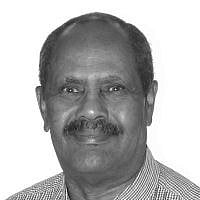
Rafi Glick