
TRAVEL FLASH TIPS ON THE TIMES OF ISRAEL
India’s Taj Mahal: Poetry Carved in White
It was all thanks to Lihi Verses my daughter. A medical student soon to become a doctor. She decided to spend her summer vacation in India’s Rishikesh attending a Yoga course in an ashram.
After the course conclusion we decided to meet in New Delhi, travel India and fulfill a secret dream: to visit the Taj Mahal. A monument officially recognized as one of the New Seven Wonders of the World, and a symbol of love, beauty, and timeless craftsmanship.
A connecting flight via Abu Dhabi brought me to India’s capital city, and the next morning – a Thursday – a private driver picked us up. Surrounded by a chaotic mix of cars, buses, auto-rickshaws, motorbikes, cycles, and endless bulls and cows, we headed south to the city of Agra. After almost four hours on bumpy roads, the idea of visiting the Taj Mahal became realistic. The only fear was the September monsoon rain. And with no alternative- since the Taj Mahal is closed on Fridays – anxiety was intact. Within the complex lies an active mosque, and on Fridays access is reserved exclusively for local Muslims.
The moment we reached our hotel in Agra, thunderstorms broke out and heavy showers swept across the landscape, drumming on the lobby rooftop and turning the streets into rushing streams. An hour later the rain stopped, and the sky cleared to a light cloud cover. Within 20 minutes we found ourselves at the gates of the Taj Mahal. To protect the monument from pollution, no vehicles are allowed within about 500 meters of the site, so a golf cart for a small fee was the perfect solution.
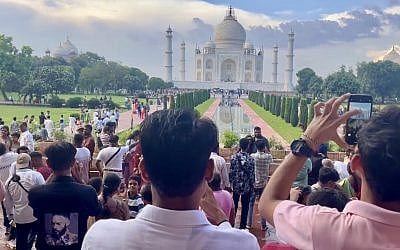
As we approached one of India’s most visited and protected monuments, entering became its own challenge. Fortunately, we had bought our tickets online in advance, avoiding the endless queues at the ticket office. Separate lines for men and women, as well as different queues for Indian and foreign visitors, awaited us. Bag checks and body scans at all entry gates were strict. My favorite mint drops candies, classified as food, along with cigarettes, a travel book, and even mobile phone chargers were all banned. We had to return and deposit them in a cloakroom. Then we joined the stream of thousands of visitors, most of them local Indians, all with mobile phones out and cameras ready. Over the next two hours, melting in unbearable humidity, I experienced what was probably the most magical time of my life.
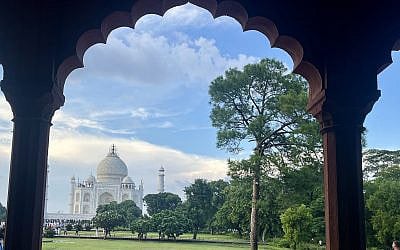
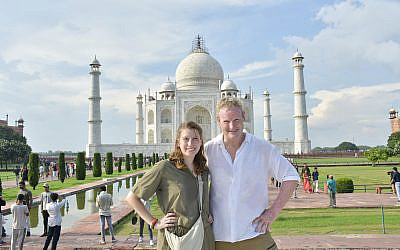
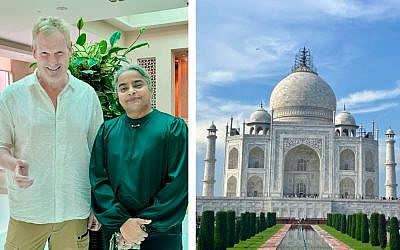
When you first glimpse the Taj Mahal from the entrance archway, it doesn’t feel quite real. Even with the current dome’s restorations, the white marble seems to float above the gardens, glowing softly in the light. That first view is both humbling and breathtaking. A reminder that this is not just a monument, but a love letter carved in stone. The muslim emperor Shah Jahan built it in the 17th century in memory of his wife Mumtaz Mahal, who died giving birth to their 14th child. The symmetry of the gardens, the gentle reflections in the pools, and the delicate inlay work of semi-precious stones all speak of devotion and perfection, making every step we took feel like walking into a dream.
But standing there, I realized the Taj Mahal is more than history. It’s an emotion. It took over 20 years and thousands of artisans to complete, yet it remains timeless, its marble shifting shades with the sun, as if alive. Observing it, I understood why millions come not only to admire its architecture but also to feel that quiet, universal truth I heard so much about: that love, when expressed fully, can outlast empires and time itself.
We didn’t miss the mausoleum inside. Here, the atmosphere shifts dramatically from the bright, sunlit exterior to a hushed, dimly lit sanctuary. The false tombs of Mumtaz Mahal and Shah Jahan lie beneath delicate marble dividers, while their actual graves rest in a plain, unadorned chamber directly below.
On our way out, my daughter and I debated: is the Taj Mahal a must-see destination because of its reputation, or is it indeed so beautiful and impressive? The answer, we agreed, is both and that’s probably the magic. The Taj Mahal’s reputation is so vast that many travelers worry it cannot live up to the myth. After all, it’s one of the most photographed places on earth, a fixture on every “bucket list,” and a name synonymous with romance and beauty. But standing there, we knew the reputation was not exaggerated.

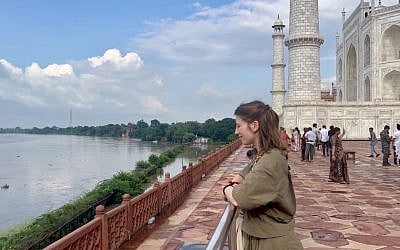
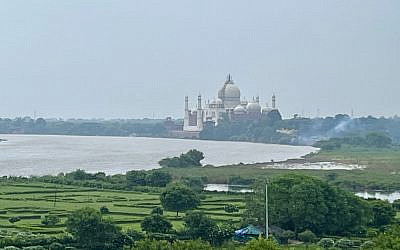
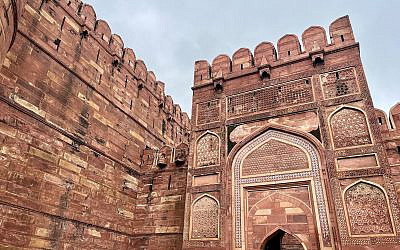
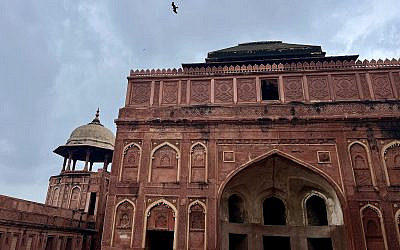
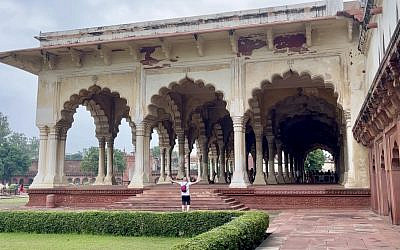
We also made sure not to miss the second must-see monument in Agra: The Fort. Walking through the red sandstone walls of Agra Fort feels like stepping into a living chapter of India’s history. Unlike the serene romance of the Taj Mahal, the fort radiates power and intrigue. As we wandered its vast courtyards, we could almost hear the echoes of emperors, court whispers, and battle commands. From the balconies, we paused to take in the sweeping view of the Taj Mahal across the impressive Yamuna River. A bittersweet sight, knowing that Shah Jahan, who once ruled from here, spent his last years imprisoned in these very walls, by his rebellious son, gazing at the monument he built for his wife. Exploring its palaces, mosques, and hidden passages is both awe-inspiring and strangely intimate, like being let in on the secrets of his empire. A must-see.
The facts indicate that most visitors to the Taj Mahal arrive on day tours from Delhi. The new high-speed railway and the ‘Yamuna’ train shortened the journey from Delhi to Agra to just three hours, making day tours very convenient. Dozens of human and digital agents market the “Taj Mahal Day Tour from Delhi” as their flagship product. In contrast, few promote overnight packages. Academic studies on tourism in Agra also note that the limited number of local attractions and services often lead travelers to shorten their stay in the city. Nevertheless, I decided to stay overnight, curious to examine a different, out-of-the-box perspective. After all, Agra was once India’s capital before Delhi.
At the DoubleTree by Hilton hotel, where we stayed, I spoke with the charming Indian general manager Rajani Nair-Deb, with 22 years of experience in hospitality across India. She is convinced that day-trippers are mistaken and miss out. “A visit to the Taj Mahal is only part of the journey. Agra is famous for shopping leather and ceramics at attractive prices. The street food here is also renowned across India. Since the pandemic, we have seen a clear trend of more relaxed family trips at a different pace. Our statistics show that three out of four guests, most of them locals, now stay even for two nights,” she says.


This DoubleTree, one of Hilton’s global brand hotels, has 104 rooms, a cool swimming pool, a fitness center, and two restaurants. The hotel is well maintained and quite pampering. Recently, a conference center for up to 1,200 people was inaugurated. This is an indication of demand and also of the need to attract new audiences to Agra. With Hilton Honors, the world’s second-largest loyalty program, the growth potential is enormous. “Half of the guests are locals and the other half international, mainly Americans, Australians, and Spaniards,” Nair-Deb reveals.
I am doubtful if Agra deserves more than an overnight, however I definitely recommend the calmer version. If you plan to visit Agra and the Taj Mahal, don’t do it in haste. It is a tourist experience worthy of time and reflection. Stay for an extra night.
I was moved by the warmth of its hospitality in Agra. The expression “Atithi Devo Bhava” – “The guest is God” is not just a saying here but a way of life. In India it is a cultural value expressed in gestures, attitudes, and genuine care. Simply a different frequency of hospitality that leaves an uplifting feeling. Combined with a visit to the Taj Mahal, it is a recipe for an unforgettable experience
Related Topics