
Infertility: Between Privacy and Empathy
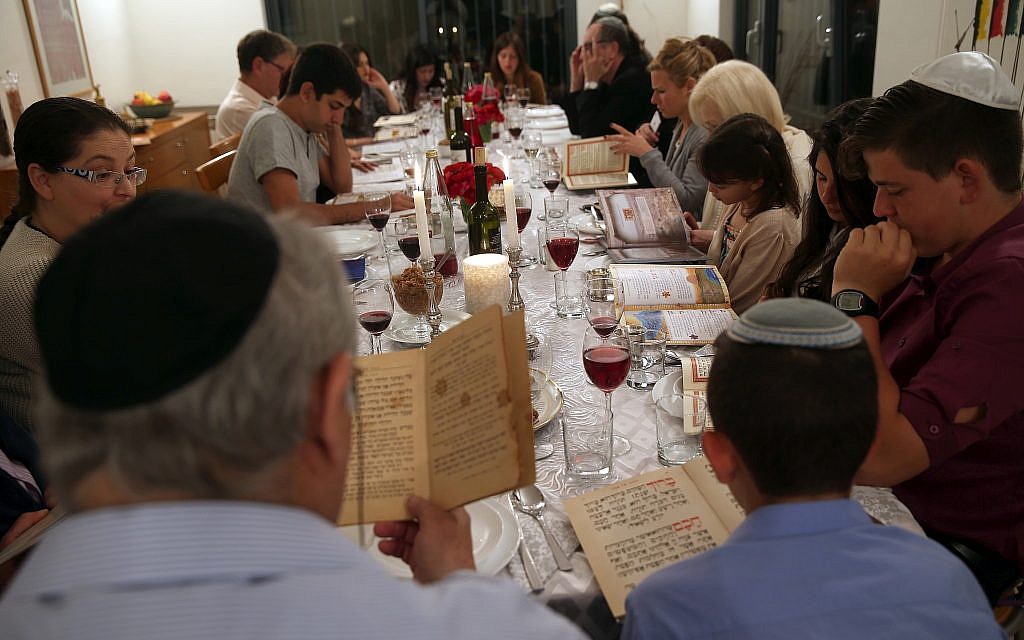
“Are you a Kohen, Levy, or Yisrael?” This question is familiar to anyone who has walked into a new synagogue and has been noticed. The Gabay responsible for calling people up to the Torah would like to know if the new arrival in their synagogue can be called up to the Torah as a Kohen, a Levy, or an Israelite. This is just another example of how, living in a tight-knit Jewish community, we are blessed with a sense of connection and belonging, yet one that demands something of our privacy.
In that same synagogue, you can see if a woman is covering her hair or not, to help determine if she is married or not, if a man is wearing a Talit or not to decide on his marital status, as married men customarily wear a Talit. Of course, there is an option, you are wearing a Talit and you are not married because you are Sephardic, which is another way in which privacy is lost in the interest of shared space and community. The beauty of community comes at the cost of our privacy. While this is often a fair exchange, in matters of infertility, it is most certainly not.
As if the emotional trauma of infertility, childlessness, miscarriage, and the emotional rollercoaster that comes with it all are not enough, those traumas are often compounded by the lack of privacy we experience when we are with a community in which children and childlessness are so pronounced.
Whether it is when someone says things outright, like the time someone came over to me point black and said: “so, when will you fullfill the mitzvah of Pru U’rvu (be fruitful and multiply)?!” or the silent stares we might get in public spaces, the violation of privacy can add a great deal to the pain we are coping with in our personal life.
If this is difficult in a synagogue, at a community event, or while going out to eat, it becomes all the more difficult when it comes to family gatherings, meeting friends, lifecycle events, and other events in which the absence of parenthood is strongly felt. My heart breaks when I think of what is by far the most challenging job of any rabbi, and the hardest phone calls and visits I have ever made; when a parent of whatever age it may be loses their child. I remember my dear friend Len, who lost his son and his heartbreak, especially during holidays. There were no words, there was nothing in the world that could have provided him with comfort to that pain. Seeing the contrast between the haves and the have-nots brings with it unimaginable pain.
Rinat Lefkowitz, an Israeli infertility coach, shared the following firsthand account of someone she accompanied through the journey of infertility. “In recent sessions, the topic of the upcoming Rosh Hashanah dinner with the family keeps coming up. For many, the holidays are a time of joy, family togetherness, and moments of peace.
But for her, the approaching holiday is a significant source of anxiety — and for several reasons. First, her younger sister, who became pregnant relatively quickly, will be there. She will sit at the holiday table visibly pregnant.
Second, not long ago, Rinat suffered a painful miscarriage, and the sense of loss still burns deeply within her. The thought that everyone will be sitting together around one table, some knowing and asking uncomfortable questions, others unaware of what she’s been through, fills her with dread. Rinat wanted to avoid taking part in the holiday meal altogether.”
While this personal account does not share any dramatic highs or lows, it is the lived experience of those going through the experience of infertility. While one would think that conventional wisdom is to give a couple more spaces and privacy, that is not a blanket rule, and it is not always true. One of the stories that conveys that dichotomy best is the story of Moshe and Esti Yitzchaki, a story that shook me to my core.
The story of Moshe and Esti Yizchaki from Israel is an orthodox couple who encountered the challenges of infertility more than a year after they got married and shared their story with the Israeli press. Speaking about the pain of sharing and of remaining silent, Esti shared the following: “It had already been a year and a half since the wedding. No one dared to ask what was happening, but they didn’t have to. People would make small talk with me, pretending everything was normal, but their eyes always went straight to my stomach. We stopped going out with friends, no dinners, no Friday night meals, because every conversation was about kids. It felt like that’s all anyone ever talked about, as if there was no other topic in the world.”
Her husband, Moshe, then went on to share: “It felt like life was moving forward for everyone else, and we were just standing still. My parents couldn’t understand why we never came over anymore.” Then came the part that Moshe shared, which had shaken me to the core. “One day, my father OBM showed up at our apartment in Petach Tikva without warning”, Moshe said. “He was the head of orthopedics at Shaare Zedek Hospital, a man who was used to fixing things. He looked at us and asked, ‘Are you in trouble? Do you owe money? Did we do something to hurt you?’ “The dam inside me broke; it all just poured out. I told him that we were struggling with fertility, and that the problem was on my side. My dad spoke with a friend of his, the head of the IVF department at Shaare Zedek, and just three days later, we were already sitting in his office.”
This story embodies the painful dichotomy that couples who feel the isolation of infertility might live through. On the one hand, there is the need for privacy and to be left alone; on the other hand, that might not be the ideal way to go. The same is true for those who love and care for them and surround them. On the one hand, sometimes there is a benefit to discussing the situation, empathizing, and even helping find practical solutions. There is no one formula for determining the right balance between the profound value of privacy in this process and the enormous help and support that might be offered. Making sure sensitivity, empathy, and thoughtfulness are there in any interaction.