In(ter)dependence? Exploring Jewish connection through art and dialogue
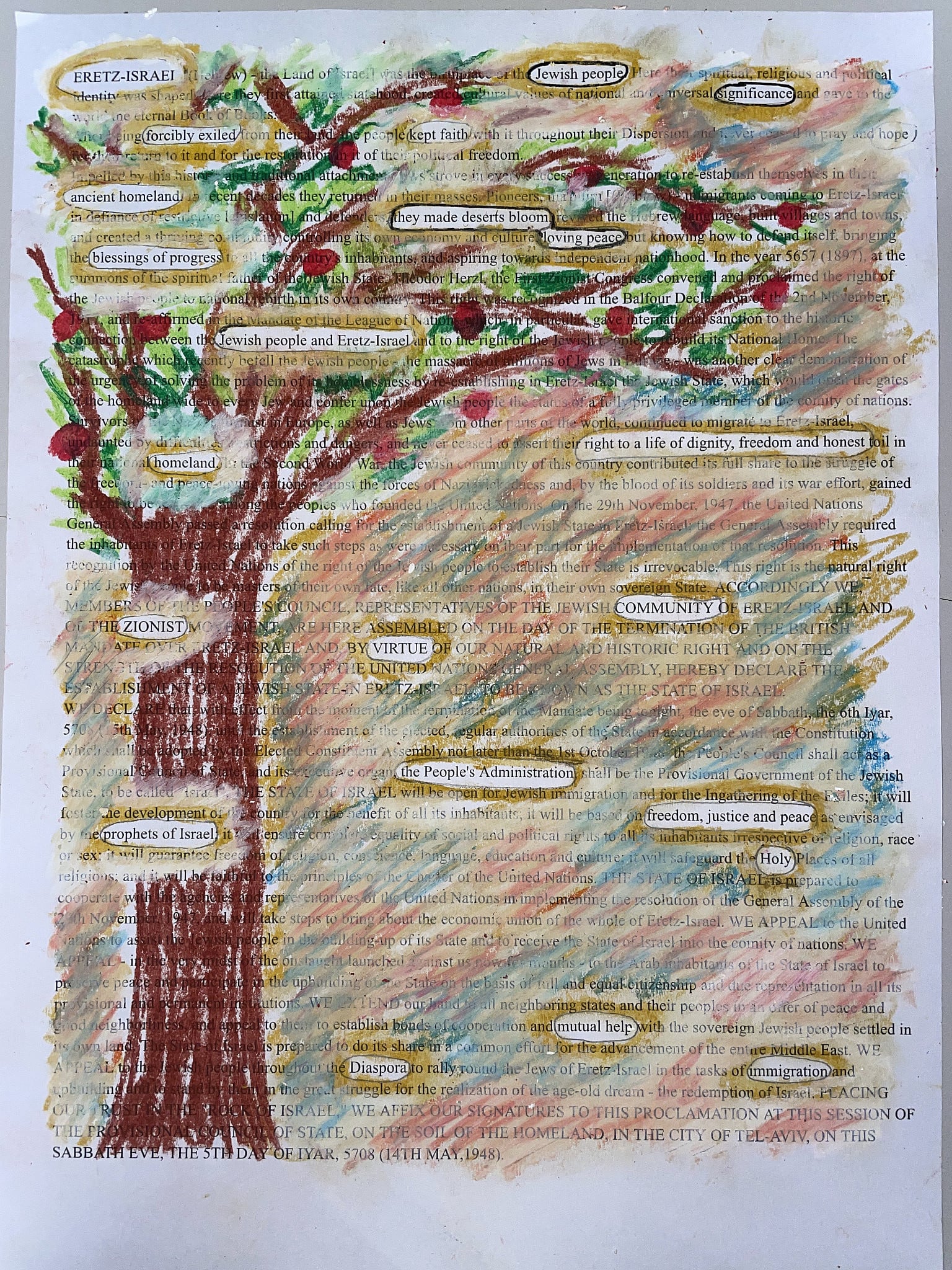
Since Sunday school, when I molded clay dreidels that immediately collapsed and painted slightly crooked murals on the walls of my synagogue, I’ve expressed my Jewish identity through art. I didn’t think of it that way at the time. It was just something we did as kids. But recently, as I helped lead a program at Hillel Jerusalem that explored Israel’s Declaration of Independence through art, I realized how deeply creativity has shaped the way I connect to my Jewish identity.
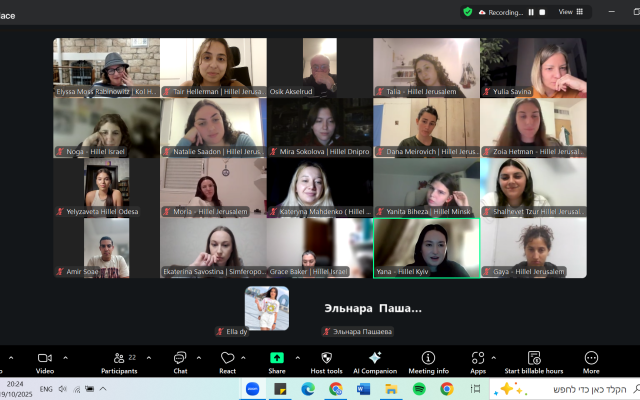
The program, fittingly called “In(ter)dependence?”, was a collaboration between Hillel Jerusalem, Hillel CASE (Central Asia and Southeastern Europe), Kol HaOt Jewish arts organization, and the Zionist Enterprises Department at the World Zionist Organization. Together, we brought students into conversation (and creation) of global Jewish peoplehood, connecting students from Israel, Azerbaijan, Ukraine and Belarus.
Many of the Eastern European students only discovered they were Jewish as adults. Some grew up in places where being openly Jewish was socially discouraged or simply absent. Many are still learning what “Jewish identity” means to them. And yet, their connection to Israel and the Jewish People was certain. Each student’s Jewish identity was thoughtful, personal, and deeply inspiring.
Israel’s Declaration of Independence is a document many Israelis encounter in their school curriculum but often take its historical significance for granted. Beyond its ceremonial role, it is not always read thoughtfully or treated as a living text that raises questions about values, identity, and responsibility. The declaration, which speaks about autonomy, justice, and right to self-determination, resonated differently in this shared space, revealing how the text continues to be interpreted from diverse perspectives.
Reading a democratic and Jewish founding document alongside students whose Jewish identity has been influenced by complex circumstances added new layers of meaning to the experience. Their connection to the declaration – politically distant yet meaningful within their Jewish lives – reshaped my understanding of the text entirely. Engaging with the declaration using artistic expression and open discussion with these students was both inspiring and deeply moving.
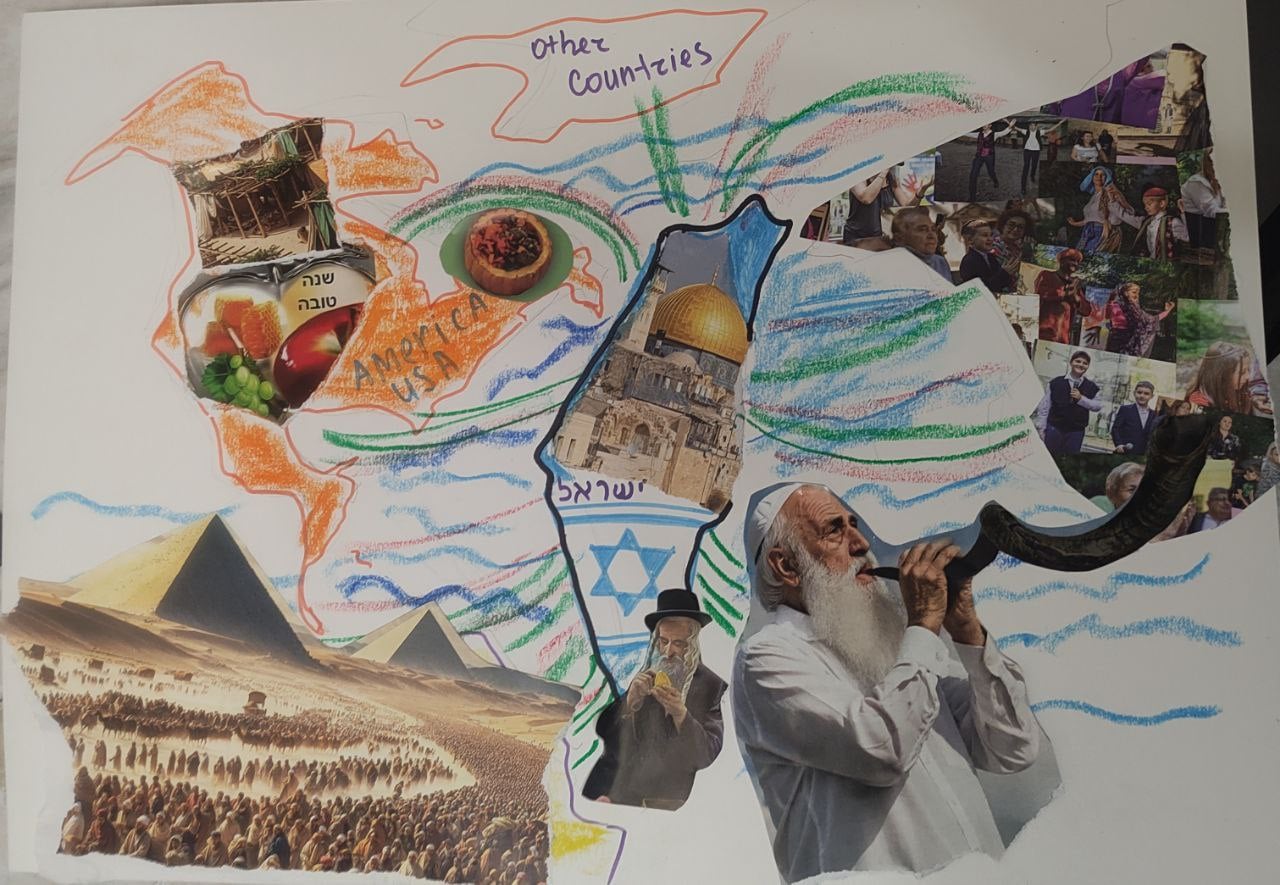
During one session, we created Jewish identity maps – visual expressions of the relationship between Israel and world Jewry. One student from Crimea included pictures of the Temple Mount, the United States, Egypt, and Jewish communities in her home city of Simferopol. I found this expression especially striking. What a Jewish-Crimean student considers part of her “Jewish map” carries particular meaning given the political realities she faces as a Jew living in Crimea.
In another session, students created value collages, visual expressions of Jewish values they found meaningful. The Ukrainian students chose values like hope, freedom, and equality, using images and words that reflected both Jewish tradition and their own lived realities. For many, these values felt urgent rather than theoretical, shaped by experiences of instability, displacement, and the search for belonging. Their work made clear that Jewish values are not only inherited through texts, but continually reinterpreted through experience.
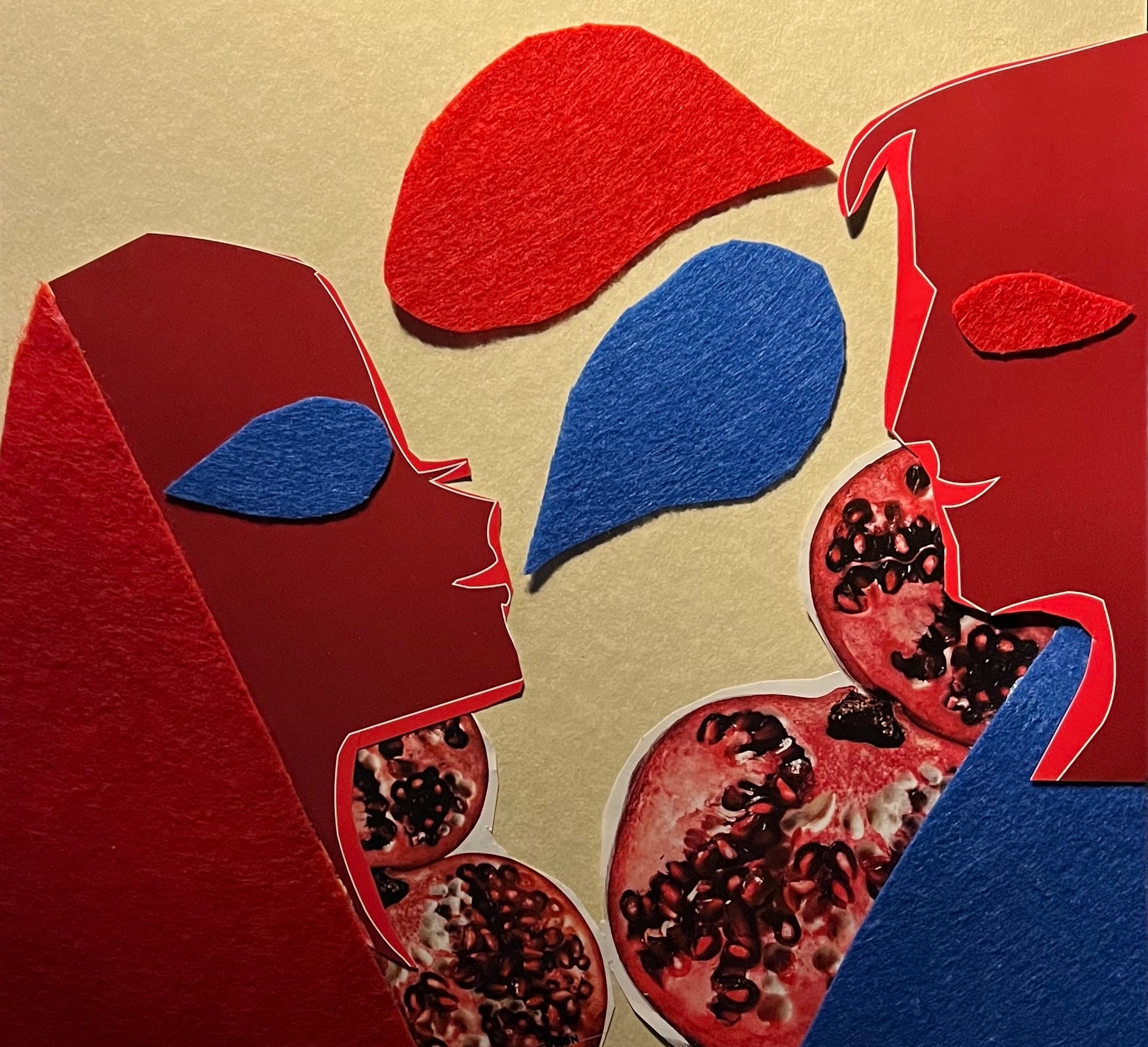
The program’s title, “In(ter)dependence?” is a question. Are Jews around the world dependent on one another, or are we all separate communities with little connection? Does Israel’s founding document reflect interdependence or is it unconcerned with Jewish communities outside of Israel?
Before this program, I didn’t know any Jews from Eastern Europe, nor did I fully understand the depth of the connection Israeli Jews share with them. After four weeks of conversations, art, and reflection, I’ve come to understand that interdependence is something we must actively create. It doesn’t happen without personal relationships, dialogue, and initiative. But, the shared history, values, and desire to build a global Jewish community, make it possible.
Jewish peoplehood depends on programs like this, where young Jews have a platform to learn together, discuss Jewish texts, and explore shared values. This is the kind of community Hillel Jerusalem strives to build, where international connections form naturally through dialogue and creativity.
We often talk about the future of the Jewish people in abstract terms, but that future is being shaped right now. In programs like “In(ter)dependence?,” encounters between Jews who have lived vastly different Jewish lives create space for young adults to explore their identity even when their environment didn’t encourage it.
As someone who grew up surrounded by Jewish learning, art, and community, I came into this program thinking I would be teaching students about Israel’s Declaration of Independence. Instead, they taught me what independence, and interdependence, really means.