
From Kibbutz to the global stage
Iran, China, India, US and EU: Economic Corridors Will Shape Ceasefire Stability
The Day After the War: Economic Corridors Will Shape Ceasefire Stability.
The opening strike that eliminated Iran’s senior leadership, including Supreme Leader Ayatollah Ali Khamenei, was operationally successful. However, in retrospect, it significantly shaped the course of the war and the response of Iran and its allies.
Iran’s partners — Hezbollah in Lebanon, the Houthis in Yemen, and Shiite militias in Iraq — perceived the assassination as a direct threat to the very existence of the Shiite axis. For them, this was not merely a strategic blow, but a sectarian one. As a result, they responded to Iran’s call and joined the fighting, leading to renewed escalation against Israel.
Hundreds of rockets and drones were launched, primarily targeting northern Israel — where residents had only recently returned to their homes after the previous round of conflict.
At the same time, the elimination of the leadership led to a consolidation of political and military power in the hands of the Islamic Revolutionary Guard Corps. The previously more pluralistic governing structure — which included military, civilian, and religious elements — was effectively sidelined, resulting in a more radical and centralized regime.
But the most significant developments occurred in the economic-strategic arena.
Iran deployed two key levers:
First, attacks on energy infrastructure belonging to US allies in the Gulf — major suppliers of oil, fuel, and LNG, and direct competitors to Iran.
Second, the closure of the Strait of Hormuz — a critical chokepoint through which roughly 20% of global energy supply and around 140 tankers per day pass.
These moves had immediate consequences:
-Heavy pressure on the United States to end the war quickly.
-A sharp increase in energy prices, with oil reaching approximately $111 per barrel.
-Volatility across global financial markets.
-Rising inflation, with the Consumer Price Index increasing by 3.3% year-over-year, reflecting higher energy and supply costs.
-Growing concerns of a broader economic crisis, including disruptions in food, fertilizers, and critical raw materials.
When viewed through the lens of economic corridors and trade routes, a pattern of converging interests emerges. When listening to public statements, however, the picture appears chaotic.
A potential US strike on Iranian energy infrastructure would directly threaten China’s Belt and Road Initiative (BRI), which relies heavily on stability in Iran and the Persian Gulf. For China and its partners — including Russia — the risks are not theoretical, but structural.
At the same time, China has an interest not only in de-escalation, but also in signaling its ability to influence broader strategic dynamics, including Western trade routes such as IMEC.
Several signals from Beijing reflected this posture:
-A joint naval exercise with Pakistan, framed as protecting the China–Pakistan Economic Corridor (CPEC), a central component of the BRI.
-The closure of airspace in the Shanghai region for an extended period.
-Renewed political signaling toward Taiwan, including high-level engagement with opposition figures — interpreted as a reminder of China’s influence and options in the immediate term.
The ceasefire was reached before significant damage was inflicted on Iran’s core infrastructure, thereby preserving the functionality of key BRI-linked routes.
However, a critical issue remains unresolved: the continued closure of the Strait of Hormuz, even days after the ceasefire announcement.
This is where the “day after” begins.
The new reality requires a fundamental reassessment of global trade architecture — including roads, railways, pipelines, energy grids, and communication networks.
India, Saudi Arabia, and Gulf states are already conducting strategic assessments and exploring alternatives:
-Expanding the use of Red Sea ports.
-Developing land corridors through Iraq or Jordan toward Mediterranean ports.
-Exploring routes via the Horn of Africa.
At the same time, the importance of the Middle Corridor — also referred to as TRIPP (the “Trump Route for International Peace and Prosperity”) — is growing.
This corridor connects Asia to Europe via the Caucasus — through Azerbaijan, Georgia, and onward to the Black Sea and Europe.
Its key advantage is geopolitical flexibility.
It allows connectivity between Asia and Europe while bypassing both Iran and Russia, and provides alternatives that reduce dependence on the Strait of Hormuz and the Red Sea.
This shift is already reflected diplomatically.
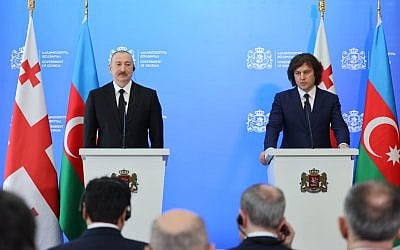
On April 6, the President of Azerbaijan, Ilham Aliyev, and the Prime Minister of Georgia, Irakli Kobakhidze, met in Tbilisi to discuss advancing the Middle Corridor in light of the war in Iran and the evolving geopolitical landscape.
The conclusion is clear:
The ceasefire is not driven solely by military considerations, but by global economic interests.
Those assessing its durability should ask not only who is fighting — but who stands to lose economically from continued instability.
The latest war demonstrated that economic corridors and trade routes are not merely outcomes of geopolitics — they are among its primary drivers.
Related Topics
Related Posts