
Iran, October 7, and the Cost of Intervention
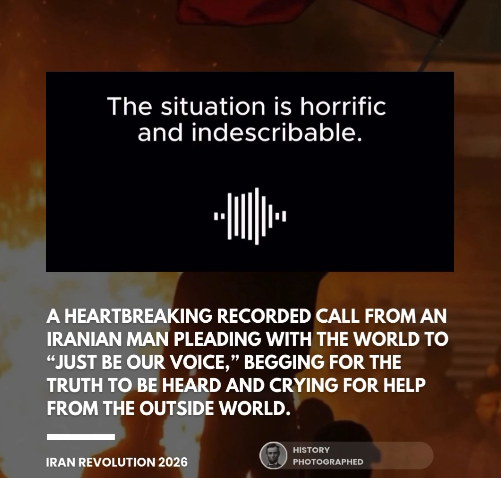
In between communication blackouts, Iranians are sending their pleas to the outside world. In the contemporary media environment, we are forced into proximity with this terror. Distance collapses, and suffering arrives not as history, but as sight and sound. It is the sound that penetrates me.
The voices are begging and weeping, pleading for exiled family members, friends, anyone with a connection beyond Iran’s borders to pass their messages along and tell the world they need help.
I last heard these sounds after October 7. Frantic voice notes and recordings of sobbing phone calls from the Nova rave, from kibbutzim and rural desert communities, still haunt me. These were the intimate horrors of people realizing, in real time, that hypothetical fears had become imminent reality. I feel the same helpless rage as I listen to the audio leaking out of Iran.
For Israelis in the diaspora, October 7 was not only experienced as a national tragedy, but as one experienced largely through media. We did not witness that day firsthand. We encountered it through our screens, through videos uploaded mid-panic, voice notes, and recordings of unanswered desperation.
We did not encounter October 7 as a completed event. We encountered it unfolding. That distinction matters. What lodged itself in the mind was not only knowledge of violence, but forced proximity to it. Technology made it possible to witness terror as it unfolded, while being unable to intervene.
We are not hearing polished narratives from Iran. We are hearing people in the midst of terror, asking the same question that haunted Israelis on October 7: where is the help? These are the sounds of people realizing that survival depends on being heard by someone, somewhere, in time.
To hear these sounds and not ask for intervention would feel like a moral failure of recognition. And yet, for Israelis and Israeli-Americans, the call for intervention in Iran carries a uniquely cruel paradox. The help Iranians are begging for, the kind of external intervention that could meaningfully alter their reality, comes with a declared consequence. Iran has been explicit: if the United States intervenes, Israel will be targeted. Iranian leadership has already begun assigning blame in advance, framing this uprising as an Israeli manipulation.
This places us in an impossible position. And still, many of us accept that cost. That willingness is not born of naivety. It is shaped by hard-earned understanding of what radical ideology does when it goes unchallenged, and what it costs when it is confronted.
This moment is particularly disorienting for me because of the clarity that exists alongside so much confusion. I am clear that the United States cannot remain passive in the face of what is happening in Iran. I am equally clear about the cost of that intervention. If the United States acts, Israel will absorb part of the retaliation. For me, this is not theoretical, but personal.
What is harder to reconcile is that this intervention is not being demanded to protect my own people, at least not directly or in the short term. It is being demanded to protect Iranians who have lived under the same radical ideology that has threatened Israelis and Jews around the world for decades. Still, I do not feel conflicted about what the right thing is to ask for. I feel conflicted only about the price.
It is deeply unsettling to understand exactly who will pay that price, and to know at the same time that calling for intervention remains the only moral choice left.
This moment exposes a fundamental tension in the world we now inhabit. We have unprecedented access to suffering, but no clear framework for what that access demands of us. We can hear people begging for their lives in real time and still hesitate at the cost of responding.
This hesitation carries weight for many. For Israelis, it carries a particular weight shaped by experience. We know what it means to see and hear terror unfold through screens. We know what these sounds evoke. And we know that intervention, when it comes, is rarely clean or evenly distributed.
There is no resolution to this tension. Only the recognition that clarity and cost can exist at the same time, and that choosing to act does not require illusion about who will bear the consequences.