
Middle East Analyst
Iran’s Chemical Weapons: Understanding the New Israeli Warning
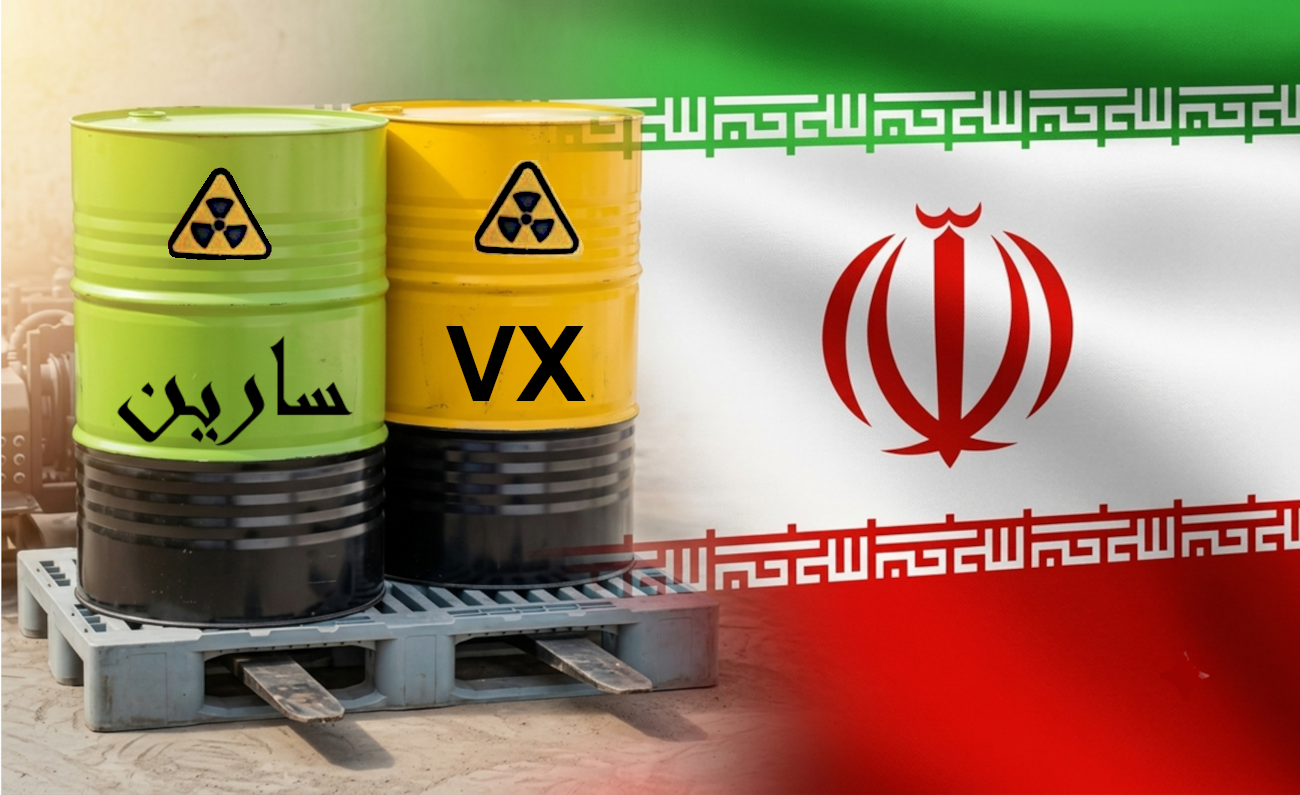
by author (AI)
Israel’s warnings about Iran’s chemical-weapons program have moved into the center of a growing debate over the next phase of the confrontation with Tehran. What began with reports of Israeli intelligence briefings to Washington and several Gulf governments has now become a public issue, with Israeli Defense Minister Israel Katz asserting that Iran is developing chemical weapons.
The timing is significant. Israel is pressing the Trump administration to consider renewed military action against Iran, while American and regional officials are reportedly divided over the seriousness and immediacy of the reported chemical-weapons threat. The issue is therefore being discussed in an environment where intelligence, national security concerns, and Netanyahu’s political survival are closely intertwined.
For the public, understanding what is happening requires some historical perspective. Iran’s interest in chemical weapons is not new. Nor are concerns about its compliance with international restrictions. What is new is the claim that its activities have accelerated and that the changed circumstances following the 2026 war may have affected the strategic calculations surrounding their possible use.
The distinction between what is historically established, what governments are now reporting, and what remains unclear is essential to understanding the issue.
An established history
Iran’s chemical-weapons history dates to the Iran-Iraq War. After suffering devastating chemical attacks by Iraqi forces, Tehran developed its own chemical-weapons capabilities. Its efforts included research into chemical agents and the technical means to produce them.
Iran subsequently joined the Chemical Weapons Convention (CWC), which prohibits the development, production, stockpiling, and use of chemical weapons. Tehran has denied possessing or developing prohibited chemical weapons. However, its treaty obligations have not ended international concerns about the completeness of its declarations and the nature of some of its research activities.
The United States has repeatedly identified compliance concerns. Its 2024 report on compliance with the CWC cited Iran’s failure to declare certain historical chemical-weapons transfers, incomplete declarations of riot-control agents and production facilities, and research into pharmaceutical-based agents for offensive purposes. These agents are particularly relevant because some chemicals developed for legitimate medical or research purposes can also have incapacitating or other hostile applications.
In July 2024, the State Department imposed sanctions on Hakiman Shargh Research Company, alleging its involvement in Iran’s chemical-weapons research and development. The department stated that the United States had assessed Iran as noncompliant with the CWC since 2018 and that its 2024 assessment included the development of pharmaceutical-based agents as part of a chemical-weapons program.
These are US government assessments, not findings that Iran currently possesses a deployable chemical-weapons arsenal. But they establish that concerns about Iranian chemical-weapons activities predate the latest Israeli warnings by several years.
The 2025 US intelligence community’s Worldwide Threat Assessment also identified Iran’s continued research and development of chemical and biological agents for offensive purposes as a concern. The report discussed chemicals with sedative, dissociative, and amnestic effects, some of which could be lethal.
The significance is that Iran’s chemical-weapons history is not simply a legacy of the 1980s. Public US assessments indicate that concerns about research and development have continued into recent years.
What Israel is now reporting
The latest round of Israeli warnings began receiving wider attention in early November. According to a November 3 report by The New York Times, Israel shared intelligence with the United States and several Gulf countries asserting that Iran was considering the use of chemical weapons against its adversaries. Israeli officials reportedly described efforts to develop ways of delivering chemical agents by missile or introducing them covertly into enemy countries.
The reported reaction was divided. Some American officials viewed the Israeli presentation with alarm, while others questioned its credibility and timing. Several Gulf officials reportedly doubted the Israeli assessment and suspected that it was intended, at least in part, to encourage Washington to resume major combat operations against Iran.
A subsequent November 18 report by Axios, written by Barak Ravid, added another dimension. Israel reportedly presented intelligence indicating that Iran had increased its chemical-weapons research and development and conducted tests. Mossad chief Roman Gofman raised the issue during meetings with senior American officials, and President Trump was briefed.
The report also described disagreement within both governments over how imminent the threat was. American and Israeli officials reportedly acknowledged that Iran was not then capable of carrying out the attacks being discussed. Some senior American officials questioned the motivation behind the Israeli presentation, while other officials considered the warnings serious.
On November 24, Katz went further in public remarks to Israeli reporters. He asserted that Iran was in the process of developing chemical weapons, although he declined to specify the program’s location or how far it had progressed. He said Israel would not allow Iran to acquire that capability.
Katz’s remarks came amid an increasingly public debate in Israel over the urgency of renewed military action. The Times of Israel reported that some Israeli officials, including figures associated with the military and intelligence establishment, were not advocating an immediate strike, while Katz and Prime Minister Benjamin Netanyahu were emphasizing the danger. Katz also made clear that Israel preferred to act jointly with US Central Command.
The public reporting thus contains several distinct claims: that Iran has a historical chemical-weapons program; that it has continued research into agents with potential offensive applications; that Israel believes this activity has increased and included testing; and that Israeli officials are concerned about possible future use.
Those claims are related, but they are not interchangeable. The public information does not establish the precise nature of the reported tests, the maturity of any new delivery capability, or whether Iran’s leadership has made a decision to use chemical weapons.
The question of deterrence
In a July essay, I examined Iran’s chemical-weapons history through the lens of deterrence psychology. The central argument was that Iran’s restraint should not be confused with an absence of capability or hostile intent. Tehran had reasons to develop weapons that could impose unacceptable costs on an adversary, while also recognizing that employing them could invite devastating retaliation.
That distinction is important because a weapons program can serve more than one purpose. It can provide a potential battlefield capability, strengthen deterrence, create strategic leverage, or offer a leadership another option in circumstances it considers existential.
Iran’s previous leadership operated within a particular strategic framework. Supreme Leader Ali Khamenei and senior figures in the Islamic Revolutionary Guard Corps had decades of experience managing confrontation with Israel and the United States. Their calculations included the risks of escalation, the vulnerability of Iran’s infrastructure, and the consequences of crossing certain military thresholds.
The February 2026 war fundamentally altered that environment. Khamenei and senior military and security figures were killed, and the leadership structure that had governed Iran’s strategic decisions for years was severely disrupted.
That does not establish that the new leadership will be more inclined to use unconventional weapons. Nor does it establish that the previous leadership’s deterrence calculations have disappeared. But it does raise a question that was less pressing before the war: whether the people now making Iran’s strategic decisions share the same understanding of the risks associated with chemical-weapons use.
A new leadership facing a weakened conventional military position could view unconventional capabilities differently. It could also conclude that their actual use would invite consequences too severe to contemplate. The public record does not yet tell us which interpretation better reflects the thinking in Tehran.
This is one reason the current reporting deserves attention beyond the immediate political debate in Washington and Jerusalem. The issue is not simply whether Iran has pursued chemical weapons. It is whether the strategic environment in which those capabilities were developed and retained has changed.
Syria’s unfinished disarmament
The history of Syria’s chemical-weapons program offers another useful point of comparison.
Following the August 2013 chemical attack near Damascus, the United States and Russia negotiated an international framework for eliminating Syria’s declared chemical-weapons arsenal. Syria joined the Chemical Weapons Convention, and an OPCW-UN mission oversaw the removal and destruction of declared materials.
Approximately 1,300 metric tons of declared chemical materials were removed from Syria. Danish and Norwegian ships transported materials from the country, while the United States used the MV Cape Ray to destroy the most dangerous liquid chemicals through hydrolysis at sea. The operation was a major international disarmament effort.
But the destruction of declared materials did not resolve every question about Syria’s program.
The OPCW continued to identify serious deficiencies in the Syrian declaration, including questions about undeclared agents, production facilities, and the fate of chemical-weapons materials. Subsequent investigations attributed chemical attacks to the Assad government, demonstrating that a chemical-weapons capability had persisted despite the international disarmament process.
In December 2024, the OPCW reiterated that serious concerns remained about the completeness of Syria’s declaration and the fate of significant quantities of chemical-weapons material that could not be accounted for.
The Syrian experience is relevant to Iran for several reasons. Tehran had a longstanding military and technical relationship with Damascus. Russia, too, had a substantial history of involvement in Syria’s chemical-weapons infrastructure dating to the Soviet period. US intelligence assessments from the 1990s and early 2000s also identified Russian entities as sources of chemicals, equipment, production technology, and expertise that could support Iran’s chemical-weapons-related activities.
This history illustrates the regional environment in which chemical-weapons knowledge and technical capabilities developed. It does not establish that Iran acquired Syria’s undeclared stockpiles or that Russia is currently transferring chemical-weapons technology to Tehran. Those are separate propositions for which the public information cited here does not provide confirmation.
The broader lesson is that chemical-weapons capabilities are not necessarily eliminated when declared stockpiles are destroyed or a government formally accepts international restrictions. Technical knowledge, personnel, research institutions, and production expertise can persist.
An issue now caught up in a larger political debate
The current Israeli warnings cannot be separated entirely from the political and military circumstances in which they are being made. Prime Minister Netanyahu has been pressing President Trump to consider renewed military action against Iran. The November reporting indicates that Mossad chief Gofman’s Washington meetings included a presentation of Israel’s concerns about chemical-weapons development. The same reporting describes disagreements among American officials about the urgency of the threat and the motivations behind the Israeli presentation.
There is nothing unusual about governments presenting intelligence to allies in support of their security concerns. Nor is it unusual for intelligence assessments to become part of a wider policy debate. But the public should recognize that the current chemical-weapons discussion is taking place alongside an active debate over whether the United States and Israel should resume major military operations.
The distinction between the underlying issue and the political arguments surrounding it is important. The fact that an intelligence warning may serve a government’s policy objectives does not establish that the warning is inaccurate. Equally, the existence of a historical weapons program does not by itself validate every claim made about its present capabilities or intentions.
Iran’s chemical-weapons history, the U.S. government’s longstanding compliance concerns, and Israel’s latest claims provide readers with a substantial body of background. The more recent assertions about increased research, testing, and possible delivery methods are significant developments, but much of the underlying information remains classified or has not been made public.
What the public record tells us
Several things can be established from open sources. Iran pursued chemical weapons during the Iran-Iraq War and developed relevant technical expertise. The United States has repeatedly raised concerns about Iran’s compliance with the Chemical Weapons Convention, including research into agents with potential offensive applications. Public US assessments have continued to identify chemical and biological research as areas of concern.
Israel now says Iran is actively developing chemical weapons and has reportedly presented intelligence suggesting an increase in research and testing. American and Israeli officials have publicly or anonymously acknowledged differences over the immediacy of the threat. The Iranian government denies the allegations.
What remains unclear from public reporting is the precise nature and extent of Iran’s current activities, the maturity of any new weapons or delivery systems, and whether the country’s leadership has considered or authorized their use. That distinction is not an attempt to minimize the threat. It is necessary to understand it.
Iran’s chemical-weapons history is real. The international concerns about its activities are longstanding. The latest Israeli warnings, particularly in the aftermath of a war that transformed Iran’s leadership and military position, add a new and potentially consequential dimension.
For readers trying to understand the current debate, the central issue is not simply whether Iran has a chemical-weapons program. It is how that program may be evolving, what the reported changes could mean, and whether the strategic calculations that once restrained Tehran remain relevant under its new leadership.
Current publicly available information does not answer all of those questions. It does, however, provide enough historical and contemporary context to understand why the issue has returned to the center of the regional security debate.
Related Topics
Related Posts