
Iran’s Gallows State
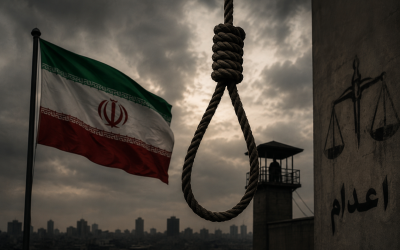 When the Gallows Become the Language of the State: What Iran’s Wave of Executions Reveals
It is not merely the number that demands attention, but the political meaning behind it. When more than 400 people are executed in Iran within just a few months, the central question is no longer about the statistics themselves. Rather, it is whether the country is witnessing the impartial enforcement of criminal law or the systematic use of capital punishment as a tool of governance and social control.
In states confronted with mounting internal crises, justice can gradually shift from serving as an independent institution to functioning as a political instrument. Iran appears to offer a striking example of this dynamic. The sharp increase in executions has coincided with persistent economic hardship, international sanctions, and growing regional and domestic security pressures. While Iranian authorities maintain that all executions are carried out in accordance with the law, the broader political context inevitably raises questions about the role these executions play in maintaining state authority.
No state can be denied the legitimate right to prosecute serious crimes or hold offenders accountable. The concern arises, however, when the death penalty becomes one of the most prominent features of a country’s criminal justice system. Its extensive use inevitably prompts legitimate questions regarding judicial independence, due process, and whether defendants are genuinely afforded the opportunity to defend themselves free from political or security-related pressures.
These concerns become even more significant in light of repeated reports alleging expedited trials, coerced confessions, and restrictions on defendants’ legal rights. Although Iranian officials reject such accusations, the continued criticism voiced by the United Nations and international human rights organizations reflects a deepening crisis of confidence in Iran’s judicial system and continues to shape the country’s international reputation.
Yet this issue extends beyond the human rights debate. It also touches upon the broader question of political stability. History consistently demonstrates that enduring stability cannot be built upon fear alone. Executions may silence dissent temporarily, but they cannot resolve economic decline, political polarization, or widespread public frustration. Deterrence may postpone unrest, but it rarely eliminates the conditions that produce it.
Ironically, governments that increasingly rely on the harshest forms of punishment often believe they are reinforcing state authority. In reality, they may be widening the gap between the state and society. The strength of a nation is not measured by the number of executions it carries out, but by the credibility of its judiciary, the transparency of its institutions, and its ability to address the underlying causes of instability rather than merely punishing their consequences.
Iran today faces a challenge that extends far beyond the number of executions recorded. At stake is the nature of the relationship between the state and its citizens, and whether lasting stability can be achieved through institutional reform and political dialogue rather than through the continued expansion of capital punishment.
The essential question therefore remains: Can the death penalty truly provide lasting security and stability for a nation grappling with profound economic, social, and political challenges? Or does its growing use signal a deeper crisis of governance—one in which the gallows become less a symbol of justice than a reflection of a state’s anxiety about preserving its own authority?