
Iran’s Post-Strike Outlook
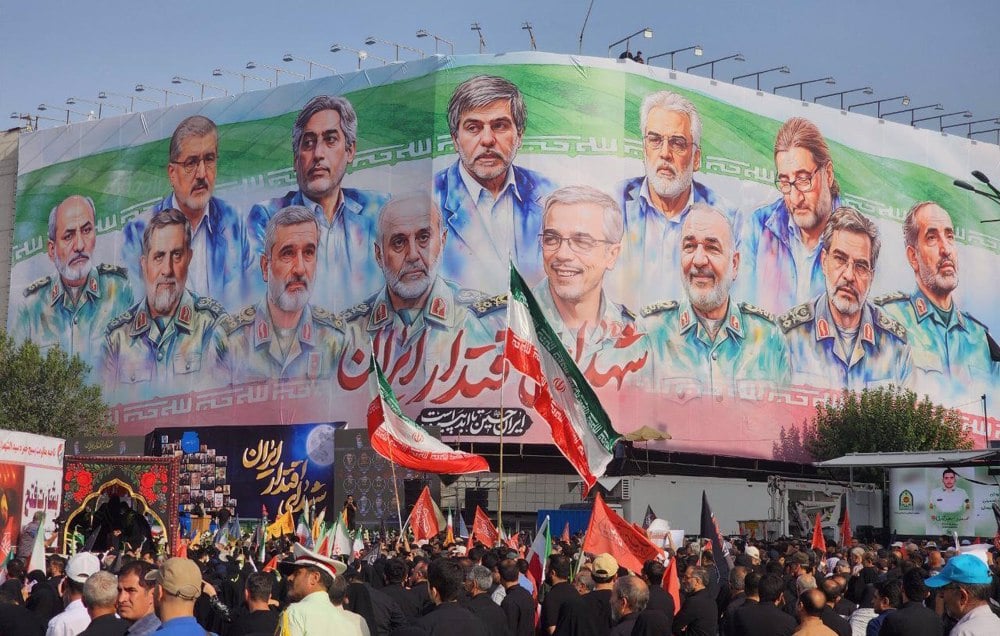
The achievements of the United States and Israel during the 12 Day War with Iran should not only be measured in terms of physical damage. They also likely had an impact on the Iranian leadership’s decision-making calculus across nuclear and non-nuclear domains. The story has not yet been written on both the latter and the former as battle damage assessments and Iranian positions take shape. However, rather than any dramatic change in Tehran—racing for the bomb or forfeiting its nuclear program and aggression altogether—the Iranian leadership is more likely to muddle through.
Unprecedented Action
For the first time in 46 years, the United States launched an attack on Iranian soil targeting its nuclear program. For years, Iranian decision-makers and -shapers believed Americans had the capability to strike Iran militarily, but they doubted Washington had the will to do so. This impression dated back to the earliest years of the Islamic Republic. When Hezbollah bombed the U.S. Marine Barracks and Embassy in Beirut killing hundreds of Americans in the 1980s, Washington never retaliated militarily against Iran despite intelligence suggesting Iranian direction to Hezbollah “to take spectacular action against the United States Marines.” These non-responses continued after a series of terror attacks up through the 1990s, including the Khobar Towers bombing in 1996. As an interagency U.S. intelligence assessment from 1987 noted Tehran “has never been made to pay a significant price for the use of terrorist tactics as a political weapon, a factor that reinforces its willingness to use them.”
An exception to the rule occurred in 1988, when the United States eliminated half of the Islamic Republic’s Navy in response to maritime provocations during Operation Praying Mantis. But thereafter the United States persisted restraining itself from retaliation against Iran after its Shiite militias in Iraq killed over 600 U.S. servicemembers there from 2003-11. Nuclear escalation after nuclear escalation—including enrichment of uranium to 60% purity in 2021—also produced statements, sanctions, occasional covert action, but nothing more. Iranian assassination plots against current and former American officials including President Trump, a former secretary of state, two former national security advisors, and others also resulted in indictments, sanctions, and strongly-worded press releases, but little else.
This was why Iranian officials felt the military option was off the table. U.S. self-deterrence spanning decades had taken it off the table in the minds of some Iranian strategists. This underscores why President Trump’s decision to launch targeted strikes against Iran’s nuclear facilities was such a sea change in American behavior in countering Tehran.
The Iranian establishment will now have to price-in in their decisions the increased likelihood that the United States, at least under President Trump, will be ready to use force to counter Islamic Republic aggression. In the past, when the Islamic Republic has felt the survival of the regime was at stake, it engaged in tactical adjustments to preserve itself. For example, in 2003 after the U.S. government invaded Iraq and the Islamic Republic feared its system was next, Iran shuttered its Amad Program, which was focused on nuclear weapons development. Various aspects of the program continued in different forms in the years since, but the experience demonstrated that when confronted with a scenario where the regime’s existence is threatened, Iran will choose self-preservation.
Operations Rising Lion and Midnight Hammer pose similar existential questions for the Islamic Republic as they telegraphed to the regime the lesson that Israel and the United States have learned: that it is possible to undertake surgical military strikes against targets on Iranian soil to punish the regime for its malign behavior without triggering a broader regional war. Both debunked the myth propagated by the Iranian regime and its sympathizers for years that any kinetic action against Iran would automatically result in devastating, unmanageable consequences. Quite the opposite, in fact. It could be argued that U.S. military action shortened Israel’s Operation Rising Lion and pushed Iran into a ceasefire.
Current Posture
Tehran’s losses—the decapitations, the erosion of its military, the destruction of its nuclear facilities—will trigger a debate in Iran. Some, like Iran’s president, will argue that now is the time for diplomacy to buy quiet and resources to rebuild—as Tehran chose to do after the Iran-Iraq War. Others, particularly in the Islamic Revolutionary Guard Corps (IRGC), will be disturbed over the regime’s losses and counsel a far more provocative future, concerned over the loss of deterrence. They will want to rearm, hit back at Israel and the United States harder, and even pursue the ultimate deterrent: a nuclear weapon.
Iran’s supreme leader, preoccupied by succession and the continuation of the Islamic Revolution, will likely seek to do what he has traditionally done: thread the needle between both camps. Khamenei, always careful and calculating, is unlikely to completely shut the door on diplomacy as such a process offers protection for the regime. So long as it is talking or creating the perception that it is ready to talk, Iran is protecting itself. This is because the diplomatic process itself is a reprieve from pressure—economic, diplomatic, and military—without even having to concede. Iran stanched the bleeding of its currency with the United States last spring by just showing up during discussions in Oman and Italy.
Thus, Ayatollah Khamenei will be loath to entirely abandon this tool. This is why Iranian officials have continued to dialogue with European powers and are already putting out diplomatic feelers—insisting they are committed to diplomacy and peaceful outcomes as a lure to capture the attention of world powers and divide any coalitions that would form against it. Iranians lose nothing by talking. Meaningfully negotiating, is a different proposition for the system. But by not even showing up for talks, they stand to lose everything. If a deal is offered which meets Iranian red lines—maintaining a domestic enrichment program, not dismantling nuclear facilities, continuing research and development, and not touching its missile and drone programs, and terrorist proxies—the supreme leader would consider it.
Khamenei himself in recent speeches emphasized the need for precision in diplomacy—a hint that he has not cast it aside. His advisor Ali Larijani called negotiations “a tactical tool, not a strategic goal” and that Iran should not be in a rush to the table. For now, Iranian officials have been keeping the door open to negotiations with America, while conditioning them on maximalist security guarantees, compensation, and even punishing and disarming Israel.
For Khamenei, this simultaneously appeases external and internal constituencies as a pressure valve. He keeps the idea of negotiations alive, greenlights diplomatic travel to buy time and space, while focusing on rejuvenating the system’s deterrence.
The core pillars of the regime—countering the United States and eradicating the State of Israel—will endure as long as Khamenei or a likeminded successor are in his chair. Iran has already signaled that much of its nuclear positions—especially repudiating U.S. demands for zero enrichment—remain the same when comparing them pre-strikes and post-strikes. Foreign policy advisor to Iran’s supreme leader Ali Akbar Velayati reiterated in July that “if the negotiations must be conditioned on stopping enrichment, such negotiations will not take place.”
Future Outlook
In sum, this means the stand-off between Iran and the West is likely to continue. Khamenei and his system merely surviving the U.S. and Israeli military juggernauts is a declaration of victory for them in their ethos of resistance. The fact that the system preserved itself—warts and all—may reinforce the impression that it could withstand future attacks and even the invocation of the U.N. snapback sanctions mechanism, which expires in October 2025. In fact, Iran’s foreign minister Abbas Araghchi told Le Monde in July, the E3 invocation of the snapback sanctions mechanism would “have the same effect as a military attack.”
Iran is already leveraging the opacity and ambiguity surrounding its nuclear program after the U.S. and Israeli strikes. The International Atomic Energy Agency (IAEA) withdrew its inspectors this month and Iran’s parliament passed a law suspending cooperation with the Agency under the pretext of ensuring the safety of its nuclear facilities. Iranian decision-makers may calculate that they can withhold IAEA access to force the U.S. government and its European allies to drop demands for zero enrichment. This way, if Iran allows resumed IAEA access to its nuclear facilities it will be seen as “moderating”—despite it being under a legal obligation as a member of the Nuclear Non-Proliferation Treaty to offer the IAEA such access—when in fact this would be merely complying with its existing international requirements while conceding nothing new.
Already reports indicate that the E3 are offering Iran an off-ramp: that it agrees to reengage diplomatically, cooperates fully with the IAEA, and addresses concerns over its stockpile of highly enriched uranium (HEU) in exchange for a temporary extension of the UN snapback sanctions mechanism deadline. The Iranians may demand more than just a delay in the invocation of the mechanism—for example sanctions relief—in exchange for such concessions. This is because at a time when Iran has eroded leverage—destroyed nuclear facilities, a neutered proxy and partner network, and losses in its military capabilities—actually negotiating with the United States, IAEA inspections, and the leftover stockpile of HEU will be even more valuable commodities for Tehran to trade away.
In the end, the unprecedented U.S. and Israeli military operations against Iran may increase the system’s risk-aversion, reducing the chances of an immediate dash to a nuclear bomb. Iranian leaders will be seeking to survive the Trump presidency. Khamenei will be treading carefully as now there is a credible American military threat to his regime. But on the fundamentals, there will be more continuity than change.
Jason M. Brodsky is the policy director of United Against Nuclear Iran (UANI).