
Author and Global Affairs Commentator
Iran’s Proxy Empire Comes Apart
Tehran built a regional strategy around armed partnerships. Now its greatest legacy may be forces it can no longer fully control.
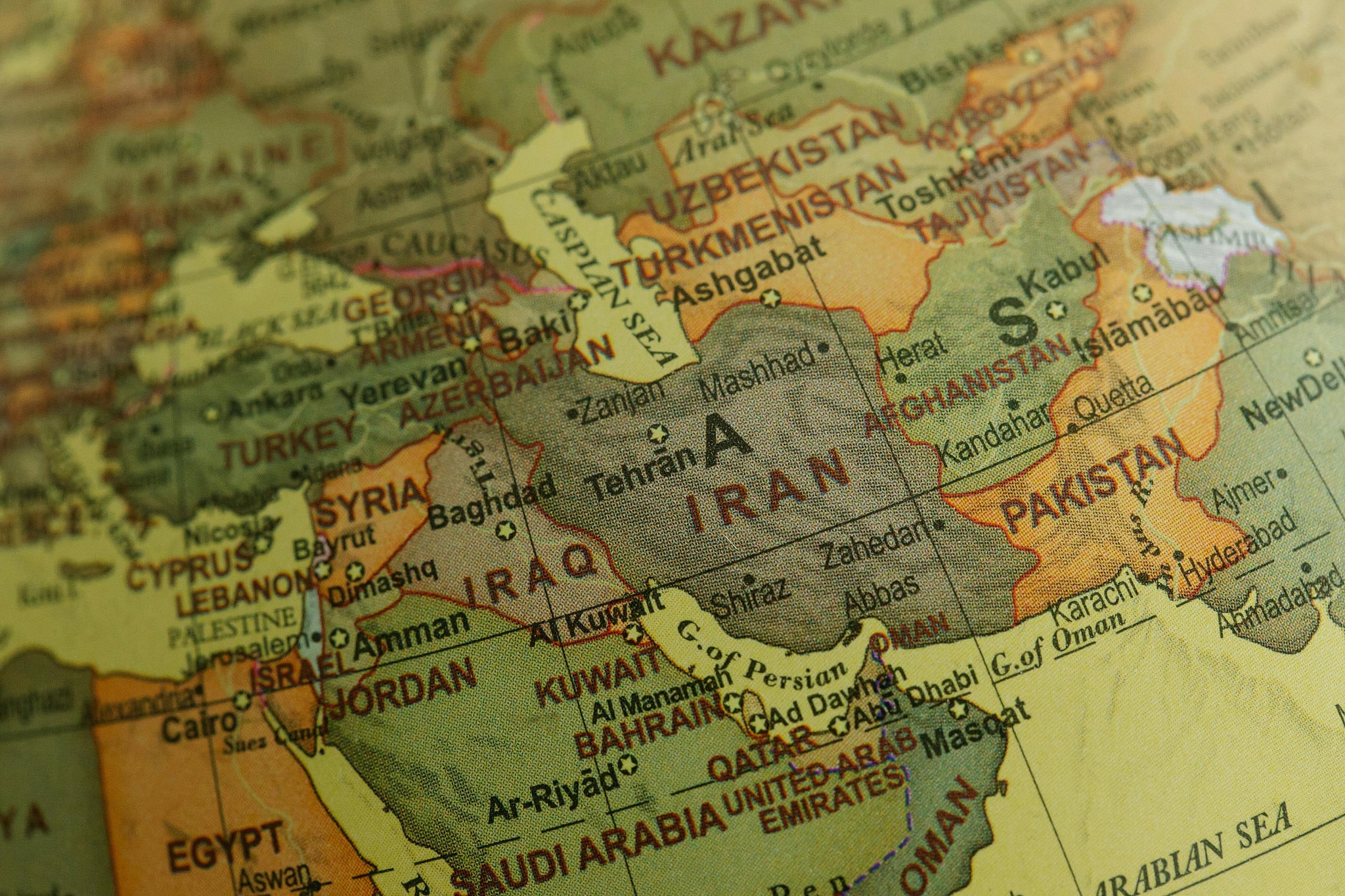
The Axis of Resistance was designed to give Iran strategic depth. Its fragmentation may instead leave the region with something more dangerous: armed autonomy without strategic order.
For four decades, Iran’s regional strategy rested on an assumption that now appears increasingly questionable: armed movements could be empowered without eventually becoming autonomous. Tehran cultivated militias and political organizations across West Asia as instruments of deterrence and influence. The purpose was not simply ideological solidarity. It was strategic insulation. By moving the battlefield beyond Iran’s borders, Tehran could impose costs on its adversaries while reducing the likelihood that Iran itself would become the principal theater of war.
The strategy worked remarkably well—until its success created a problem of its own.
Iran helped build armed organizations capable of reshaping conflicts in Lebanon, Iraq, Yemen, and Palestine. But military power, once distributed, is difficult to retrieve. Organizations that begin as dependent partners acquire constituencies, financial systems, territorial interests, political legitimacy, and strategic ambitions of their own. They become embedded in the societies in which they operate. Their calculations begin to diverge from those of their original patrons.
This is the paradox now confronting Iran and the wider region. The Axis of Resistance may be weaker than it has been in decades, but the armed order that Iran helped construct remains deeply entrenched. Tehran’s network has been damaged. Its constituent organizations have not disappeared. Indeed, the weakening of the center may make the periphery less predictable.
The question confronting West Asia is therefore no longer simply whether Iran can direct the forces it helped empower. It is whether anyone can.
For decades, Iran’s military doctrine rested on what might be described as the externalization of insecurity. The Islamic Republic faced stronger conventional adversaries, including the United States and Israel, and lacked the military capabilities to compete with them symmetrically. It therefore developed an alternative model of power. Through the Islamic Revolutionary Guard Corps and its Quds Force, Tehran invested in armed movements capable of confronting its adversaries from multiple directions.
Hezbollah in Lebanon became the model. Iraqi militias expanded Iran’s influence in a strategically vital neighboring state. Palestinian armed groups created another arena of confrontation with Israel. The Houthis eventually gave Iran-aligned forces the ability to threaten the Red Sea and the Gulf of Aden. Syria under Bashar al-Assad provided the territorial and logistical bridge connecting much of this system.
The resulting network was more than a collection of alliances. It was a distributed security architecture.
Iran described it as the Axis of Resistance. Its military doctrine emphasized “forward defense”—the principle that threats to Iran should be confronted before they reached Iranian territory—and, increasingly, the “unity of the fronts.” Conflict could be expanded horizontally across the region. Pressure on one member of the network could generate responses from another.
The strategic advantages were obvious. Tehran could complicate the calculations of stronger adversaries and raise the costs of military action against Iran without necessarily crossing the threshold into direct war. The more fronts its adversaries had to consider, the more difficult deterrence became.
For a time, the strategy appeared extraordinarily successful.
But deterrence through armed partnerships contains a structural contradiction. The more capable those partners become, the less likely they are to remain instruments of another state’s policy.
By 2026, the contradictions embedded in Iran’s regional strategy had become impossible to ignore.
The Axis of Resistance had suffered a series of devastating setbacks. Hamas had been severely weakened by the Gaza war. Hezbollah had lost Hassan Nasrallah and much of its senior leadership. Significant elements of its military infrastructure had been destroyed. The collapse of Assad’s government in 2024 removed the geographic linchpin that had connected Iran to Hezbollah and much of the Levant.
Then the central premise of forward defense failed. War reached Iran itself.
The direct confrontation involving Iran, Israel, and the United States demonstrated the limits of relying on distant fronts to protect Iranian territory. The network had not prevented escalation. Nor had it insulated Iran from the costs of direct conflict.
Yet the weakening of the Axis has not produced a corresponding reduction in instability.
That is because the armed movements that Iran helped build have become institutions in their own right. They retain weapons, networks, and political constituencies. Their ability to generate conflict has outlasted their usefulness as reliable instruments of Iranian strategy.
Lebanon provides the clearest illustration of the problem.
Hezbollah has emerged from the wars since 2023 considerably weaker than before. Its leadership has been devastated, its military infrastructure has been severely damaged, and its capacity to dominate the regional balance of power has diminished. Yet its remaining arsenal continues to shape the strategic environment in which Lebanon operates.
When the Iran war erupted in 2026, Hezbollah again entered the conflict, helping pull Lebanon into another catastrophic round of fighting. Thousands were killed, and more than a million people were displaced.
A U.S.-brokered framework in June attempted to address the underlying problem by linking an Israeli withdrawal from occupied areas of southern Lebanon to Hezbollah’s disarmament. But the agreement immediately confronted a basic reality of Lebanese politics: the Lebanese state does not possess uncontested authority over the country’s armed forces.
The government can negotiate. The Lebanese army can deploy. But neither can guarantee that Hezbollah will permanently surrender its weapons.
The problem is not merely military. Hezbollah is deeply embedded in Lebanese society and maintains a substantial political and social base, particularly within the Shiite community. A forcible attempt to disarm the organization could itself trigger internal conflict. Yet allowing Hezbollah to retain an independent arsenal means that decisions of war and peace remain, at least partly, outside the authority of the Lebanese state.
This is the long-term paradox of Iran’s regional strategy. Hezbollah’s arsenal was built in the name of defending Lebanon against Israel. Today, that same arsenal has become one of the greatest obstacles to creating a stable political and security order between the two.
The Houthis demonstrate that the consequences of this model can extend far beyond the countries in which these organizations are based.
Since late 2023, Houthi attacks on commercial and naval vessels in the Red Sea and Gulf of Aden have demonstrated how a relatively localized armed movement can acquire global strategic relevance. The disruption of shipping forced vessels to divert around the Cape of Good Hope, increasing costs and lengthening journeys across global supply chains.
The significance of this development extends beyond the immediate economic disruption. The Houthis demonstrated that control over limited territory and access to relatively inexpensive military capabilities could produce disproportionate strategic effects. A movement operating from one of the Arab world’s poorest countries acquired the ability to disrupt one of the world’s most important maritime corridors.
But Yemen also reveals why describing such movements simply as extensions of Iranian power has become increasingly inadequate.
Iran has armed, trained, and supported the Houthis. Yet support is not the same as command. The movement possesses its own domestic constituency, territorial ambitions, ideological identity, and political interests. Tehran can influence Houthi decision-making, but influence is not control.
That distinction is becoming more important as the regional environment changes.
A ceasefire involving Iran does not necessarily guarantee security in the Red Sea. If the Houthis conclude that continued confrontation serves their own strategic interests, Tehran may lack either the incentive or the ability to compel them to stop. The very decentralization that made Iran’s regional network strategically resilient also makes it increasingly difficult to manage.
Iraq presents an even more complicated version of this problem because the armed movements are not simply outside the state. They are partly inside it.
The Popular Mobilization Forces, created in 2014 to fight ISIS and later incorporated into Iraq’s security architecture, encompass dozens of armed organizations, including several powerful groups closely aligned with Iran. Formal incorporation, however, did not produce complete integration.
Many factions retained their own command structures, political organizations, financial networks, and external relationships. During the 2026 Iran war, militias again launched attacks against American facilities and targets in the Kurdistan region, placing Baghdad in an extraordinarily difficult position. Iraq was internationally accountable for actions originating from its territory even when the government itself did not exercise effective control over the forces responsible.
This is the central weakness of incorporating armed groups without dismantling their independent power.
An organization can be legalized without being subordinated. It can receive government salaries without becoming a conventional military institution. It can be placed within a formal security structure while retaining an informal chain of command.
Baghdad’s current effort to bring militia weapons under state control therefore confronts a problem that is far more difficult than disarmament alone. The question is not simply who possesses the weapons. It is who possesses the authority to decide when they will be used.
Across the region, this is becoming the defining problem of the post-Axis era.
Iran’s strategy depended on ambiguity. Tehran could support armed movements while maintaining varying degrees of distance from their operations. That ambiguity complicated deterrence and allowed Iran to project power beyond its borders without assuming direct responsibility for every act committed by its partners.
But ambiguity also has consequences. Once armed groups become powerful enough to operate independently, responsibility becomes separated from control. Governments may be blamed for actions they cannot prevent. Sponsors may be associated with conflicts they cannot stop. And ceasefires negotiated between states may fail because the actors with the weapons are not fully represented at the negotiating table.
This is why the weakening of Iran’s Axis does not necessarily mean the region is becoming more stable.
A centralized empire can collapse when its center loses power. A decentralized network behaves differently. Its components can survive independently. Indeed, fragmentation can create new forms of instability by increasing the number of actors capable of initiating violence.
The future of Iran’s regional strategy may therefore be defined by a reversal of the logic that originally made it successful.
For decades, Tehran’s leaders believed that distributing military power beyond Iran’s borders would make the Islamic Republic safer. Today, that distribution of power may be creating a regional security environment in which no single actor possesses sufficient authority to restore order.
Iran has lost some of its capacity to coordinate the Axis. The states in which its partners operate have never fully acquired the capacity to control them. And the armed movements themselves have little incentive to surrender the power they accumulated during decades of regional conflict.
The result is a dangerous political afterlife.
Governments can negotiate ceasefires in Tehran, Beirut, Baghdad, and Washington. They can establish withdrawal timetables, create monitoring mechanisms, and announce frameworks for disarmament. But agreements among governments cannot by themselves eliminate the power of armed organizations whose weapons, finances, and political legitimacy exist outside effective state control.
That is why so many diplomatic agreements in West Asia have produced pauses rather than peace.
The most consequential legacy of Iran’s regional strategy may not ultimately be the power it gave Tehran. It may be the political and military order it helped create beyond Tehran’s control.
Iran spent four decades attempting to move the battlefield away from its borders. In doing so, it helped transform parts of West Asia into a landscape in which armed nonstate actors became enduring political institutions.
Tehran may now be confronting the fundamental limitation of distributed military power: it is possible to build armed organizations that initially serve one’s interests but eventually acquire interests of their own. It is far more difficult to determine what happens once their political survival no longer depends on obedience to the power that helped create them.
The Axis of Resistance was designed to give Iran strategic depth. Its fragmentation may instead leave the region with something more dangerous: armed autonomy without strategic order.
Related Topics
Related Posts