The views expressed herein are solely mine.
Iran’s War on the Bahai People
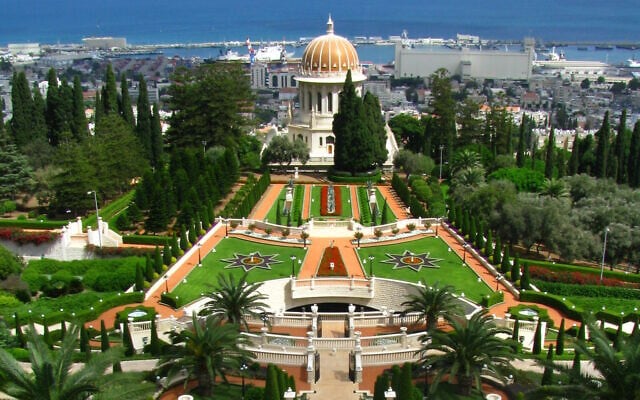
View of the Bahai Gardens terraces in Haifa, from above, 2008. (Wikipedia/Danny Lyulyev/CC BY-SA)
When the Ayatollahs dictatorship feels weak, it arrests the quiet. And that is what they did last week against 32 Bahai individuals last week.
That’s the pattern. A Bahai family is dragged from its home, the word “Israel” is hissed like a curse, and raw repression is repackaged as national security. Not because the Bahai community poses a threat—but because it doesn’t.
The Bahai faith was born in Persia, yet the Islamic Republic treats its followers as a permanent internal enemy. Since 1979, they’ve been erased by design: locked out of universities, pushed out of work, surveilled, arrested, suffocated slowly enough that it feels administrative rather than brutal. This isn’t excess. It’s policy.
The Israel accusation is Tehran’s favorite shortcut. Because the Bahai World Centre sits in Haifa, geography becomes guilt. Faith becomes espionage. Prayer becomes treason. It’s crude—and it works—because authoritarian systems don’t survive on truth, only fear.
Sociologically, this is how brittle regimes endure. They don’t crush everyone at once. They start with minorities who lack power, weapons, or allies. Arrest the quiet first, and the rest learn the lesson. Obedience keeps you safe. Identity puts a target on your back.
Geopolitically, the timing is never random. When sanctions bite, protests simmer, or regional ambitions wobble, Tehran turns inward. Israel becomes a domestic excuse. Every failure needs a spy.
This won’t stop. Expect more arrests, louder accusations, tighter suffocation—especially of women and youth. Reform is dangerous. Persecution is easy.
In the end, the image is simple: a regime so afraid of belief that it must criminalize the Bahai to feel strong. That isn’t power. It’s decay.
Related Topics
Related Posts