


Is It Time for American Jews to Plan an Exit Strategy?
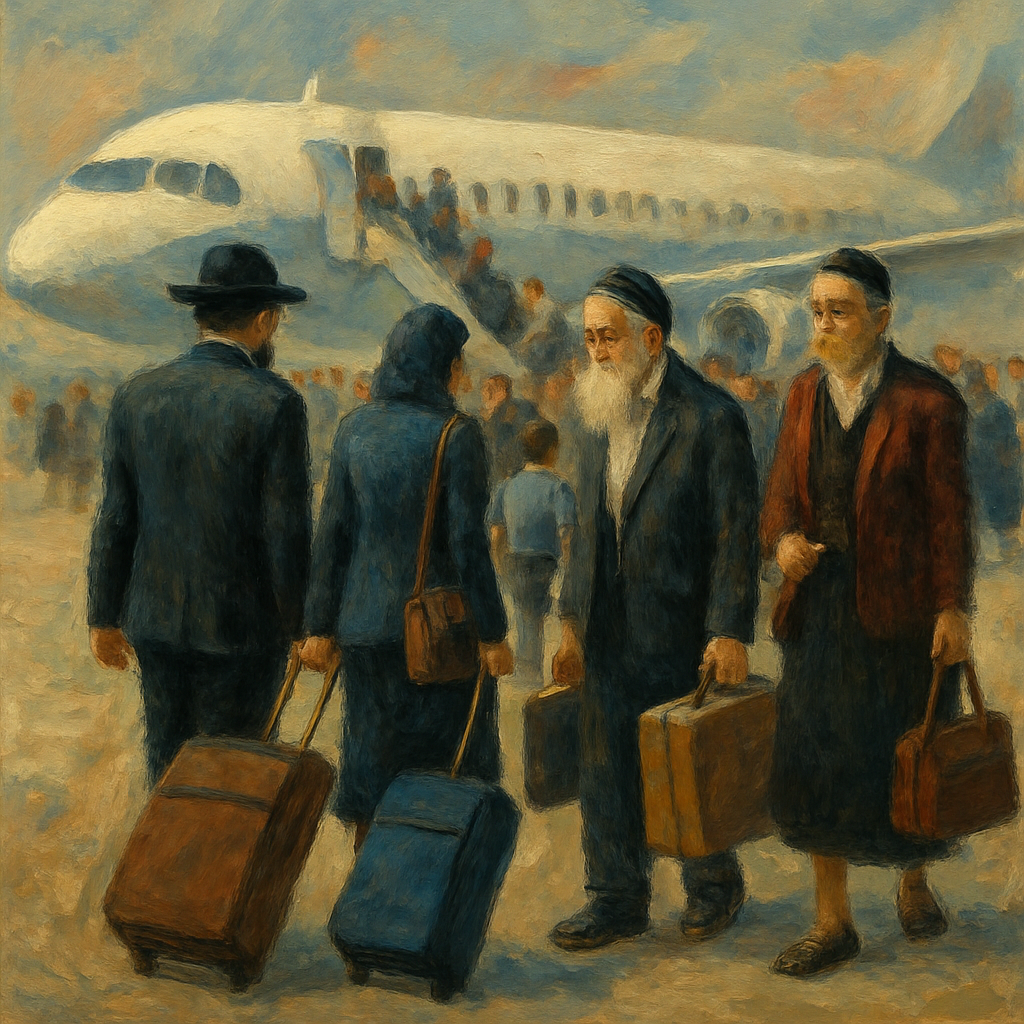
Is It Time for American Jews to Plan an Exit Strategy?
Record-high antisemitic incidents are America’s bellwether alarms.
For decades, American Jews believed they had found a safe home, woven into the fabric of the nation and buffered by lessons of the Holocaust. But the alarms are ringing again—louder than ever. In 2024, antisemitic incidents in the U.S. hit their highest level since records began. From torch-lit chants in Charlottesville to synagogue shootings and Gaza-justified attacks on Jewish schools, the question once unthinkable is now whispered in kitchens and community centers: Is it time for American Jews to plan an exit strategy? If history is any guide, these record numbers are not just a Jewish problem—they are a warning siren for America itself.
To understand where we are, we need to see how antisemitism has shifted across American history—how old hatreds have mutated into new forms, fueled by polarization, grievance politics, conspiracy theories, and, most recently, the invocation of Palestinian victimhood as moral license for violence.
Old Hatreds, New Forms
Antisemitism is not new to America. In the 19th and early 20th centuries, Jews were excluded from neighborhoods, universities, and professions, while stereotypes of greed and dual loyalty circulated freely. Polls in the 1930s showed most Americans held negative views of Jews, and populist demagogues like Father Coughlin broadcast hatred to millions. This was traditional antisemitism—religious prejudice, cultural suspicion, and economic scapegoating—long before Zionism or the State of Israel.
The Holocaust briefly changed the climate. Outrage at Nazi atrocities made antisemitism shameful, and from the 1950s through the 1990s prejudice receded as Jews became integrated and respected. But antisemitism never vanishes; it adapts to new climates.
Polarization and Grievance
The election of Barack Obama in 2008 marked a turning point. For many, his victory symbolized progress. For others, it triggered anxiety about cultural change. Conspiracies about his birthplace and religion flourished, while Tea Party populism recycled older tropes about hidden elites and bankers. The 2008 financial crisis revived scapegoating patterns, and once again Jews were accused of manipulating the economy.
Polarization hardened politics into an “us versus them” struggle. Grievance became identity, and antisemitism fit naturally into this framework. On the right, Jews were cast as “globalists” undermining sovereignty. On the left, Jews were associated with Israel and portrayed as oppressors. Different vocabularies, same result: suspicion and blame.
The Trump Era: Fear as Currency
If the Obama years opened the door, the Trump years blew it wide open. Donald Trump’s politics thrived on fear and grievance. His rhetoric portrayed America as besieged by immigrants, elites, and cultural decline. He did not create antisemitism, but his style normalized suspicion and emboldened extremists. Charlottesville in 2017—with chants of “Jews will not replace us”—was only the most visible sign.
Trump’s era showed how opportunistic leaders could profit from fear and division. As long as politics is fueled by grievance, antisemitism will flourish.
Victimhood as Moral License
The Hamas attack of October 7, 2023, and the devastating Gaza war that followed, added another twist. Around the world, Palestinians came to embody pure victimhood. Sympathy was natural, but it often came with a dangerous corollary: the justification of terrorism as “resistance.”
In this framing, violence was sanctified. That shift gave some individuals a sense of license to extend hostility beyond Israel to Jews everywhere. American Jews—regardless of politics or views on Israel—became stand-ins for the state.
The results were stark. Most antisemitic incidents in 2024 were tied directly to Israel or Zionism. Attacks and threats invoked Gaza as justification. Palestinian victimhood, far from only eliciting empathy, became a weaponized narrative that excused violence against Jewish schools, synagogues, and community centers in the U.S.
This does not mean criticism of Israel is antisemitic. But when anger at Israel morphs into collective blame of Jews, or when terrorism is excused and celebrated, anti-Zionism merges with antisemitism.
Conspiracy’s Accelerant
Overlaying all this is the conspiratorial culture of the internet. Movements like QAnon, the “Great Replacement” theory, and talk of “global elites” borrow directly from centuries-old antisemitic imagery: Jews as puppet masters, media manipulators, orchestrators of decline. Once fringe, these narratives now spread instantly on social media, amplified by outrage algorithms.
The Holocaust once made antisemitism shameful. Today, in a grievance-driven, conspiracy-saturated culture, it has been normalized again. And the invocation of Palestinian victimhood has lowered the bar further, providing moral cover for violence.
Exit Strategy or Renewal?
So, should American Jews plan an exit strategy? History warns that when antisemitism spikes, it signals not just a threat to Jews but a society in crisis. The lesson of Charlottesville and October 7 is that when fear, grievance, and conspiracy dominate public life, no community is truly safe.
The better strategy is not exit but transformation. America needs courageous leaders who act as healers, not opportunists—leaders who refuse the easy wealth and power that come from stoking fear and blame. Such leadership could turn today’s record-high antisemitic incidents into alarms that forced the nation to change course.
If that leadership fails to emerge, the whispered question of an exit strategy will grow louder, not only among Jews but among all who fear the erosion of democracy itself. The stakes are larger than one community’s safety. They are about whether America chooses healing over fear, courage over grievance, and unity over the easy profits of division.
