Is Mount Herzl the right place for the Herzl family?
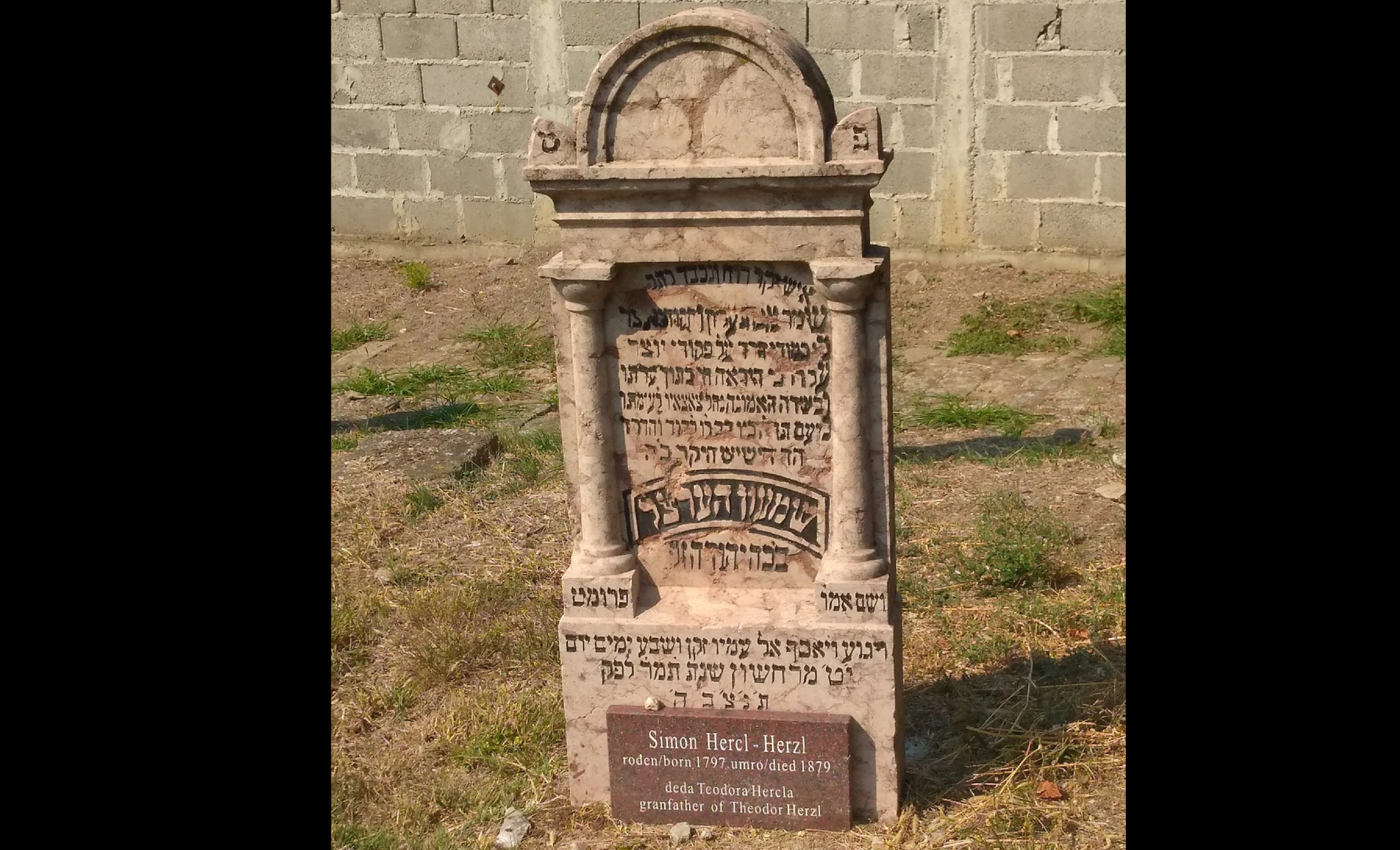
The grandparents of Zionist visionary Theodore Herzl, Simon Leib and Rivka Herzl, are to be buried today in a state ceremony in Jerusalem on the mountain that bears their family name. This touching Zionist moment par excellence takes place a week after Simon and Rivka’s bodies were exhumed from their resting place in the cemetery of Zemun, which is today a suburb within metropolitan Belgrade – the capital of Serbia. Surprisingly, the potentially sensitive issue of raising the dead in a foreign land to bring them to Israel seems to not have raised an ounce of protest from the Serbian national authorities or the local Jewish community.
As with Sherlock Holmes, the fact that the dog did not bark in this case speaks volumes about the ongoing development at the highest levels of international relations between Israel, Serbia and their sometimes loud and sometimes silent partner, the United States. It also perhaps inadvertently reveals something about Jewish identity in the communities of the former Yugoslavia today, survivors of not only the Holocaust, which ravaged the region, but also of the internecine warfare that tore apart a once reasonably powerful and respected country.
The Zemun connection
First, to the facts!
The Serbian town of Zemun has an equal (if not greater) claim to being the birthplace of modern Zionism as compared with Vienna, Budapest or any other great European Jewish cultural center. It was the home for over 40 years of Rabbi Yehudah Hai Alkalai, who actively promoted his ideas for the non-messianic revival of the Jewish State from what at the time was an outpost of the Austro-Hungarian Empire. His ideas to form what became the World Zionist Congress and the Jewish National Fund can be traced down to Theodore Herzl via his grandfather, Simon Leib, who lived in Zemun at the same time as Rabbi Alkalai and even blew the shofar in his synagogue. It is known that the young Theodore was close with his grandfather and even journeyed from Budapest to visit him in Zemun in the summers as a youth.
Unfortunately, not much remains of the old Jewish Zemun. Most of it was destroyed during World War II and the Holocaust. The decimation of the community meant that the one surviving synagogue, located at 5 Rabina Alkalaja street, was rented out as a rock club and then as a traditional Serbian restaurant.
Besides the streets renamed in the last decade after Rabbi Alkalai and Theodore Herzl, the one real clue to the Jewish significance of the place was the Jewish cemetery, the resting place of Simon Leib and Rivka Herzl. And it is this cultural capital that the Jewish community and Serbian government are willingly parting with!
Instead of seeking to make this historically significant location a tourist destination for Jews and Israelis around the world, a secular Uman or a second Dohány Street Synagogue, they willingly donated it to Israel. It is easier to understand the decision of the local Jewish community, so we will seek to explain it first.
Why the local Jewish community agreed
There were two Jewish bodies involved with the decision to move the Herzl grandparents’ bodies to Israel: Savez JOS, the Jewish federation that represents the interests of all the Jewish communities in Serbia, and the local Zemun Jewish community. As one might expect, the leaders of the two Jewish organizations are often quarreling. But in the end, they both agreed on this decision.
“Savez JOS was unanimously in favor,” Daniella Danon, Secretary General of Savez JOS, told me over the phone, discussing the decision. “All the family is together now on their soil in the Promised Land. I’m sure that they wished to be there. I understand why Israel wanted it to be there for closure. It was meant to be like that. I think they belong to the Holy Land.”
When I asked the president of the Jewish Community of Zemun why he agreed to the move, he echoed that logic. “We wanted to honor the wishes of Theodor Herzl and the WZO [World Zionist Organization],” said JCZ President Nenad Fogel. “I don’t think we have lost any part of our heritage. The monuments remain where they were.”
As the quotes might suggest, the small organized Jewish community in Serbia identifies closely with Israel and Zionism. That this is so should come as little surprise to people familiar with the regional history. When Yugoslavia fell apart in the 1990s and NATO bombed the country, many Jewish families moved to Israel for a few years to wait for things to calm down. They received the assistance of Zionist organizations in making aliyah to Israel. Numbered among the beneficiaries was even Marko Djuric, the current Serbian foreign minister, who presided over the handover of the Herzl family remains to Israeli authorities at the Belgrade airport last week. He even spoke to those in attendance in Hebrew.
This history has led the Serbian Jewish community to maintain close ties to Israel and Zionist organizations, perhaps to a greater degree than Jewish communities in other parts of Europe.
Serbia’s strategic calculus
What is less self-evident than the Jewish community’s cooperation is the avid cooperation by the Serbian state in exporting part of the country’s cultural heritage. To comprehend this, one must look at recent relations between the Netanyahu, Vucic and Trump administrations.
One of the grand foreign policy goals of the Vucic government has been to rebuild Serbian-American ties from the nadir of the Milosevic era. And it’s not as grand a goal as it looks at first glance. Serbia and the US were once close allies. During World War I, US President Woodrow Wilson ordered the Serbian flag flown from the White House in recognition of the major sacrifices the Serbian nation made for the Allied cause – the first time a foreign flag ever flew over the White House. In the beginning of the 20th century, American public opinion was quite favorable towards Serbia and Serbs.
It was during this period that the Serbian government-in-exile became the first country to recognize the Balfour Declaration, which established the purpose of creating a Jewish home in Palestine. Coincidentally or not, it was the Serbian diplomatic representative to the US, Dr. Milenko Vesnić, who wrote the letter of recognition addressed to Jewish Serbian Zionist leader David Albala. The latter had been dispatched to the US by the Serbian government to drum up support from the American Jewish community.
Over the past decade or more, there has developed a (possibly correct) belief in Serbian policymaking circles that improving ties with Israel is an effective backdoor means to strengthen ties with Washington. This found expression in 2020 with the signing of the Washington Agreement at the Trump White House by Vucic and Kosovar Prime Minister Avdullah Hoti, normalizing economic ties between Serbia and Kosovo. As part of the agreement, Muslim Kosovo agreed to open an embassy in Jerusalem in exchange for Israeli recognition of their independence. Serbia agreed to eventually move its embassy in Israel to Jerusalem as well. The Israeli aspect to the agreements, which closely followed the Abraham Accords, was viewed as an oddity at the time and something distinctly Trumpian.
However, last week’s announcement of the transfer of the Herzl family’s remains immediately followed the official announcement of the strategic reset in US-Serbia relations. The two nations entered into a “strategic dialogue” on July 17 with the aim of bringing Belgrade closer to Western supply chains, reducing Russian and Chinese leverage, and expanding cooperation in energy, defense, and advanced technology. As part of the new dialogue, Serbia signed at NASA headquarters the Artemis Accords, a commitment of like-minded nations committed to the peaceful, transparent, and responsible exploration of space. Israel is another one among many countries that previously signed the accord.
The Djuric factor
It’s probably also not an accident that the strengthening of ties between Serbia and the US and Israel and Serbia occurred after the appointment of Marko Djuric as foreign minister. His Israel ties aside, he also served as Serbia’s ambassador to the US prior to his current role.
Is it a coincidence that Serbian foreign minister Marko Djuric is racking up points with the US and Israel ahead of the upcoming 2027 Serbian elections (when President Vucic will be ineligible to run)? It could explain why he was so eager to part with the Herzl family’s remains in a formal ceremony in front of national and Israeli media.
What this means for Serbia’s balancing act
Perhaps the most interesting question: How do Serbia’s newer ties with Israel and Washington fit with its traditional ties with Russia and declared goal of joining the EU? Is it all a part of Serbia’s historic foreign policy of balancing powers? A discussion of that will have to wait for a subsequent article.