
Middle East Analyst
Is the Pentagon Inspector General a Coward and Traitor?
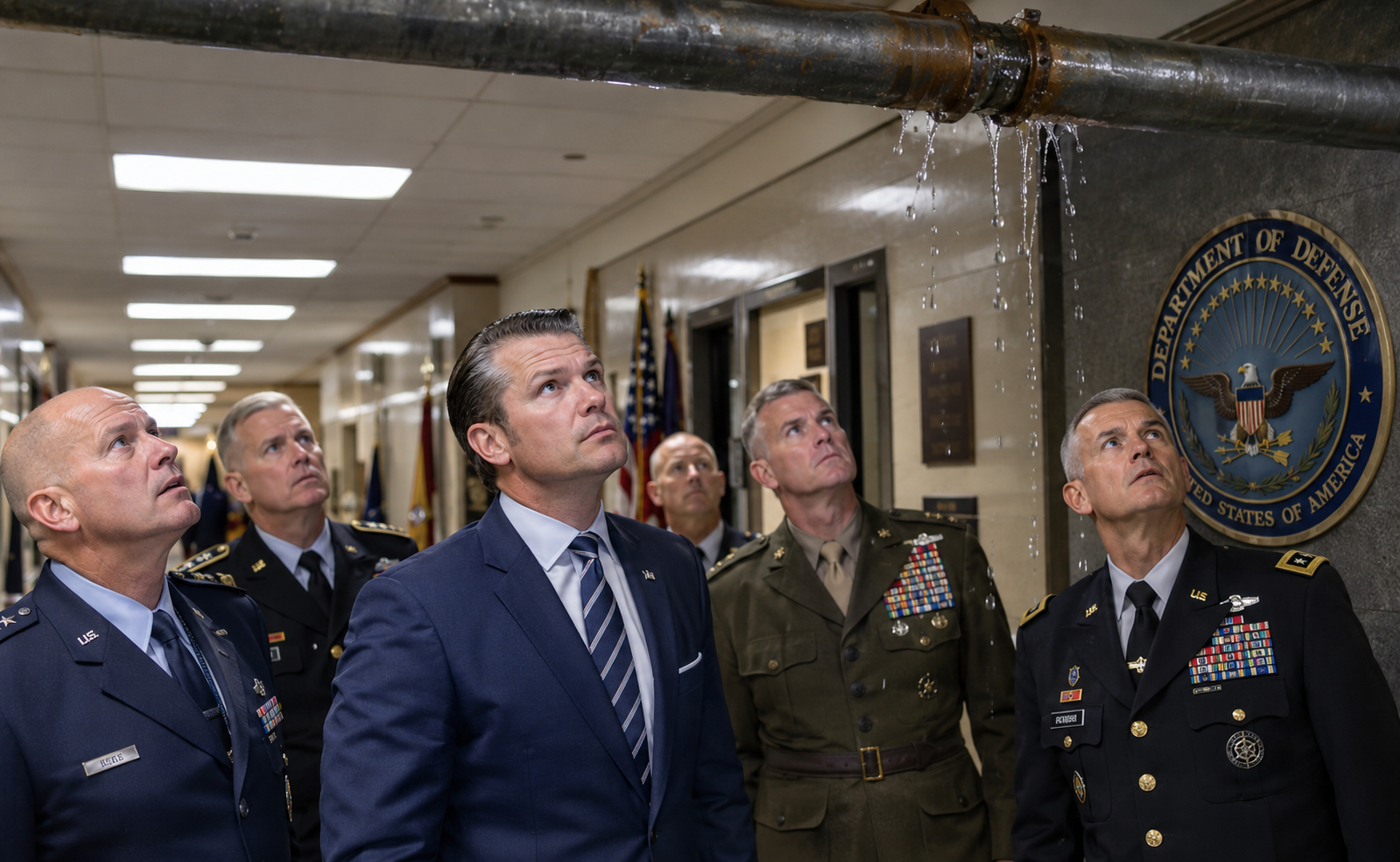
by author (AI)
President Trump took to Truth Social this week to denounce “cowards and traitors” who, he said, were falsely claiming the United States is running low on munitions. “We have more munitions than we could ever possibly think of using,” he wrote, dismissing the reports as fake news. He did not name who he meant.
The timing makes the target hard to mistake, even without a name attached. Days earlier, the Department of Defense’s Inspector General released a report finding that the war with Iran had produced “strategic inventory shortfalls” and exposed bottlenecks in the industrial base’s ability to resupply munitions, after the Pentagon spent more than $22 billion on munitions between February and June. If the President’s post was aimed at that report, it’s aimed at the wrong target, and the distinction matters more than it might appear.
The IG report is not a leak. It exists because Congress, through statute, built the Inspector General into the Department precisely so that its assessments would not depend on the comfort of the people it evaluates. Congress had pushed for this specific oversight for months. The report went through the Department’s own clearance process and was released as an official government document, over the signature of an office that answers to Congress as well as to the Secretary of Defense. Whatever the President thinks of its conclusions, disputing them is a different act than accusing the office of treachery.
The leaks are a separate matter, and they came first. Reporting earlier in the year, before the IG report existed, described the US warning allies about shipment delays and raised the shortage question publicly. Trump’s response to that reporting was not to call it treasonous. It was to call it fake news, “totally inaccurate,” and to say the leakers should be prosecuted. That claim carries its own contradiction. Prosecution under the Espionage Act requires that classified information actually was disclosed. A story that is simply false, as the President described it, reveals nothing prosecutable, because there is nothing true and classified in it to protect. Either the reporting was accurate, in which case the IG’s later findings vindicate it, or it was fabricated, in which case there is no secret to have leaked and no case to bring. The two positions cannot both be true, and the administration has now taken both.
Behind this particular dispute sits an older and more durable one: the leak double standard. For decades, senior officials have disclosed classified information with almost no legal consequence, while lower-ranking personnel who do the same face the harshest tools the government has. The current administration is not exempt from this history, and neither are its predecessors or its most prominent critics. Trump himself faced federal charges for retaining classified documents at Mar-a-Lago after leaving office, a case a judge later dismissed on separate legal grounds without resolving the underlying facts. Joe Biden was found to have kept classified material from his time as Vice President in his home garage, a matter a special counsel investigated and ultimately declined to prosecute. Hillary Clinton faced years of scrutiny over classified information that passed through a private email server as Secretary of State, and was not charged. General David Petraeus, then director of the CIA, shared classified notebooks with his biographer and lover; he was not prosecuted at all, pleading instead to a single misdemeanor mishandling charge. Each case ended without serious legal consequence for a senior figure, in sharp contrast to the prison sentences handed to lower-level leakers like Reality Winner, Daniel Hale, and Chelsea Manning. Rank and political standing have shielded senior officials from the same law that has been applied with force against everyone below them.
What is different now is not the double standard itself but a second factor layered on top of it: a widely held perception, among active and retired officers and among members of Congress from both parties, that the chain of loyalty within the Pentagon has been blurred. Since taking office, Defense Secretary Pete Hegseth has removed more than two dozen senior generals and admirals, including the Army’s own Chief of Staff, dismissed years before his term was due to end. He also fired the top judge advocates general of the Army, Navy, and Air Force, the very lawyers responsible for advising commanders on the lawfulness of orders in real time. At a mass gathering of generals, admirals, and senior enlisted leaders at Quantico, Hegseth told the assembled officer corps that “personnel is policy,” and drew a distinction between officers who had merely carried out the previous administration’s lawful policies and those he judged to have absorbed too much of that administration’s culture to be trusted with his own. Retired officers, legal scholars, and a bipartisan group of members of Congress have all responded by restating, publicly, a principle that should not need restating: that the oath service members take is to the Constitution, not to any individual officeholder.
None of this proves what motivated any particular leaker in the munitions case. No reporting has identified who disclosed the shortage information or why. But the mechanism connecting climate to conduct doesn’t require that proof to be sound. An official’s willingness to defer to the chain of command rests on an underlying trust that the chain itself operates within constitutional bounds. When that trust is in question, at the institutional level, not as a matter of speculation but as a matter of public record, the threshold for going outside the chain to raise a national security concern plausibly drops. That is a different and more consequential problem than the old leak double standard alone. The double standard has always rewarded senior officials for freelancing with classified information while punishing everyone beneath them for doing the same. What may be emerging now is a population that used to be reliably deterred by that risk, no longer being so, because it has concluded the guardrails it once trusted to hold no longer can be assumed to.
Calling the Inspector General a coward and traitor, if that is what the President’s post meant, gets the target backward. The office did exactly what Congress built it to do. The people worth asking harder questions about are the ones whose actions, over the preceding year, gave officers inside the building reason to doubt whether the institution’s loyalty still runs where the oath says it should.
Related Topics
Related Posts