International Speaker, Author, Educator, Tour-Guide, Artist, Zionist
Isaiah: The Prophet Behind the Scroll
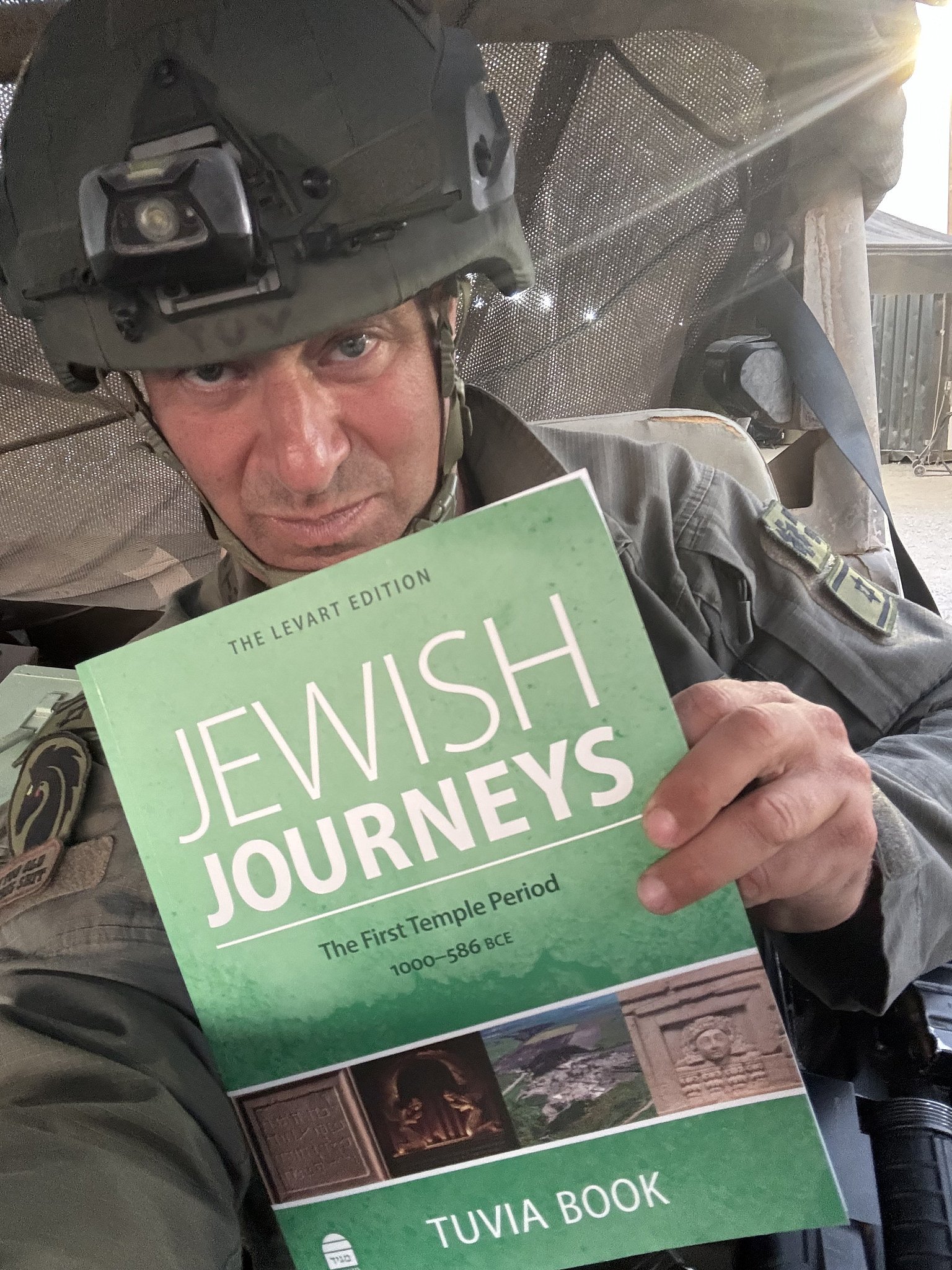
The author/soldier with his book "Jewish Journeys, The First Temple Period" (Koren: 2025). Photo ©️ T. Book, 2026
The Israel Museum in Jerusalem is concluding a remarkably successful exhibition, “A Voice from the Desert: The Great Isaiah Scroll.” For the first time in almost 60 years, the public has seen the complete scroll, more than seven meters long and spanning 54 columns, which corresponds fully to the canonical book of Isaiah. It is the world’s oldest intact biblical manuscript discovered to date. Yet behind the emotion of reading Hebrew words that remain relevant today, one question lingers: who was the man behind the scroll?
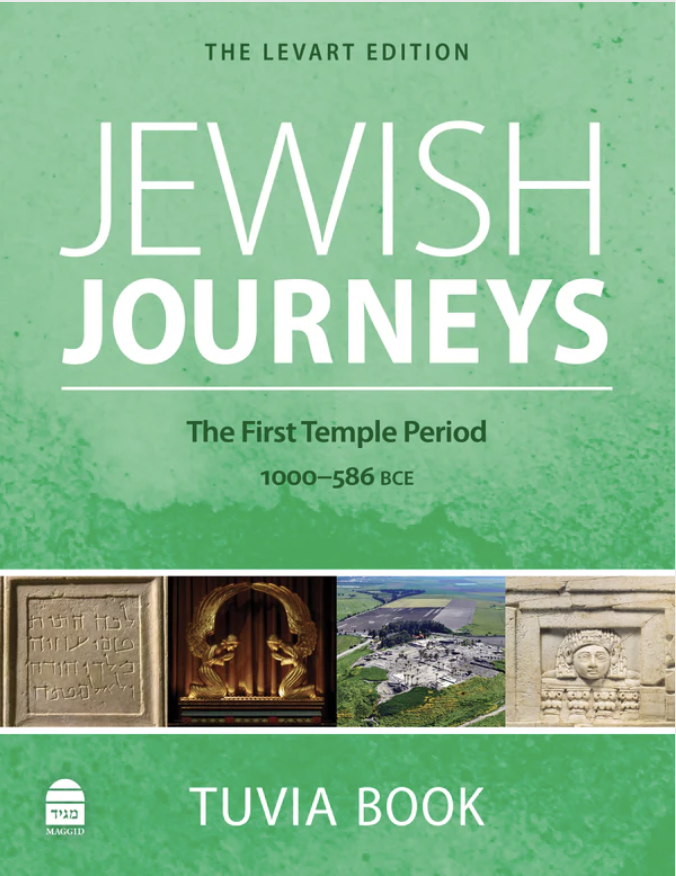
In my book Jewish Journeys: First Temple Period, 1000-586 BCE (Koren, 2025), I explore both the man and the myth. Our Jewish identity rests on knowledge of our history, our traditions, and our connection to Israel. That knowledge is a source of strength, and we need to restore pride and awe in it, recognizing that being a Jew is a privilege, not a burden. As President Herzog wrote of the book, we need “to foster ties of connection with our past, to enrich our Jewish present.” Our Rabbis put it simply: “Know from whence you come and to where you are going.”
The Prophet and His Times
Isaiah son of Amoz, the first “literary prophet,” was active from roughly 740 to 686 BCE, serving under kings Uzziah, Jotham, Ahaz, Hezekiah, and possibly Manasseh. He wrote some of the most eloquent and historically influential poetry in the Hebrew Bible, and he was no mere poet. Rabbi Lau describes a political thinker who hovered around the royal palace for decades, seeking to challenge what he saw as the government’s dangerous inclinations. Simon Sebag Montefiore noted that his “incandescent poetry” first expressed the apocalyptic yearnings that run through Jerusalem’s history to this day.
His ministry falls into three periods, each with its own message.
The Early Years: Seeing Behind the Façade
Under Uzziah, Judah enjoyed material, territorial, and economic success. Isaiah saw past it. Like his contemporary Amos in the northern kingdom, he condemned a prosperous society hollow at its core: the poor were neglected, wealth was unevenly distributed, and religious hypocrisy was rampant. “What need do I have of all your sacrifices?” he asks in God’s name. “Cease to do evil. Learn to do good. Devote yourselves to justice.”
Isaiah ridiculed those who punctiliously observed ritual while ignoring ethics, and he warned of the consequences. His plea fell on deaf ears.
The Middle Years: The Unpopular Pacifist
During the Assyrian threat under King Ahaz, Isaiah took an extremely unpopular stance. He urged Ahaz not to ally with Tiglath-Pileser III, predicting that the invading kings of Israel and Damascus would burn out like “two smoking stubs of firebrand.” Judah’s only path to security, he insisted, was faith in God rather than reliance on tyrants. He warned that those who spurned the gently flowing waters of Siloam would be engulfed by the mighty Euphrates, the king of Assyria, like a flash flood.
His advice was ignored by Ahaz and later, partially, by his son Hezekiah, who made a Faustian bargain with Assyria. Israel was destroyed and Judah emasculated.

The Latter Years: The Prophet of Consolation
In his final phase, Isaiah, or the author of what scholars’ call “Second Isaiah,” becomes a beloved figure of consolation. “Comfort, oh comfort my people,” opens chapter 40, assuring Jerusalem that her sentence has been served. The prophet offers expectation and patient hope, envisioning Judah emerging from the smallness of its political power into a spiritual role as “a light to the nations,” and Jerusalem as a “city of justice.”
His most famous vision imagines a day when “the wolf will live with the lamb,” when nations “shall not lift up sword against nation, neither shall they learn war anymore,” and the earth will be filled with the knowledge of the Lord as the waters cover the sea.
The Legacy
There is an irony here. The Jews had mocked and ignored the prophets, including Isaiah, Jeremiah, Ezekiel, and Zechariah. Only in the adversity of exile, asking why disaster had befallen them, did they grasp the truth of those warnings. The prophets’ words then took on soul-stirring significance, and exile forged a strong group identity.
Exiled Jews understood that three things would let them survive, thrive, and ultimately return: attachment to their faith, their community, and their homeland. The belief in a return to Jerusalem, the renewal of the Temple, and independent Jewish life in the Land of Israel, together with a yearning for the Messiah, became central to Jewish life everywhere.
Centuries later, early Zionists eagerly seized on Isaiah’s prophecies of comfort and return. They became a symbol of national revival, the “hope of 2,000 years” of becoming a free people in our land, the land of Zion, Jerusalem.
As visitors file past the Great Isaiah Scroll, they are looking at more than an ancient manuscript. They are meeting a prophet who demanded justice over ritual, faith over political expedience, and hope over despair. His voice from the desert still speaks to us.
–-
Dr. Tuvia Book currently serving on IDF reserve duty. He is the author of Heroes of Palmar: How one IDF Unit Revolutionized Combat Medicine in Gaza. It is published by Gefen Publishing House and is available either from gefen.com or Amazon.com. He also authored “For the Sake of Zion, A Curriculum of Israel Education” and “Jewish Journeys” books on both the First Temple and Second Temple periods (Koren). In addition, Tuvia is a much sought after public speaker and is a Ministry of Tourism licensed Tour Guide, Jewish educator and a Judaica artist. www.booktuvia.com.
Related Topics