
Israel Cannot Afford to Lose Its Arab Partners
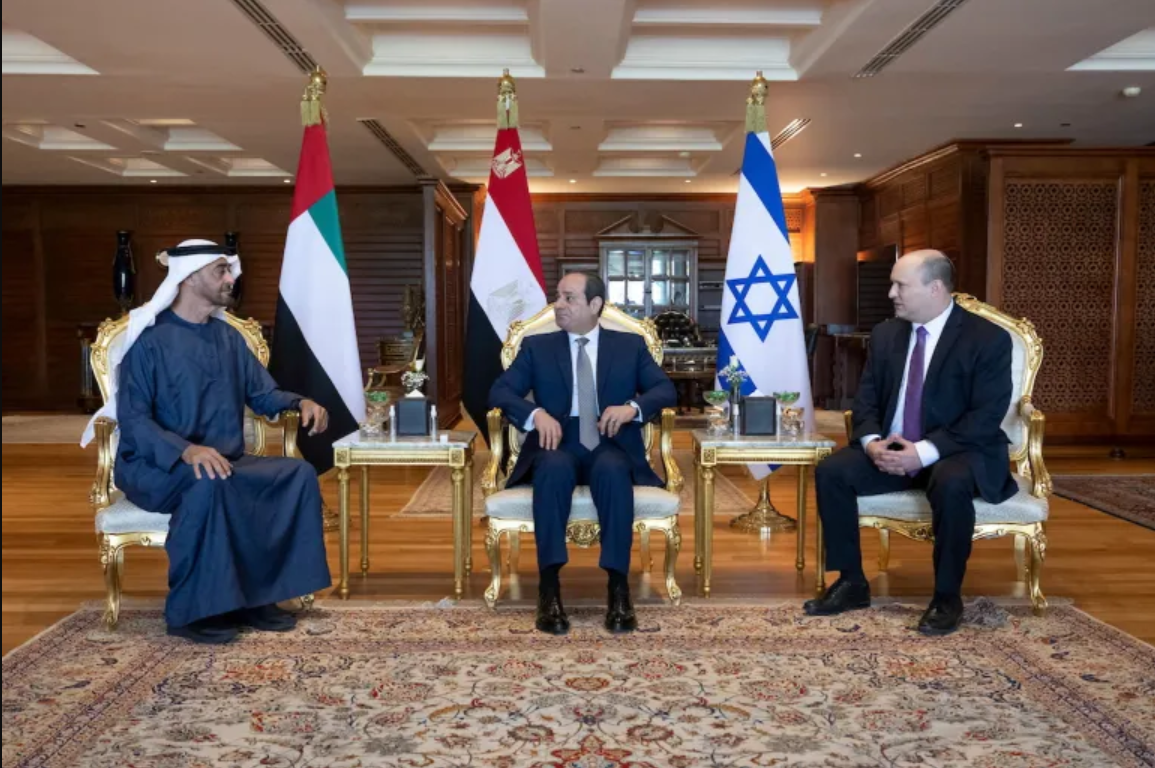
When the Abraham Accords were signed in 2020, the world witnessed a diplomatic breakthrough few thought possible. For the first time in decades, the Arab Gulf states chose to normalize relations with Israel, with the United Arab Emirates leading the way. In that moment, Israel gained more than trade agreements or tourist flows. It gained legitimacy, a strategic gateway to the wider Arab world, and—most importantly—the prospect of long-term regional integration and recognition.

Among all the new partners, the UAE was the crown jewel. A global hub of finance, logistics, and technology, the Emirates offered Israel not only bilateral opportunities but also a bridge to the wider Arab world. For decades, Israelis had dreamed of this kind of partnership: pragmatic, forward-looking, and grounded in shared interests. The Abraham Accords seemed to deliver it.
Half a decade later, the promise of the Accords is at stake—tested and weakened by the enduring war in Gaza and Israel’s policies.
Business Cannot Be Separated from Politics
Some argue that Israel has little to worry about. Trade with the UAE continues, joint ventures remain on paper, and economic cooperation still has momentum. But this is a dangerous illusion. In the Middle East, business is never just business. When strategic sectors are involved—defense, infrastructure, finance, energy—commerce becomes politics. Every deal is a political signal, every partnership a test of trust.
If Israel continues down its current path of alienating Arab partners, these projects will become unsustainable. Abu Dhabi, despite its restraint, cannot indefinitely justify ties that come at the expense of its domestic legitimacy and regional credibility.
The Costs of Losing Arab Partners
The potential costs of losing Arab allies like the UAE and Bahrain are enormous.
Regional Isolation: The Abraham Accords signaled Israel’s long-sought integration into the region. Without them, Israel risks falling back into a posture of siege—isolated, mistrusted, and perpetually on the defensive.
Opportunities for Rivals: If Israel squanders its Arab ties, others will fill the void. Turkey, Iran and even Russia are eager to expand their influence in the Gulf. Israel would find itself sidelined just as the region undergoes a historic realignment. And UAE is a hub connecting all the region and the world.
Generational Backlash: For young Arabs who saw normalization as a chance for progress, a collapse of relations would be devastating. They would view Israel not as a partner but as an unreliable actor. Once trust is broken, it may take generations to rebuild or maybe never will be.
Degraded diplomacy doesn’t mean much: Israel does not need another peace treaty in the style of Egypt’s—one that exists largely on paper and in politics but lacks depth in economic and social integration. What Israel needs is a partner like the UAE, which has gone far beyond symbolism to become a truly ideal ally in the Arab world—combining political courage with genuine economic, technological, and cultural engagement.
Collapse of the Normalization Model: If the UAE’s partnership falters, it will discourage other states—Saudi Arabia, Bahrain, Morocco—from deepening or pursuing normalization. The entire Abraham Accords framework could unravel.
The Myth of Permanent Strength
Part of Israel’s complacency stems from an assumption that its advantages will last forever. Many in Jerusalem believe that the United States will always provide unconditional support, that Israel’s military edge will always deter adversaries, and that its economic and technological dynamism will always ensure prosperity.
But none of these assumptions are guaranteed. American politics is shifting; Israel cannot rely on every administration to be as supportive as Donald Trump’s. Military superiority is not permanent—History teaches us that no nation remains strong forever—not for centuries, and often not even for decades. Regional actors are rapidly modernizing their arsenals and cyber capabilities. Economies rise and fall, and technological dominance is never eternal, one day, Israel’s rivals may grow stronger, and the very security of the nation could be placed at grave risk.
To assume otherwise is not strategy; it is hubris.
The Dangers of Ultra-Right Ideology
Perhaps the gravest danger comes from within. The rise of ultra-right ideology in Israel threatens to undo the very achievements that the Abraham Accords represent. Maximalist rhetoric, disregard for Arab concerns, and policies that deepen the conflict with Palestinians do not merely inflame tensions—they erode Israel’s credibility with its close partners.
The UAE did not enter into normalization for symbolic gestures. It did so on the expectation of stability, pragmatism, and a new era of coexistence. If Israel projects the opposite—instability, ideological extremism, and disregard for long-term diplomacy—then the very basis of the partnership collapses.
Thinking Beyond the Next Election
Israel must think beyond the next election cycle or the next military campaign. The real question is: what kind of region will exist in 20 or 30 years? Will Israel still enjoy unquestioned military dominance? Will the US still treat Israel as its most privileged ally? Or will the balance of power shift, leaving Israel exposed and in need of strong regional partners?
If Israel continues alienating the UAE and other Arab states, it will find itself facing that uncertain future alone. That is not strategy—it is a slow march toward vulnerability.
A Once-in-a-Generation Opportunity
The Abraham Accords opened a historic door. For the first time, Israel was not isolated in the Middle East but embraced—cautiously, yes, but genuinely—by a major Arab power. That opportunity is still alive, but it is fragile. If Israel protects it, the path to deeper regional integration remains possible. If Israel squanders it, the region will return to its old patterns of hostility and mistrust.
The choice could not be clearer. Israel cannot afford to lose its Arab partners. To do so would be to undermine decades of diplomacy, weaken its strategic position, and rob future generations of the chance for coexistence.
What is needed now is not ideology, but vision. A vision that recognizes that power is not eternal, that alliances are not permanent, and that trust, once lost, is rarely regained.
The Abraham Accords gave Israel a once-in-a-generation chance to reimagine its place in the Middle East. The tragedy would be if short-term politics destroyed what diplomacy had so carefully built.
Think long-term, not short-sighted.