
Israel must defend itself — without defending the indefensible
For Israelis, October 7 is not our past; it is our present. As such, it continues to mandate aggressive military policies on all our borders in the name of self-defense. For many of our friends-turned-critics, however, October 7 is a horrific tragedy that belongs to the past, one Israel now uses to whitewash ongoing war crimes against civilians. This divergence is one of the main causes of the collapse of Israel’s moral and political standing, a collapse we have failed to stem.
How do we, who love Israel, bridge the gap between ourselves and our friends? Beyond shouting at our critics, which is Netanyahu’s style, and ad hominem attacks, which are the approach of most of our spokespeople, we seem to have lost the ability to listen or to communicate. Why is it so hard for so many of us to engage our critics by accepting even some of their criticism? To affirm that October 7 obligated us to defend ourselves, yet admit that this mandate had moral limits? To believe that the Gaza War is one of the most just wars Israel has fought, yet recognize that we have not always fought it justly? Why can’t we declare that we love our country and still acknowledge that we have wronged the Palestinian people?
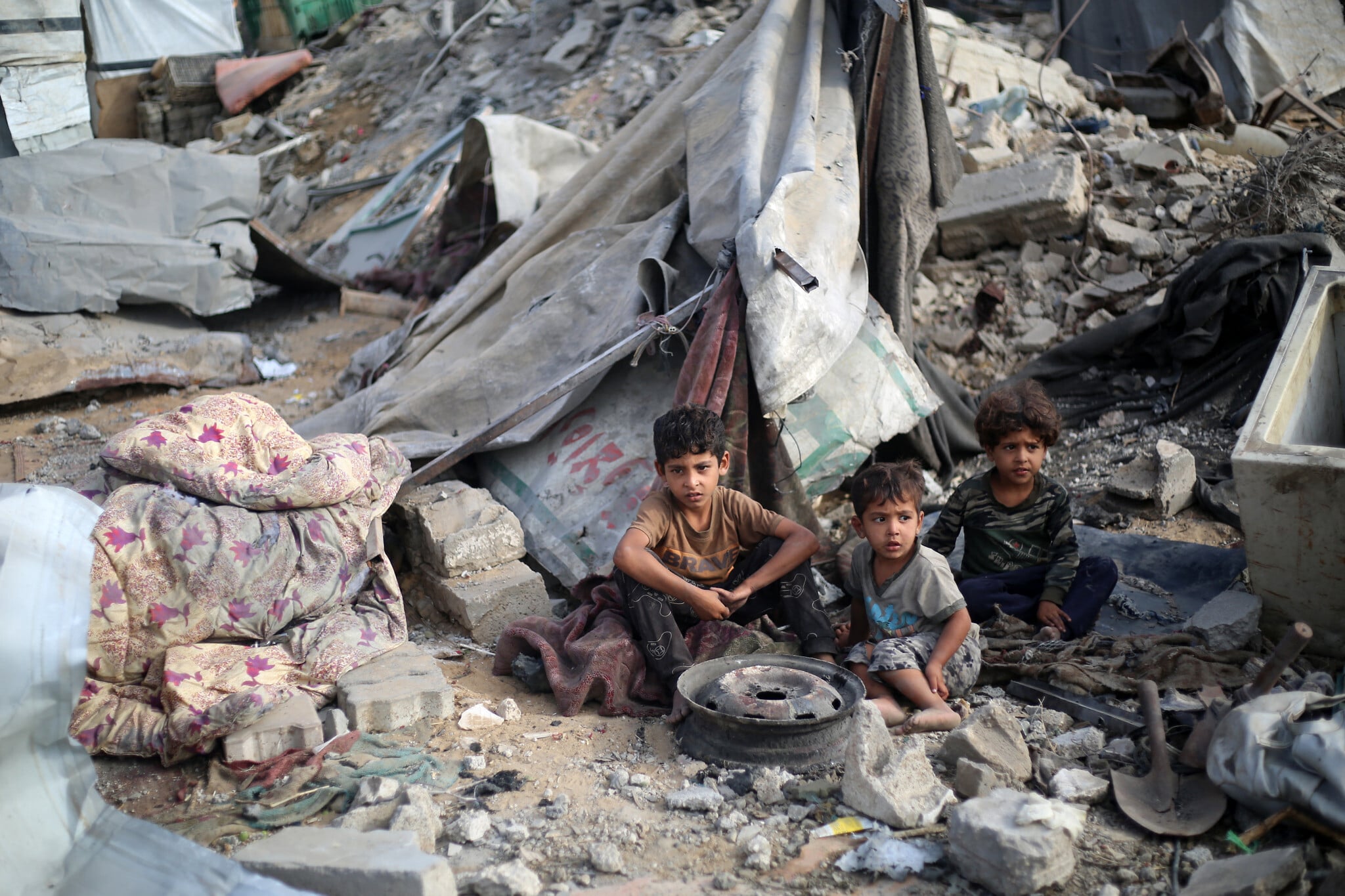
Moral failure in wartime is inevitable. Those of us who have fought and killed know this better than anyone. We also know that innocents have been killed. The humanitarian crisis for two million Gazans continues unabated. Injustice toward Palestinians in the West Bank is rampant. Yet to date, we Israelis have by and large been unwilling to take responsibility or to change our policies. Deflecting to the history of the Israeli-Palestinian conflict, to Hamas’ responsibility for October 7, to its ongoing moral depravity and its refusal to lay down its arms, does not obscure a simple truth that much of the world, including our friends, has embraced: we, too, have failed.
This failure is amplified when a majority of Jewish Israelis say there are no innocents in Gaza, and that October 7 has voided our concern for Gazans’ basic human rights. When many Israelis continue to support policies and politicians who use genocidal language and deny Palestinians’ basic rights, the failure threatens Israel’s moral future and undermines every effort to repair our standing in the world.
So why is it so complicated?
Between failure and libel
As a Zionist, I have not lost my moral compass; I have lost my voice.
I have lost my voice because I have lost the ability to say that my country and I have indeed failed, but not in the way, or to the extent, that we are accused of. Babies have been killed, but we are not a nation of baby killers. Innocents have been killed, but we are not a nation of murderers. Genocidal declarations have been made, but a genocide in Gaza has not occurred.
More than 74,000 Gazans have reportedly died since October 7, but that figure does not distinguish between civilians and combatants. The IDF estimates that more than 24,000 of those killed were combatants. The civilian toll has been horrific, but the killing of civilians alongside tens of thousands of combatants in a war fought in one of the world’s most densely populated areas does not in itself establish genocide. Gaza is the scene of many war crimes for which we must account, but it is not the scene of the worst injustice the world has known since World War II. It is not even the scene of the worst injustice taking place in the world today.
I have lost my voice because the minute I try to say any of this, people shut down and shut me out. The context of war, the causes of this war, and Hamas’ depravity toward both Israelis and Gazans have all been erased from the discussion, from the record, from memory. The Gaza War has been rewritten as a unilateral war of aggression or, worse, as merely the latest chapter in a nearly 80-year unjust war waged by a colonial power against an innocent people. Every accusation against Israel, even the most heinous, is immediately accepted as fact. My country and I have been recast as the world’s primary agent of evil.
If I could speak, and if people were willing to listen, I would embrace my failures but reject the libels. I would accept responsibility for not living up to my moral standards while pointing out the moral duplicity of some of my critics. I would condemn all unjustified killing, but I would also speak of the impact of the horrors of October 7 on my society, and of how hard it is to feel moral responsibility for those who celebrated my massacre.
I would denounce those who aspire to eradicate life in Gaza, but I would also explain why October 7 might understandably leave Israelis wanting some distance between themselves and those who seek their destruction. I would ask people to judge me in light of these conditions, and I would challenge them to put themselves in my shoes and consider what they would do in similar circumstances.
I have lost my voice because in today’s political discourse, once I accept some moral responsibility, all my explanations, distinctions and justifications are ignored. The minute I admit my moral failures, I validate the camp of my enemy. I am co-opted into a discourse that condemns me even for that of which I know I am innocent, a discourse that accuses me not merely for what I have done but for who I am. I have lost my voice because, while I know that I have failed, I also know that I am not what many in the world accuse me of having become. I have not lost my humanity or my moral conscience.
The price of denying our failures
But this loss of voice has led us into an indefensible, self-righteous posture in which we admit no wrong. Instead of seriously examining the criticism, we cancel the critics and offer pious factual rebuttals, contextualization and deflection.
Since we cannot, and should not, admit to being a morally failed, genocidal, racist state, we have chosen instead to deny any and all failure. But without an honest and painful accounting of the war, our moral and political standing will continue its free fall. More importantly, so will our country’s moral values. In an act of self-destruction, we have silenced our own discourse and awarded ourselves a grade of moral excellence.
But we have not earned that grade, and we need to acknowledge why. Collateral damage and civilian deaths are inevitable, particularly when fighting a terrorist force that embeds itself within the civilian population and infrastructure of a densely populated area. Even so, we need to admit that we did not always live up to the standards of international law or our own military code of ethics.
The hundreds of miles of tunnels, and the thousands of tunnel entrances hidden beneath homes, schools, hospitals and mosques, turned many of these sites into legitimate military targets. Still, we have yet to investigate whether the destruction of infrastructure was always driven by military considerations and the need to protect our soldiers, rather than by a desire for revenge or to destroy Gazan life in whole or in part.
We failed to stop Hamas’ plundering of humanitarian aid or to put in place responsible, reliable and safe food distribution. We did not establish viable temporary housing for those forced to flee the battle zones. We did not build alternative medical and educational facilities to care for the sick, the elderly and the young. To this day, we are not embracing initiatives to rebuild life in the half or more of Gaza that we control.
Meanwhile, in the West Bank, we are allowing a growing Jewish terror infrastructure to take root, one that murders and robs Palestinians and terrorizes them into abandoning their homes and fields. And since October 7, many of us have normalized immoral policies, politicians and political discourse that violate our commitment to justice and to the value and equality of all life created in the image of God.
I love my country. We must admit these failures even though our critics accuse us of far worse. It is difficult for those with moral standing to support us unless we do. Acknowledging our failures is a necessary step in showing that we have not lost our humanity. Indeed, it is how we reclaim it.
In the end, this is not only a question of finding our voice. It is about changing our policies and reclaiming our national identity. October 7 is not our past; it is our present. We must find the will and the strength to embrace our responsibilities and our humanity despite it. There is no other way to halt our internal and external free fall. We can view the status of being a nation that stands alone as a blessing or as a curse. We must decide.