
CEO of Time to Stand Up for Israel
Israel Must Learn To Win The Media War
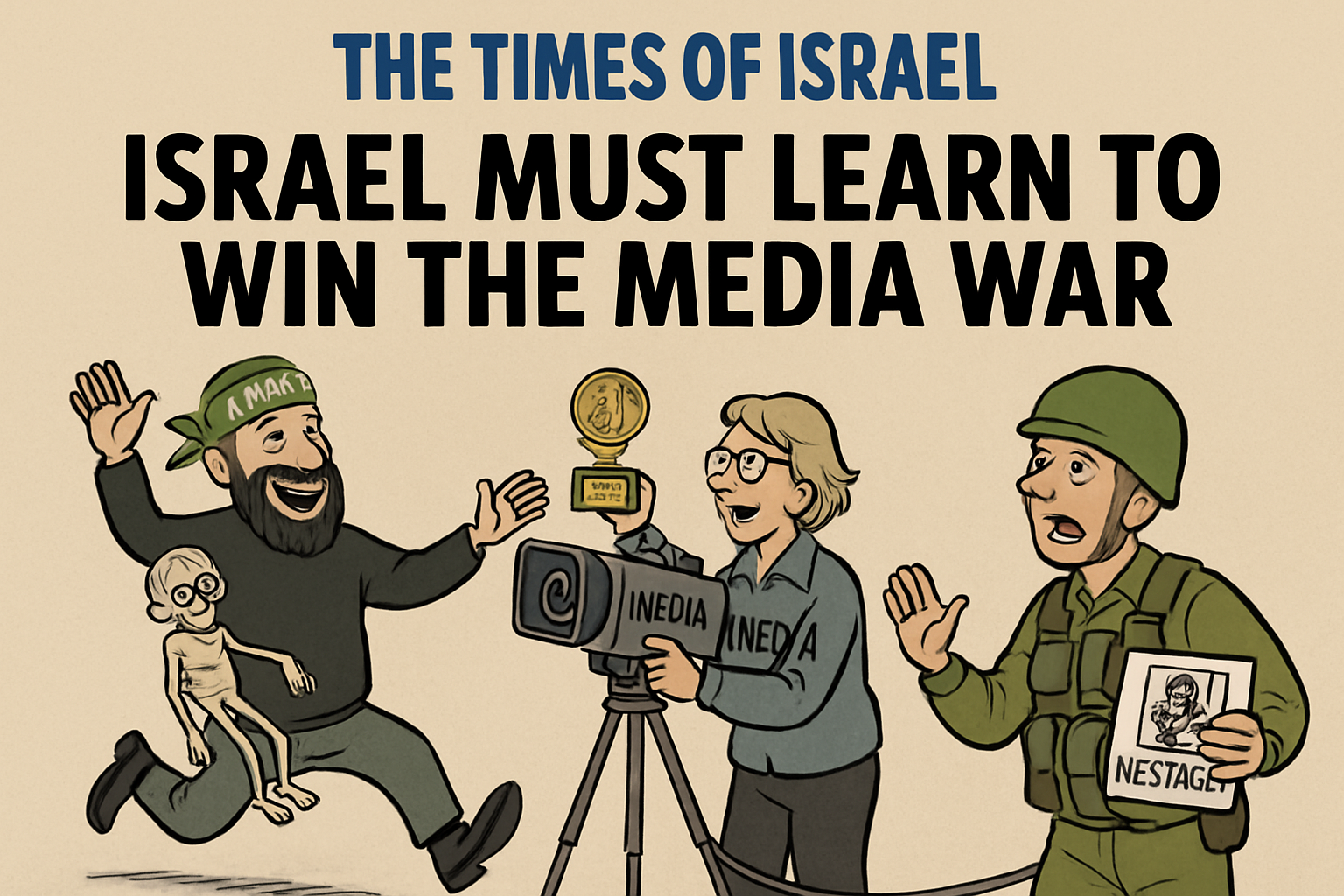
Photo Credits: Sabine Sterk (AI)
How Israel is Losing the Media Battlefield
Israel leads the world in innovation, medicine, defense, agriculture, and technology. Yet, on one of the most critical fronts of the modern age, the war for public perception, it is falling behind.
Today’s battles are not fought only on the ground but also in the digital arena, where narratives are shaped in real-time and absorbed uncritically by millions. In this realm, Israel’s enemies have mastered the craft of psychological warfare and propaganda, often leaving Israel on the defensive.
Hamas, for example, has recently flooded social media with videos showing hostages appearing starved and abused, coupled with fabricated images of emaciated children. These are not meant for truth, they are designed to shock, manipulate emotions, and sway public opinion. Tragically, many in the West take such staged content at face value, with mainstream outlets repeating these narratives without proper scrutiny. Even worse, countries like France and the UK have gone a step further, effectively rewarding this propaganda war by recognizing a “Palestinian state,” handing Hamas and its allies a political victory without demanding accountability or peace.
This is not a new tactic. For decades, anti-Israel groups, including radical Arab factions and their international allies, have exploited imagery, language, and selective storytelling to demonize Israel. Their methods range from editing unrelated footage into “documentaries” to using phrases that reframe terrorists as “freedom fighters” and hostages as “prisoners.”
Israel, meanwhile, holds itself to the highest moral standards. Mistakes by its soldiers are investigated, not glorified. It does not manufacture lies or falsify history. But this integrity often becomes a weakness in the ruthless world of media warfare. A single unverified image from Gaza can dominate headlines for days, while Hamas’ brutality which is documented and indisputable, barely registers.
The problem is compounded by an internal “fifth column” within Israel itself, commentators, journalists, and even officials who, perhaps unintentionally, echo enemy narratives. On-air descriptions calling Hamas members “soldiers” or “warriors” lend them a legitimacy they do not deserve, while Israeli hostages are reduced to “prisoners,” erasing their victimhood.
Language is a weapon. Using “West Bank” instead of “Judea and Samaria,” “occupied” instead of “disputed,” or “settler” instead of “resident” quietly chips away at Israel’s legitimacy. Even the term “Palestine”, a Roman invention to erase Jewish identity after the Bar Kochba revolt, is now wielded to undermine Israel’s very right to exist.
If Israel’s leaders, media, and supporters fail to challenge these distortions, they allow falsehoods to take root. In the age of viral misinformation, every word, every image, and every headline matters.
To win this fight, Israel must not only excel on the battlefield, it must reclaim control of its own story. Because if Israel doesn’t define the truth, its enemies will define it for the world. And in this war of perception, losing the narrative can be as dangerous as losing the war itself.
Related Topics
Related Posts