
Israel must now decide: Will it win or lose this war?

About a year ago, I posted an essay in the Times of Israel (“Should Israel ‘clear and hold’ Gaza?”) that explored whether Israel should shift from a strategy of raiding Hamas strongholds to one of occupying Gaza and taking responsibility for its civilian population. At the time, a number of senior American military thought leaders – including David Petraeus and Charles Brown – had argued that the only way to defeat Hamas was to isolate it from the civilian population that was its source of manpower, food and fuel, and human shielding.
I concluded that “in the short run, this isn’t even a real question. Israel can ill afford to divert the number of troops required for occupation (estimates range as high as 50,000) from other missions while it faces the prospect of a major ground war with Hezbollah. Furthermore, as long as Hamas can put up an organized military resistance, establishing a permanent – and intrinsically vulnerable – military and civil presence in Gaza would result in large numbers of Israeli casualties.”
But I went on to argue that “it is only a matter of time, however, before Hamas transitions from resisting Israeli incursions to hiding and hoping to survive to fight another day. And it is also just a matter of time before the confrontation in the north is resolved – either through an agreement or through war. At that point, should Israel occupy Gaza, finish off Hamas, and take responsibility for the governance of its population? The answer is yes.”
The time has come. Israel needs to decide if it intends to win or lose this war. This might sound like an odd question, given that Hamas’s actions led to the destruction of Gaza and the loss of fifty times more combatants than those lost by the IDF. How could Hamas possibly “win” this war?
The answer is that this war is asymmetric, being fought between a conventional military and a guerrilla army/terror gang. In his analysis of America’s defeat in Vietnam, Henry Kissinger summed up how asymmetric wars are won or lost: “the guerrilla wins if he does not lose. The conventional army loses if it does not win.”
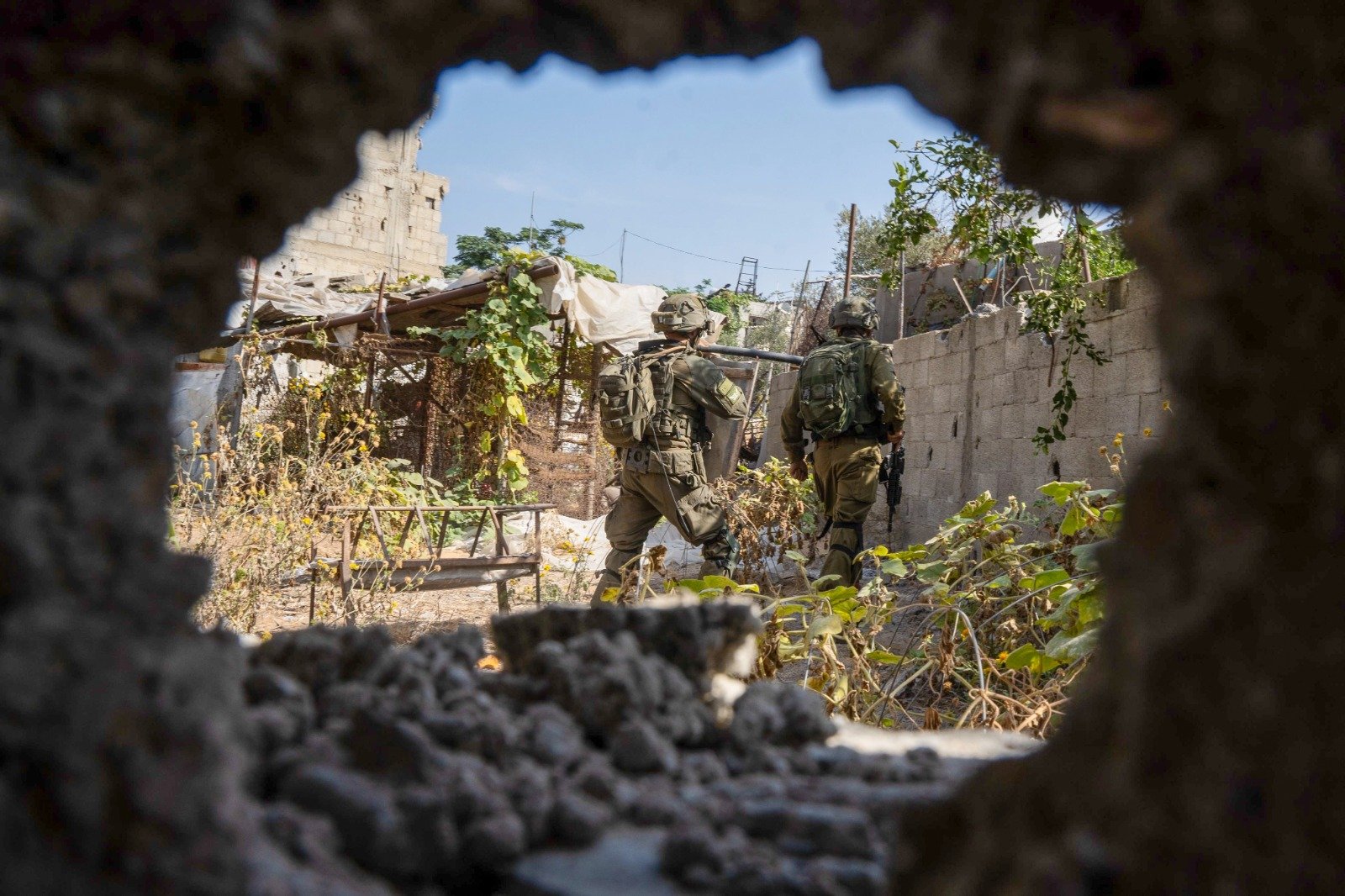
If Hamas survives the war, it will have frustrated a nearly two-year Israeli campaign to defeat it. That will lift the organization’s prestige to a level that will far exceed that of Al Qaeda, ISIS, or Hezbollah during their respective heydays. Ironically, the crushing defeats Israel has dealt Iran and Hezbollah will only enhance Hamas’s image, since Hamas succeeded in doing what these ostensibly more powerful entities could not – delivering the absolute worst blow Israel has experienced in its existence, and then surviving to fight again another day.
As a result, it will not be long before Hamas takes over the Palestinian Authority – although I suspect they will eschew tossing PLO operatives out of windows and instead seek to puppet the existing leadership in Ramallah. Jordan, with a large Palestinian population and facing a resurgent Muslim Brotherhood, could very well fall under indirect Hamas control as well. And even Egypt, long plagued by the Brotherhood, could face destabilization.
In other words, if Hamas survives this war, the stage will have been set for a war far more violent than this one, with disastrous consequences for Israel, its Arab neighbors, and indeed, the entire world.
As such, it is vital that Israel win this war, and frankly, the only way to do so is to isolate Hamas from Gaza’s civilian population. There are three options for doing that – and all of them are bad. One option, however, is clearly better than the others.
Conquest
The first alternative is to extend Israel’s control of Gaza from the current 70% to 100%, or in other words, complete the conquest of the Strip. This would leave the IDF in control on the surface while Hamas tried to hold out underground. It would only be a matter of time before food and fuel would run out in the tunnels and Hamas would be forced to either surrender or come to the surface to make one final (and hopeless) stand.
The obvious problem with this is that it would require the IDF to engage in precisely the type of combat it has studiously avoided up to this point – fighting in areas with dense civilian populations. The result would be large numbers of both Israeli military and Palestinian civilian casualties, and possibly the loss of the remaining hostages, as well as optics so bad that Israel would likely be forced to end its campaign prematurely as a result of both internal and external political pressure.
‘Humanitarian city’
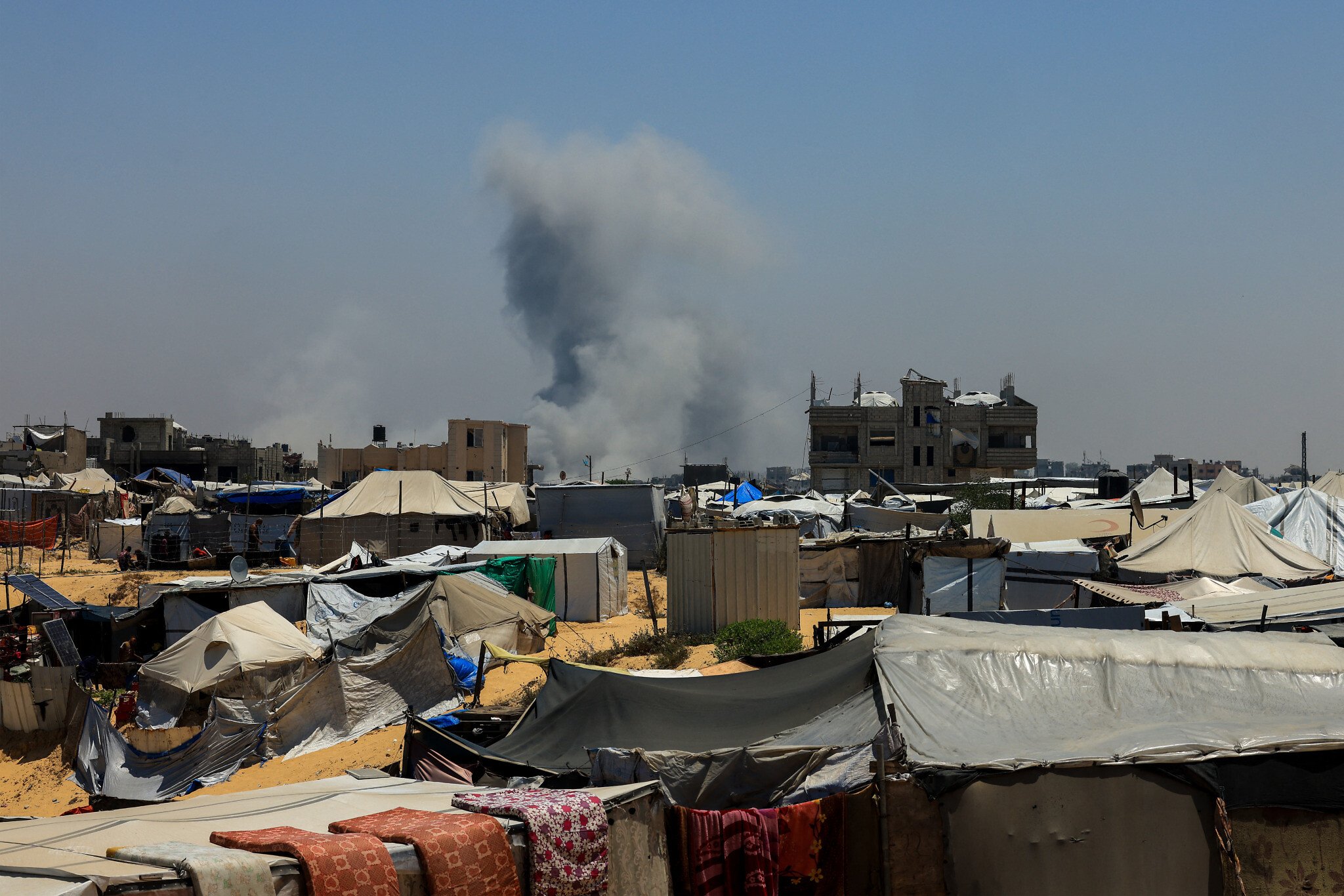
The second approach – associated with Minister of Defense Israel Katz – is to move Gaza’s civilian population to a huge camp in what he termed a ‘humanitarian city’ that would be built in the Rafah area. This plan engendered widespread criticism for a variety of reasons, of which the most significant was that it appeared to be associated with an attempt to facilitate the outright removal of the Palestinian population from most if not all of the Gaza Strip. That is illegal and unethical, and not consistent with Israel’s commitments to its de jure and de facto allies.
Area B
Finally, consider what I believe to be the best method of securing Gaza’s civilian population and denying Hamas the ability to exploit them. The approach (loosely based on ideas articulated by former Shin Bet official Yossi Amrusi) would be to set up a series of designated humanitarian zones throughout the portion of the Strip under IDF control.
The implementation would be phased: In the first phase, Israel would declare the territory it currently holds in Gaza as “Area C” – the designation used in the West Bank to denote territory whose final status will be determined through negotiation but under complete Israeli control for the time being.
Israel would then build a large number of relatively small humanitarian camps throughout Gazan districts under its control. Gazans vetted by the Shin Bet and/or vouched for by Gazan community leaders cooperating with Israel would be invited to relocate to the camp closest to where they lived prior to the War.
As soon as the IDF deemed it safe, residents would be able to inspect the homes they lived in before the War. If those homes were still inhabitable, they could choose to move into them. Those whose homes had been destroyed would remain in the camps. And when deemed safe by the IDF, employment working on preliminary reconstruction projects – such as the removal of debris – could be offered to the local community.
In the second phase, districts would be redesignated as “Area B,” with the IDF retaining security control, while local elections would be held to choose which entity would handle civilian governance.
Three political blocs would likely emerge, one associated with the Palestinian Authority, one associated with local clan leaders, and one associated with the Arab states – probably led by Mohammed Dahlan. And once local communities had determined who would govern them, the full-scale reconstruction of these districts could commence.
Meanwhile, Hamas would find itself hemmed in while watching its control of the civilian population slip away as civilians steadily relocated to areas under Israeli control. Eventually, it would either capitulate or collapse.
The approach I just sketched out would win a lot of support from the US and Israel’s by now not-so-secret Arab allies. The Palestinian Authority would not be ecstatic about the arrangement – it simply wants Gaza handed to it on a silver platter – but would inevitably acquiesce since this approach offers it a path to at least partially reassert its authority in Gaza and assure itself a “seat at the table.”
Israel’s extreme rightwing parties would also not be ecstatic since they advocate the annexation of Gaza. Redefining Gaza as “Area C” and allowing Gazans to return to their communities would assure that most of the Strip will eventually be part of a Palestinian political entity. That said, it should be noted that Israeli settlement is allowed in Area C. Re-establishing the three small communities in northern Gaza dismantled as part of the 2005 unilateral Israeli withdrawal from the Strip would be a sensible quid pro quo that could allow them to acquiesce.
The real opposition to what I just proposed is likely to come from Israel’s exhausted mainstream. Polls suggest that most Israelis want an immediate end to the war, with Israel leaving Gaza to Hamas in return for the remaining hostages. This would allow Israel’s reservists to get on with their lives – at least for a few years before such an arrangement led to an even worse conflagration.
In addressing the Israeli public’s understandable objections, I will finish this essay with the same words I used over a year ago: “An effective occupation will take a long time, be very difficult, require the continued mobilization of large numbers of IDF reservists, and cost a lot of money. But like so many of the actions that Israel and its allies have taken since October 7, the coming occupation of Gaza is TINA – “there is no alternative.”