The views expressed herein are solely mine.
Israel Takes the North: Syria and Hezbollah Fall
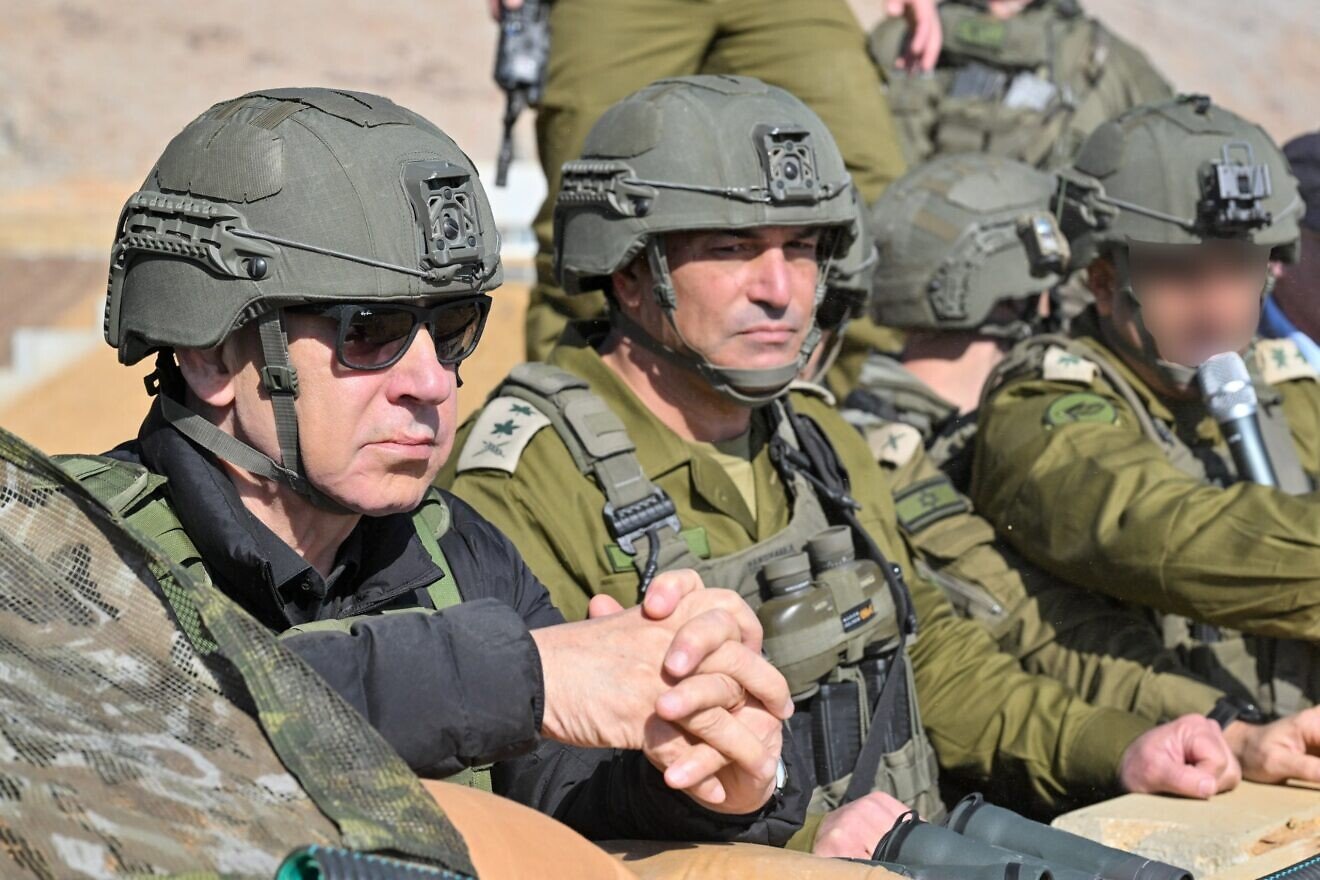
Benjamin Netanyahu, left, and Eyal Zamir visit the Syrian Hermon on Nov. 19, 2025. Photo credit: The Prime Minister's Office.
The State of Israel is not merely striking southern Syria—it is recalibrating the entire northern theater.
With Ahmad al-Sharaa now sitting in Damascus and both Saudi Arabia and Turkey (his main regional allies) chasing bigger regional gains—from F-35s and nuclear energy to gas corridors and sanctions relief—Jerusalem sees the rarest commodity in Middle Eastern geopolitics: a power vacuum ripe for exploitation.
Riyadh has not “quit” Syria; it has moved up a weight class.
Hence, MBS left Washington with F-35s on the table, major non-member NATO ally status, a civil-nuclear cooperation track, and a pledge to push Saudi investment in the U.S. toward $1 trillion.
In that deal, Syria drops so far down the Saudi priority list that it practically disappears.
At the same time, President Trump is not demanding immediate normalization with Israel; he wants the cash and the headlines. MBS wants the jets and the security guarantees.
Meanwhile, Ankara is securing gas routes, training Syrian forces, and fighting its own war against the Kurdish SDF—not volunteering to absorb the blowback of Israeli strikes near the Golan Heights.
In other words, no actor with real leverage is spending political capital to shield Syria. And Israel knows it.
That reality was punctuated when Prime Minister Benjamin Netanyahu stood on the Israeli-Syrian buffer zone, just 16 miles from Damascus.
Clearly, his presence was not symbolic—it was territorial signaling.
By physically anchoring Israel’s authority on the border, Netanyahu delivered a blunt warning: if Damascus refuses a security arrangement, the territorial integrity of Syria itself could be up for negotiation.
No Iranian corridor, no militia buildup, no “shadow sovereignty” near the Golan will be tolerated—not militarily and not politically.
Paradoxically, Israel is applying that same doctrine in Lebanon.
The assassination in Beirut of Hezbollah’s chief of staff yesterday proves it. Israel is not waiting for UN resolutions, Lebanese politics, or international consensus. It is accelerating the demilitarization of Hezbollah by decapitating its command structure and destroying its logistical arteries.
The message is unmistakable: leadership, weapons, funding—nothing is safe.
This mirrors Israel’s maritime campaign in the Eastern Mediterranean and Red Sea, where Israeli strikes and naval enforcement have blocked Iranian and Hezbollah maritime supply routes and protected gas infrastructure.
Although the goals differ—maritime freedom and energy security at sea, demilitarization and border dominance on land—the strategy is identical: targeted force, intelligence-driven strikes, and political leverage against a shrinking Iranian network.
When an enemy loses patrons, Israel tightens the screws until they break, bend, or bargain.
In reality, the same doctrine that blunted and boxed in Hamas after 2014 is now being adapted to al-Sharaa’s Syria and Hezbollah’s Beirut command.
The State of Israel’s objective is brutally simple: smash Iran’s comeback plan before it crawls back through the cracks Assad left behind.
With Damascus no longer functioning as Tehran’s clubhouse and al-Sharaa unwilling to inherit Assad’s dependencies, Iran has shifted to survival mode—moving weapons through Iraq, repositioning proxy commanders, and rebuilding its corridor through militias rather than state power. That makes every convoy hit, every warehouse leveled, and every commander eliminated not just tactical strikes but strategic ultimatums: choose sovereignty or choose Tehran—you do not get both.
Right now, Israel is hammering the arteries of Iranian influence because the old anchor in Damascus is gone. What remains is a smuggling empire vulnerable to pressure, and Israel is squeezing it from land, air, and sea simultaneously. Lebanon is merely the next domino.
Netanyahu’s Golan visit crystallized the stakes: Israel is no longer just influencing southern Syria—it is shaping it.
The message to al-Sharaa and Hezbollah alike is clear: without serious agreements, Israel will define the borders of influence on the ground, not at negotiating tables.
As a result, that shifts the dynamic from deterrence to dictation and from reactive strikes to proactive territorial redesign.
This is not tit-for-tat. It is hard-edged coercive geopolitics, backed by local support in southern Syria and a collapsing political shield around Hezbollah.
For the benefit of the region and the West, Israel is reshaping the map while al-Sharaa and Beirut’s militants behave as if the region has not shifted under their feet.
Unless Damascus and Hezbollah accept new military and political boundaries—starting with limiting Iran’s reach toward the Golan—Israel will keep rewriting reality from the air and from the ground.
In today’s Middle East, pressure is not a tool of policy.
It is the policy.
And Israel is executing it with patience, precision, and zero apologies.
Related Topics
- Benjamin Netanyahu
- Donald Trump
- Gaza
- Gaza Border
- Gaza Rocket Attacks
- Gaza Strip
- Golan Heights
- Hamas
- Hezbollah
- IDF
- Invasion of Ukraine
- Iran
- Islam
- Israel At War
- Israel-Iran Conflict
- Israel-Saudi Normalization
- Israeli Foreign Policy
- Israeli Politics
- Jerusalem
- Lebanon
- Middle East
- Natural Gas
- Russia
- Saudi Arabia
- Syria
- Terrorism
- The Arab World
- The Kurds
- Trump Peace Plan
- Turkey
- Ukraine
Related Posts