
French-Israeli Visual Artist and Writer
Israel: The Dangerous Precedent of Indigenous Return
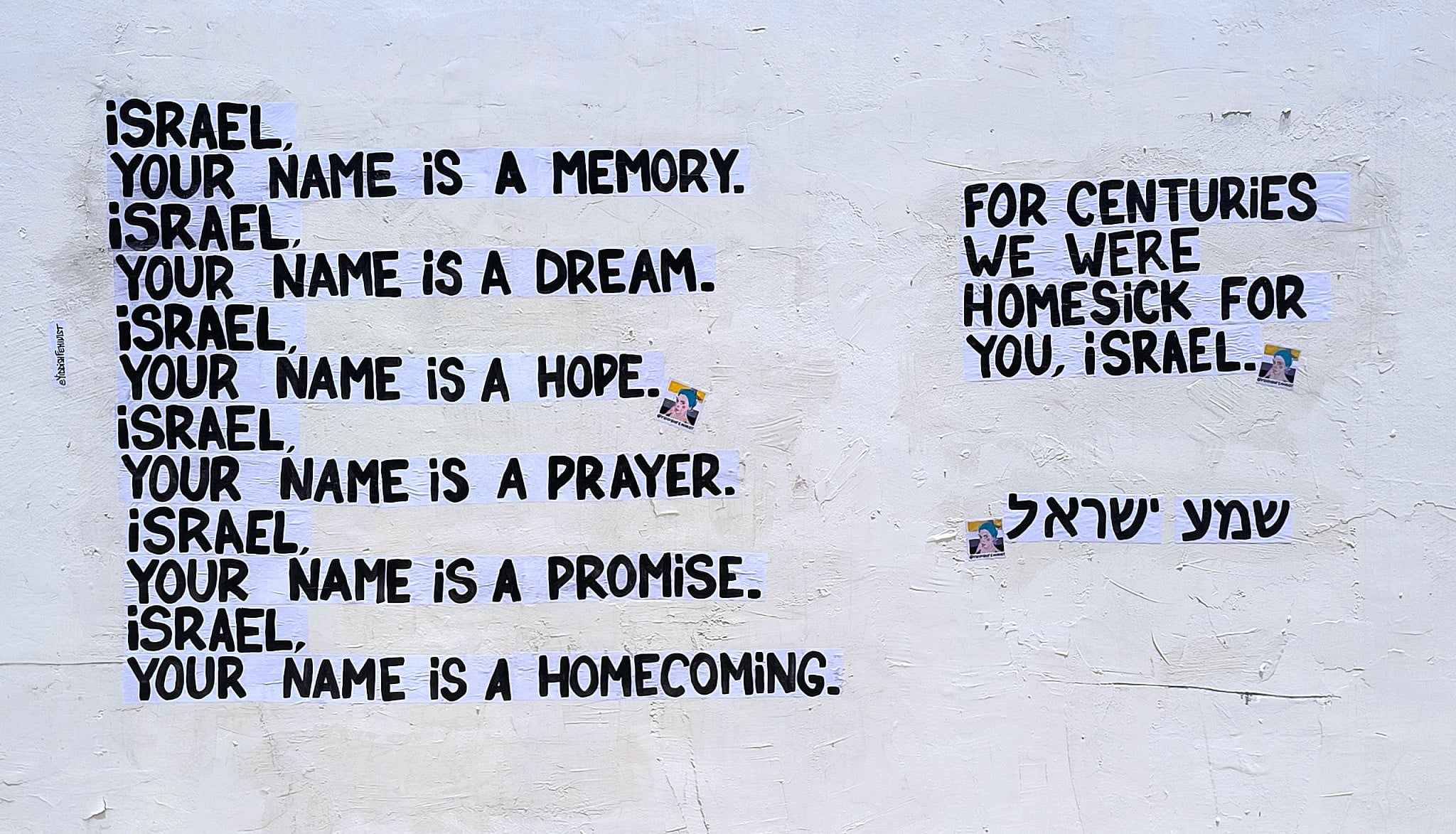
Credit: YiddishFeminist, Morgane Koresh
The world loves to perform solidarity with indigenous peoples—just not when it matters.
Not when it’s inconvenient. And especially not when it works.
I’ve been thinking about it for a while, that perhaps what terrifies both Western and Muslim societies isn’t just the Jewish return to sovereignty, it’s the idea that any indigenous people might one day do the same. That they might not stay displaced or symbolic forever. That land could be taken back, not just mourned. That erasure could be reversed. That power could return to the hands of those it was taken from.
That’s the precedent Israel set. And that success story is too dangerous to be allowed.
Indigenous Rights as PR, Not Policy
The West speaks the language of decolonization fluently, but only when it’s abstract.
Land acknowledgments. Social Media posts. Curriculum reforms.
But when real land, real sovereignty, and real return are on the table, resistance kicks in.
- In Canada, reconciliation is ritualized, but land is not returned, and First Nations communities remain in systemic neglect.
- In Australia, even a symbolic Indigenous advisory body was voted down.
- In France, the Kanak struggle for autonomy is met with riot police.
- In the United States, treaties are broken, and “land back” remains a slogan with no substance.
Indigenous rights are good PR, but never the priority. Empowerment is tolerated as long as it stays metaphorical.
In the Arab and Muslim world, the suppression is more direct. There is no conversation about justice for the Amazigh, Yazidi, Druze, Kurds, or Armenians…, groups often actively erased or persecuted.
What the world actually supports is controlled indigeneity: tragic, poetic, and powerless.
Not sovereign. Not armed. Not home.
But then came Israel: a successful landback story.
And also the only landback movement they reject. The only indigeneity they deny. The only minority whose sovereignty is rebranded as oppression.
The Intersection They Refuse to Name
This isn’t just about politics or land.
Hatred of Israel sits at the intersection of antisemitism and fear of indigenous revival.
The world has always resisted seeing Jews as fully human with the right to safety, dignity, and self-determination.
And it has always resisted the idea that indigenous people could move beyond cultural symbolism into real power.
Most people can accept Jews as survivors, if we stay quiet and displaced.
Most people can celebrate indigenous cultures, if they remain folkloric and unthreatening.
But Jews as an indigenous people who came home? That breaks every frame.
Israel Is the Story They Cannot Afford to Tell
When Israel declared independence in 1948, there was no conversation about indigenous rights. Empires still ruled. Decolonization had barely begun.
To the Arab world, Israel was already intolerable: A land that would not fall under Muslim rule but governed by Jews, historically subordinate in those societies.
But the true backlash came when indigeneity became fashionable in the West.
Suddenly, being indigenous was sacred. “Land back” was a virtue signal. Power imbalance was everything.
And then came the problem: Jews had already done it.
We had already re-established sovereignty, revived an ancient language, and made exile reversible.
So the story had to be rewritten. And we were rebranded as white. As Western. As colonial.
Let’s not pretend this started in 2023.
It began decades ago—through “Zionism is racism,” Durban, and a culture of academic and political erasure.
But once indigeneity became a moral currency, the backlash found a new disguise. Now it could parade as progress and wear the mask of justice.
Because if Israel is an indigenous success story, then everything else must be reexamined.
A real success story is deeply inconvenient—it shatters the fantasy that indigeneity must remain poetic and tragic, never powerful.
So Israel must be removed from that story.
What They’re Really Afraid Of
The Western world was built by removing indigenous peoples from their land.
The Muslim world was built by subjugating them.
Israel proved both models reversible.
That is the threat.
Because if Jews can reclaim land and memory, why not the First Nations? The Native Americans? The Kanak? The Armenians?
Israel is proof that indigeneity doesn’t have to remain poetic. It can be real. Lived. Sovereign. Defended.
And if one group can do it, others might believe they can too. That’s what they’re afraid of.
The Double Standard
There is silence when Yazidi girls are sold. When Kurds are bombed. When Armenians are threatened. When Druze are murdered. And yes—when Jews are massacred.
But Jews are blamed for noticing that silence. We are told that mourning is provocative. That survival is aggression. That sovereignty is colonialism.
This hypocrisy isn’t limited to the Arab world.
The same countries that speak of justice for indigenous peoples—while ignoring treaties, crushing uprisings, and rejecting even symbolic power—are the ones quickest to call Jews “settlers” in our ancestral homeland.
The message is clear: You can grieve. You can commemorate.
But don’t you dare actually take your land back.
The Fear of the Possible
At its core, hatred of Israel is a reaction to both antisemitism and fear of an actual “landback” movement.
It’s a lot about being Jewish. But it is not only about being Jewish.
It is about a global system that cannot tolerate the idea that indigenous people might not only survive but come home, speak their language, rebuild their culture, and defend it.
And that’s what I think they’re really afraid of.
If one People can return from the ashes, rebuild a homeland, and reassert their indigenous identity—what’s to stop others from believing they can too?
Israel didn’t just challenge the past, it disrupted the future.
And that’s what they’re trying to prevent: Hope. Inspiration.
They don’t only fear what we’ve done. They fear what it might teach others.
So they demonize. They rewrite. They erase.
But it’s too late. The precedent exists—loud, proud, unapologetic.
—
Bonus: The Hollowness of the Landback movement in the West:
Related Topics
Related Posts