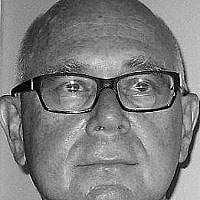
Israeli Arab Politician Crossed A Red Line
Rare is the day when Israeli politicians drop their differences and agree on an issue of national importance. Two days ago, they broke the mould when they backed a decision by the Central Elections Committee to disqualify the chairman of the left-wing Balad Party, Sami Abu Shehadeh, from running in the October 27 election. They passed this motion by a margin of 30-4.
Abu Shehadeh crossed a red line when he broke a basic law that explicitly prohibits an Israeli citizen from expressing support for armed struggle against Israel, negating its existence as a Jewish and democratic state, and inciting racism.
But in a problematic decision, the committee also voted to disqualify Ra’am, the United Arab List headed by Mansour Abbas, and the Joint List, an alliance of Arab parties consisting of Hadash, Ta’al, and Balad. Ofer Cassif, a Jewish member of Hadash, was thereby disqualified from running in the election.
The chairman of the committee, Supreme Court judge Noam Sohlberg, said that Abu Shehadeh failed to adequately answer allegations that he had backed Hamas’ armed struggle against Israel in an article published only a day after its massive attack on October 7, 2023.
Israeli opposition leaders from the center, right and left, ranging from Gadi Eisenkot and Naftali Bennett to Yair Golan and Benny Gantz, supported the committee’s verdict with respect to Abu Shehadeh. It must be ratified by the Supreme Court, which has historically struck down such decisions.
The decision that the committee handed down on September 23 was not unexpected.
A day earlier, Attorney General Gali Baharav-Miara and State Attorney Amit Aisman told the committee that an article written by Abu Shahadeh voiced support for armed struggle by Hamas, which categorically rejects Israel’s existence.
The petition to disqualify Abu Shahadeh from running in the forthcoming election was filed by Itamar Ben Gvir, the far-right minister of national security and the leader of the Otzma Yehudit Party.
Currently, Balad does not have a seat in the Knesset, having failed to cross Israel’s 3.25 percent electoral threshold in the 2022 election.
Baharav-Miara and Aisman said that Abu Shahadeh’s responses to the accusations against him “do not allay concern that his article reflected an expression of support for armed struggle against Israel, at the worst possible timing.”
In their legal opinion paper, Baharav-Miara and Aisman focused on an article he wrote for an Arabic-language website in which he called Hamas’ Al-Aqsa Flood operation as “a historic event of significant military, political, and strategic importance.”
Abu Shahadeh said that Hamas’ invasion was “entirely consistent with a law of physics we all know: that great pressure leads to explosion.” He was referring to “decades of occupation, siege” and other alleged misdeeds by Israel.
In another sentence in his piece, Abu Shahadeh wrote that if “the small, besieged Gaza managed to do this, and at this level, then others can do so more effectively and easily.” He added that the “resistance” should engage the PLO and friendly Arab states “to attain the desired achievements.”
Baharav-Miara and Aisman wrote that Abu Shahadeh did not condemn Hamas’ massacre of Israelis and foreigners, and that his article sounded like a call to the Arab world to replicate it.
They went on to write that his article “includes a series of statements that, cumulatively and against the backdrop of the timing of their publication, give the reader the impression that the article’s author is emphasizing the advantages inherent in the historic event of October 7, in the respondent’s words.”
Abu Shehadeh denounced Ben Gvir’s’ attempt to disqualify him as “absurd,” denied supporting the Hamas massacre or political violence, and claimed he would not have published the article had he realized the scale of the atrocities.
“I never called for violence, did not support the events of October 7 and do not justify them,” he said in a post on X. He insisted that his support for Palestinian rights and opposition to Israel’s occupation of the West Bank did not translate into “support for violence or armed struggle.”
Rejecting Shahadeh’s claim, Baharav-Miara and Aisman said he was aware of the scope of Hamas’ incursion. By October 8, they noted, there was already ample evidence that Hamas had perpetrated a bloodbath on an unprecedented scale.
Although they acknowledged that Abu Shahadeh subsequently condemned the civilian casualties, they pointed out that Israel’s basic law bars Knesset candidates from supporting armed struggle against Israel, be it aimed at civilian or military targets.
Abu Shahadeh’s downfall reminds observers of a similar incident about 20 years ago.
The founder of the Balad Party, Azmi Bishara, a member of the Knesset since 1996, became the subject of a criminal investigation after visiting Lebanon and Syria in the wake of the 2006 war in Lebanon.
Investigated for acts of alleged treason and espionage after he came under suspicion of supplying targeting information to Hezbollah, he denied the allegation and fled Israel, claiming he would not receive a fair trial. He has not returned to Israel, having established himself as an academic and researcher at the Arab Center for Research and Policy Studies in Qatar. He announced his retirement from direct political work in 2017, saying he would dedicate himself to “writing and intellectual production.”
The Bishra and Abu Shahadeh cases, though different, converge in one respect. They underscore the degree to which a minority of Israeli Arabs, who comprise 21 percent of Israel’s population, are alienated from Israeli society and are willing to act on their beliefs to help external Arab entities bent on harming Israel.
Although Yair Golan, the chairman of the left-wing Democrats, endorsed Abu Shahadeh’s disqualification, he has qualms about the committee’s other measures. “We will resolutely defend the right of Israel’s Arab citizens to vote, be elected and be partners in leading the country,” he said, adding that his party would not allow “an entire public to be made illegitimate.”
Hadar Susskind, the president and chief executive officer of New Jewish Narrative, a US based liberal Zionist organization, denounced the committee. “This is an outrageous decision,” he said in a statement. “Palestinian citizens of Israel have the same right as any other citizens to participate in elections and to choose their representatives. Arab political participation is not a peripheral feature of Israeli democracy; it is essential to it.
“The Central Elections Committee has voted to shut out the political parties representing a significant portion of Israel’s citizens from the democratic process. That should set off every alarm bell about the state of Israeli democracy. Even if the High Court overturns these decisions, the damage done by the message sent today – that Israel’s Arab citizens can be denied a political voice by the very institution charged with safeguarding its elections – will not be easily erased.”
It is safe to say that Israeli Arabs, the descendants of the 160,000 Palestinian Arabs who did not leave their homes in Israel during the 1948 Arab-Israeli war, will file an appeal in the hope of overturning the committee’s decision.