Israel’s Arab Parties: Three Visions and the Mansour Abbas Gamble
As Israel heads toward the October 27, 2026 election, just over one in five Israeli citizens is Arab. Yet for much of the Jewish public — and even more so for outside observers — their political representation is often lumped together under one convenient label: “the Arab parties.”
The reality is considerably more complex.
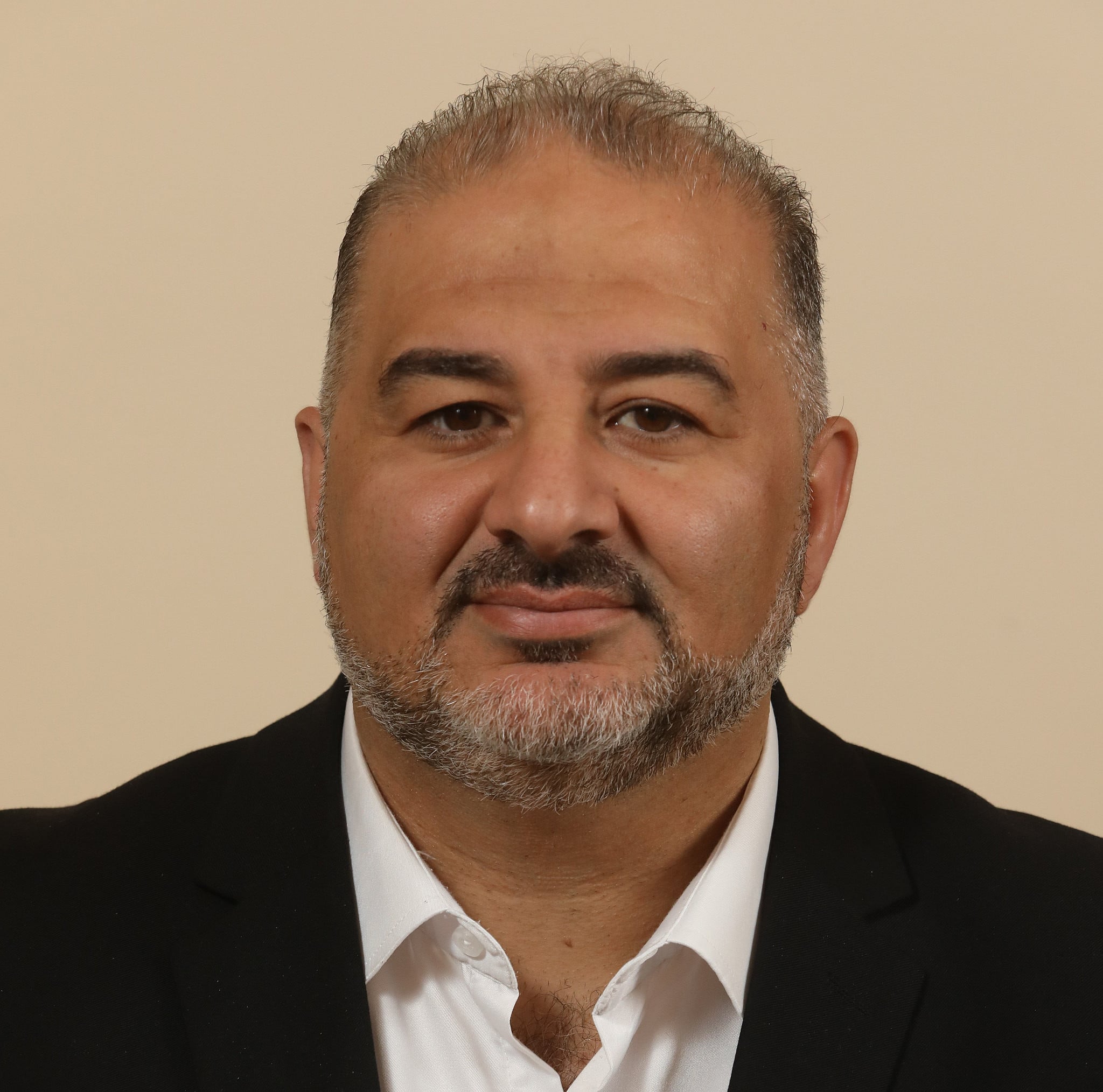
This article maps out the three main political forces competing for the Arab vote before focusing on the most closely watched — and most ambiguous — experiment of all: Mansour Abbas’s attempt, since 2021, to turn an Arab party into a legitimate partner in an Israeli government without becoming Zionist himself.
Three main lists currently compete for this electorate: Ra’am, led by Mansour Abbas; Hadash-Ta’al, an alliance between Hadash and Ahmad Tibi’s Ta’al; and Balad, the Palestinian nationalist party that failed to cross the electoral threshold in 2022.
All three demand full equality for Israel’s Arab citizens and identify, to varying degrees, with the Palestinian cause. But beneath this apparent common ground lie profoundly different conceptions of the place of Arabs within the State of Israel.
And since 2021, one question has overshadowed all others: Can an Arab party become a regular partner in an Israeli government without itself becoming Zionist?
That is both the revolution — and the ambiguity — of Mansour Abbas.
Three parties, three traditions
Hadash-Ta’al actually brings together two distinct political traditions.
Hadash — the Democratic Front for Peace and Equality — has its roots in the Israeli Communist Party. Officially Jewish-Arab, secular and socialist, it has always included Jewish activists and candidates — among them Meir Vilner, Tamar Gozansky, Dov Khenin and Ofer Cassif — even though its electorate today is overwhelmingly Arab. It advocates civic equality, an end to the occupation and the establishment of a Palestinian state alongside Israel.
Ta’al, founded by Ahmad Tibi in 1996, is less ideological. Secular, Arab nationalist and largely identified with its founder — a former adviser to Yasser Arafat who became one of the Knesset’s most experienced parliamentarians — it combines support for the Palestinian cause with a pragmatic defense of the interests of Israel’s Arab population.
Balad, also founded in 1996 around Azmi Bishara, occupies different ground. Its defining formula is that of a “state of all its citizens”: replacing Israel’s definition as the nation-state of the Jewish people with a state in which common citizenship, rather than Jewish national identity, would constitute the foundational principle.
Ra’am is different again.
The party is the political arm of the Southern Branch of Israel’s Islamic Movement. Paradoxically, it is therefore more religious and socially conservative than either Hadash or Balad — particularly on family and social issues — yet it has become considerably more pragmatic than either when it comes to exercising political power.
That paradox is essential to understanding Mansour Abbas.
From fragmentation to the Joint List
Arab representation in the Knesset is almost as old as the state itself. During Israel’s first decades, Arab satellite lists affiliated with Mapai, the precursor of today’s Labor Party, participated in parliamentary majorities.
Independent Arab political representation gradually took shape: Hadash emerged in 1977; the Arab Democratic Party in 1988; and Balad, Ta’al and the modern incarnation of Ra’am during the 1990s.
Alliances subsequently formed and dissolved from one election to another. Balad ran alone or alongside other factions; Ra’am and Ta’al joined forces on several occasions; Hadash maintained its own organizational structure.
Then, in 2014, the Knesset raised the electoral threshold to 3.25 percent. For these small parties, fragmentation suddenly became dangerous. Their response was the creation of the Joint List for the 2015 election, bringing together Hadash, Ta’al, Balad and Ra’am.
It won 13 seats.
After splitting ahead of the April 2019 election, the four factions reunited and again won 13 seats in September 2019. In March 2020, they reached a historic high of 15 MKs.
Never had independent Arab political representation been so powerful in the Knesset.
Yet that strength simultaneously exposed its impotence.
Fifteen lawmakers could influence votes, sit on committees and force issues onto the public agenda. But they offered little access to executive power if almost no one was willing to form a coalition with them — and if they themselves were not necessarily willing to join one.
Mansour Abbas drew a radical conclusion from that contradiction.
A taboo maintained on both sides
It is often said that Zionist parties historically “excluded” Arab parties from government. That is true, but incomplete.
In 1992, Yitzhak Rabin’s government relied in part on outside parliamentary support from Hadash and the Arab Democratic Party for crucial votes. But no independent Arab party had ever been a full member of an Israeli governing coalition.
The reluctance was largely mutual.
For much of the Jewish public, the idea that an Israeli government should depend on parties that challenged the state’s Zionist character or identified with the Palestinian national movement was difficult to accept — particularly when that government had to make decisions involving war and national security.
But for the Arab parties themselves, entering a Zionist government also meant assuming collective responsibility for the decisions of a state whose fundamental policies they opposed in significant respects — particularly regarding the Palestinians, the territories and the use of military force.
Exclusion, therefore, was for many years both imposed and self-imposed.
It is precisely this barrier that Mansour Abbas set out to break.
2021: When four seats were worth more than fifteen
Ahead of the March 2021 election, Abbas broke away from the Joint List. His reasoning was almost provocative by the standards of Arab politics: Why decide in advance which Jewish parties one is or is not allowed to negotiate with?
He developed what his political current would call the “New Approach” — al-nahj al-jadid: an Arab lawmaker’s effectiveness should no longer be measured solely by the forcefulness of his positions on the Israeli-Palestinian conflict, but also by his ability to deliver tangible results for the citizens he represents.
Crime, housing, infrastructure, municipal budgets, recognition of Bedouin villages, education: Abbas wanted to turn Arab votes into bargaining power.
Ra’am barely crossed the electoral threshold, winning four seats. Parliamentary arithmetic suddenly made those four seats indispensable.
And there is a detail often forgotten today: Abbas did not begin by turning to the left. He also negotiated with Benjamin Netanyahu and opened the possibility of supporting a right-wing government. Bezalel Smotrich’s opposition ultimately made that formula impossible.
Abbas then joined the extraordinarily heterogeneous coalition assembled by Naftali Bennett and Yair Lapid.
For the first time, an independent Arab party became a formal member of an Israeli governing coalition.
The paradox is worth emphasizing:
In 2020, the Arab parties collectively held 15 seats and wielded almost no governmental power. In 2021, Mansour Abbas had just four — and became a kingmaker.
What Mansour Abbas actually changed
To some of his admirers on the political center and left, Abbas gradually became proof that a different kind of Arab politics was possible: a religious Muslim leader willing to play by the rules of Israeli politics, condemn violence and even publicly recognize — in a certain sense — the Jewish character of the state.
Some of his statements have indeed been unprecedented.
In December 2021, Abbas declared that Israel was born as a Jewish state and would remain one. The real question, he argued, was no longer the identity of the state but the status of Arab citizens within it.
Following the October 7 massacre, he unequivocally condemned the murder of civilians, including on the basis of Islamic values.
It would be intellectually dishonest to minimize the significance of such statements.
But Abbas’s most recent remarks also make it necessary not to read more into them than he himself intended.
On August 26, 2026, in a lengthy clarification published in Arabic, he returned specifically to the question of the Jewish state. Its Jewish character, he wrote, is a “reality imposed upon us,” resulting from the choice of the Jewish majority. Arab parties, he explained, have effectively been compelled to accept that reality or face exclusion from electoral politics.
The distinction is considerable.
Abbas therefore accepts Israel’s existence and its Jewish character as a political reality with which Arab citizens must contend. But that does not mean he is asking his electorate to embrace the Zionist narrative or ideologically endorse the principle of a Jewish nation-state.
The scope of his revolution must therefore be assessed with greater caution.
Mansour Abbas may be seeking less to change the political identity of Israel’s Arabs than to separate that identity from their political strategy.
In his conception, one can remain Palestinian in national identity, Muslim in religion and supportive of Palestinian statehood — while still participating fully in Israeli institutions and even in an Israeli government.
Palestine has not disappeared
His August 22 address to the Ra’am convention in Taibe confirms that distinction.
Abbas declared that an independent Palestinian state was already, in his words, a “reality” recognized by most of the international community, and called on Israel and the United States to recognize it. He spoke of ending the occupation and described Israel’s Arab citizens as a potential “bridge” to peace.
It would therefore be wrong to portray his “New Approach” as abandoning the Palestinian question in favor of sewage systems, roads and municipal budgets.
His reasoning is more subtle: the Palestinian question remains, but it should no longer condemn Israel’s Arab citizens to political powerlessness in their own country.
That is where his real break with Balad — and, to a lesser extent, Hadash-Ta’al — lies.
How far does integration go?
An essential question nevertheless remains: How far is Abbas prepared to take this logic?
The recent debate over civilian service in the Arab community is revealing.
In May 2026, speaking in Hebrew at a conference at Tel Aviv University, Abbas spoke favorably about a service framework for young Arab citizens. To many Jewish Israelis, the gesture appeared significant.
But two days later, speaking in Arabic on Radio al-Nas, he clarified that he was not referring to conventional national service to the state. Instead, he advocated voluntary community service, organized according to the needs and values of Arab society and administered by Arab Israeli institutions rather than by the state.
The same caution appears in his statements about Hamas.
Abbas condemned the crimes of October 7 in unusually clear terms and declared them contrary to Islam. But in July, when asked directly whether Hamas was a terrorist organization that should be eliminated, he declined to give an unequivocal answer.
Here again, the limits of his project become visible: Abbas condemns Hamas violence more clearly than many Arab Israeli political leaders, but hesitates to fully adopt the strategic vocabulary of the Israeli Jewish consensus.
Segalovitz: Symbolism and political calculation
It is against this background that the advanced talks between Abbas and Yoav Segalovitz should be understood. Segalovitz has left Yesh Atid and is negotiating for a prominent place — possibly the No. 2 slot — on Ra’am’s Knesset slate.
Segalovitz has reportedly set two explicit conditions: that Ra’am recognize Israel as a Jewish and democratic state, and that the party support national civilian service for young Arab citizens — precisely the two issues on which Abbas’s position remains most ambiguous.
The symbolism would be considerable. Segalovitz is a former senior Israel Police official who headed its Investigations and Intelligence Division — which oversees, among other units, Lahav 433, responsible for major crime and corruption investigations — and later served as deputy public security minister.
Ra’am would not, of course, be the first predominantly Arab political formation to field a Jewish candidate: Hadash has always defined itself as Jewish-Arab. But Segalovitz comes from an entirely different political world than Hadash’s Jewish communist-left figures. A former centrist lawmaker and senior police official, he is a product of the Israeli establishment.
His value to Ra’am is not merely symbolic. His efforts against organized crime in Arab communities while serving as deputy minister earned him a measure of credibility among Arab local leaders. For Abbas, having Segalovitz on Ra’am’s slate could also make the party easier for some Jewish Israelis to envision as a legitimate coalition partner.
Yet the political landscape of 2026 is markedly different from that of 2021, and that limits the significance of the calculation. Bennett, who accepted Ra’am as a coalition partner in 2021, has since said that a government led by him would consist only of Zionist parties. Gadi Eisenkot, Netanyahu’s principal rival in current polls, has meanwhile laid down conditions for potential coalition partners that begin with recognition of Israel as a Jewish and democratic state — language strikingly similar to Segalovitz’s own demands of Abbas.
The Segalovitz initiative thus illustrates the next stage of Abbas’s gamble: having brought Ra’am into a Zionist coalition in 2021, he is now trying to expand the party’s political boundaries further without relinquishing its Arab and Muslim roots — but in a political arena where potential partners have, paradoxically, become more demanding than they were five years ago.
Three lists, but above all two strategies
As election day approaches, Arab voters will therefore be choosing between more than three political formations.
Balad remains the clearest representative of a Palestinian nationalism that challenges Israel’s definition as the nation-state of the Jewish people.
Hadash-Ta’al combines national claims, civic equality and parliamentary activism, while remaining considerably more reluctant than Ra’am to participate fully in government.
Mansour Abbas offers a different strategy: not to renounce Palestinian identity or the demand for Palestinian statehood, but to stop treating them as a matter of principle that precludes participation in Israeli political power.
Nor was the 2021 experiment punished at the ballot box. In 2022, after participating in the Bennett-Lapid coalition, Ra’am won five seats, while Balad failed to cross the electoral threshold.
The question facing Abbas in 2026 is therefore less whether his strategy exists than where its limits lie.
The ambiguities remain. Abbas accepts Israel’s Jewish character as a political reality without necessarily embracing it as a principle; he condemns the crimes of October 7 without fully adopting the Israeli discourse on Hamas; and he speaks of civilian service while carefully limiting its scope when addressing his Arab constituency.
To his supporters, none of these reservations disqualifies Ra’am from becoming a legitimate coalition partner. To his opponents, they are precisely why an Israeli government should not depend on the party.
Segalovitz’s possible presence on the Ra’am slate may reassure some Jewish voters. It resolves none of these contradictions — nor does it, by itself, guarantee that an anti-Netanyahu bloc would be willing to govern with Ra’am.
The Bennett-Lapid experiment demonstrated that a coalition dependent on Ra’am was arithmetically possible. The question now is whether such a formula can win acceptance beyond those who already supported it — and those prepared to accept almost any parliamentary combination to bring Netanyahu’s tenure to an end.
That may be the real test of the Mansour Abbas gamble: Does it herald a lasting realignment of Israeli politics, or is it merely a temporary parliamentary key for a political camp seeking a path back to power?