
Israel’s Founders Did Not Imagine a Messianic State
Yair Lapid’s recent slip of the tongue on Nadav Perry’s podcast, when he said, “You know I’m a Zionist and a patriot, not a leftist,” reflects something deeper in Israeli public life: an almost Pavlovian demand from leftists to prove their Zionism, as if it were not self-evident. I believe that Lapid himself does not share this perception, and he clarified as much, but it is pervasive.
This burden of proof is not placed on right-wingers like Bezalel Smotrich, May Golan, or Itamar Ben Gvir, but all of us on the left are required or feel obligated to mention our military service and contribution to the state as a kind of “proof” of our Zionism.
I also sometimes get caught in this trap. In media interviews, I find myself mentioning that I was an officer, that I served in Lebanon, and that my son served there in the ongoing war. Such behavior is how the Israeli left has learned, over the years, that to be given a voice, you must first prove that you are a patriot, and only then might your views be heard.
This conditioned reflex is the result of many years of delegitimization of the Israeli left. Netanyahu’s governments, over the years, did not invent the method, but they refined it and turned it into an often used political tool. Leftists are portrayed as weak and disloyal, prioritizing the rest of the world over their state. Thus, a distorted situation was created where the camp that continues to fight for the democratic, moral, and Zionist character of Israel is required to prove again and again that it belongs.
But the truth is completely the opposite: we owe no explanations to anyone. Moreover, the state of Israel and Zionism itself were born out of values that today are distinctly associated with left-wing Zionism.
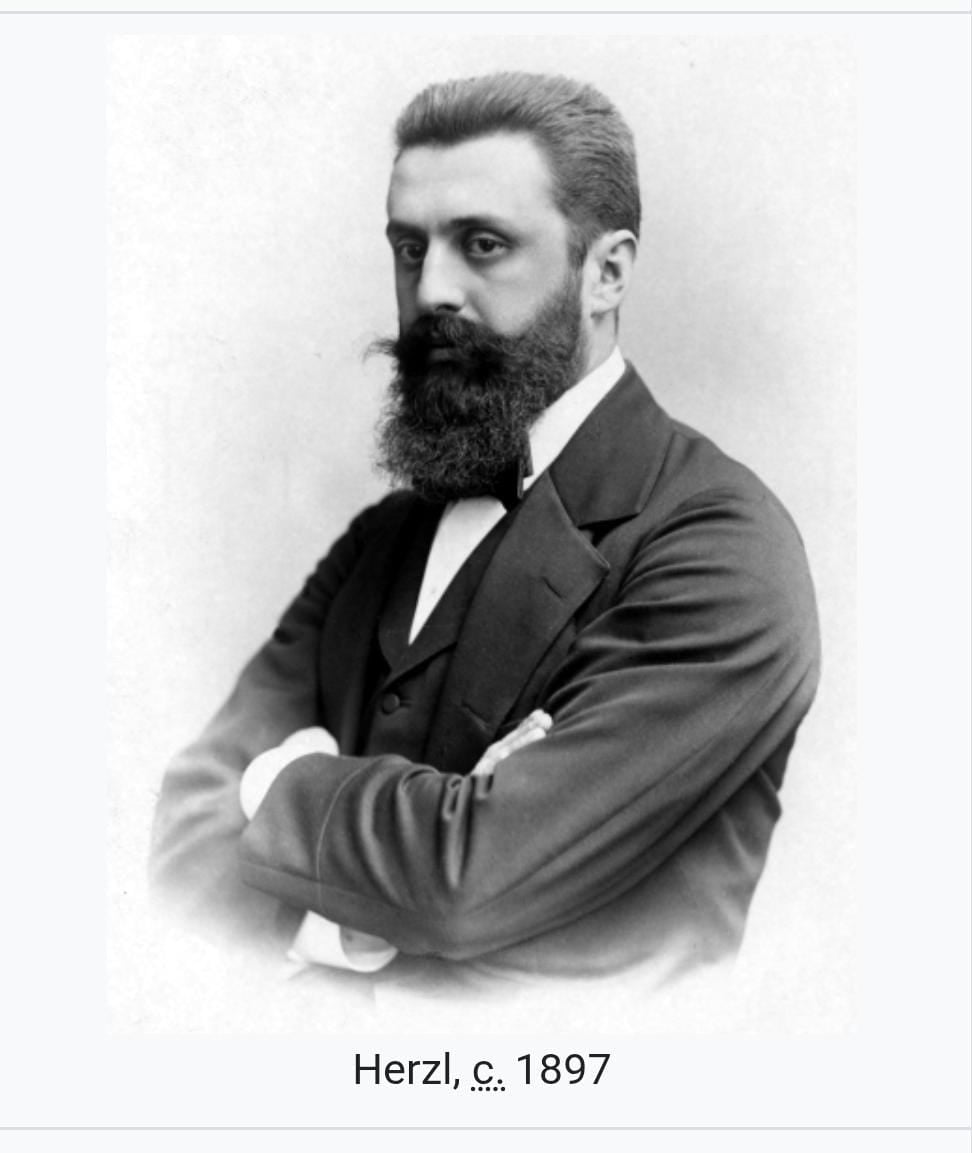
These were the values of the visionary of the state, Theodor Herzl. In his book The Jewish State and espoused ideology, Herzl envisioned a nation-state for the Jewish people—modern, democratic, progressive, socially responsible, with separation between religion and state, as well as strong civic institutions—established based on political agreements with its neighbors. Political Zionism was not born out of nationalist messianism but out of a historical responsibility for the fate of the Jewish people.
Even the pioneering movement that settled the land mainly came from the left. The settlement groups “Hanoar Haoved,” “Hashomer Hatzair,” “Machanot Haolim,” and other left-wing movements worked to establish a democratic national home for the Jewish people. A home that is also the home of non-Jewish citizens. A home that is not based solely on power but on partnership. They sought a more just, more equal, solidarity-based society. They believed in work, mutual aid, the brotherhood of nations, and the deeply Jewish concept of “Tikkun Olam.” A belief that did not stop them from fighting valiantly when it was necessary.
Israel’s Declaration of Independence delineates the values of the state’s founders. The drafters of the declaration determined that the state of Israel “will ensure complete social and political equality for all its citizens without distinction of religion, race, or gender; will guaranty freedom of religion, conscience, language, education, and culture; will safeguard the holy places of all religions; and will be faithful to the principles of the United Nations Charter.”
These are the cornerstones of the Zionism that founded Israel. Full civil equality. Freedom of religion and conscience. Protection of minorities. Adherence to international law. Political responsibility. Striving for cooperation with the international community. Anyone who reads the Declaration of Independence understands that the Zionism it reflects is very far from ultra-nationalism, Jewish supremacy, and the disdain for democracy that characterize large parts of today’s Israeli right.
The Declaration of Independence also stipulated that the state of Israel would have a constitution. However, Ben-Gurion’s security concerns and later the Harari compromise in 1950 prevented the enactment of a constitution, such that certain fundamental values were not fully and clearly anchored.
We continue to pay the price of this missed opportunity—in the form of right-wing attempts to dismantle the judicial system and weaken the checks and balances intended to protect Israeli democracy. Every day, the missed opportunity reveals itself as the Arab minority faces discrimination and as the Orthodox establishment attempts to impose a halakhic state.
The movement against the right-wing judicial coup has succeeded in restoring the original meaning of the Israeli flag: not a symbol of one political camp, not the property of the right, but a symbol of the democratic nation-state of the Jewish people with equality for non-Jewish citizens. Now we must continue the struggle. This is not only against what threatens to destroy Israel, but also for what Israel is meant to be.
The mission of the Zionist left is not to apologize. Nor is it to prove our patriotism. Our mission is to remind them of the historical and ethical truth: Zionism does not belong to the right. The state of Israel was not established to be a messianic, coercive, isolated, and discriminatory state. It was established to be the national home of the Jewish people, upholding full civil equality, freedom, justice, and peace. We must do this work by fully integrating Palestinian citizens of Israel and without apologizing for it.
This was the Zionism of the founders of the state. This is the Zionism of the Declaration of Independence. This is the Zionism we grew up with and for which we are fighting. Now we must believe in ourselves, stop apologizing, and fight for these values.