
Leadership With Heart
Israel’s Imperative: A Swift and Successful Finish
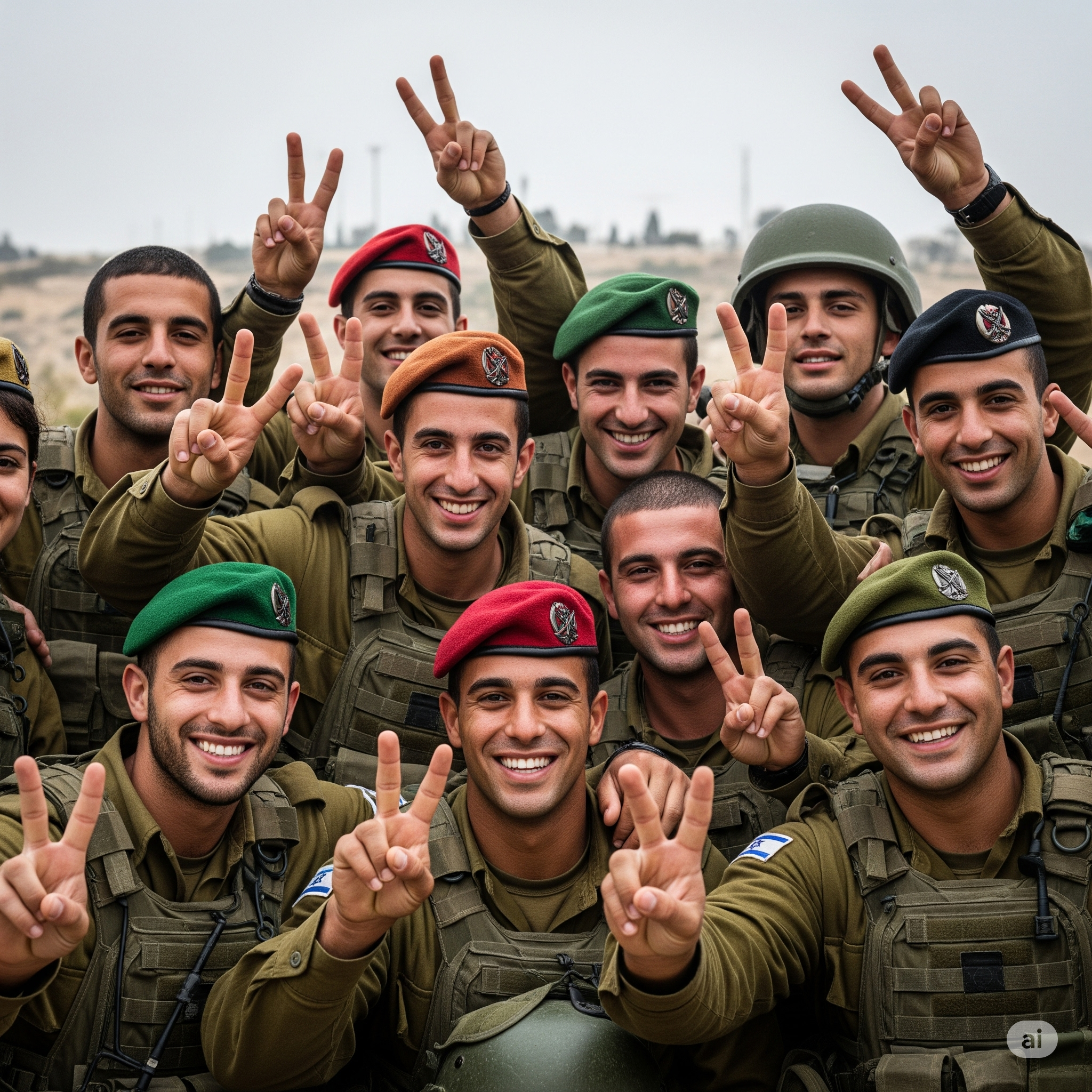
AI generated image via Gemini
As the war in Gaza approaches its two-year mark this October, the urgency for Israel to bring this conflict to a decisive close has never been greater. Israel continues to face a complex challenge: simultaneously defeating the Hamas terrorist organization militarily while negotiating for the release of Israeli hostages.
Dual Battles: Israel’s Military Fight and Hamas’s Propaganda War
Israel and Hamas are effectively engaged in two very different wars:
Israel’s war is existential and multifaceted — focused on survival, dismantling Hamas’s terrorist infrastructure, securing the release of hostages, and ultimately achieving lasting peace and security. This war is conducted under the heavy demands of a democratic society that must weigh every military action against domestic and international scrutiny.
Hamas’s war is simpler yet potent — it is a media and public relations campaign aiming to produce victims and amplify suffering to generate international sympathy. This sympathy fuels delegitimization campaigns, sanctions, diplomatic recognition efforts like those by Emmanuel Macron, and movements such as BDS, all designed to isolate and weaken Israel politically and morally.
The Ongoing Hostage Crisis: Why Hamas Refuses to Yield
Though Israel has succeeded in liberating approximately 80% of hostages, roughly 50 abductees remain captive — both living and deceased. Hamas intentionally rejects full hostage release agreements, retaining captives to maintain critical leverage. They understand that holding even one Israeli hostage forces Israel into concessions, keeping Hamas “holding the cards” in the negotiation.
Hamas’s Cynical Use of Civilians
Central to Hamas’s strategy is the deliberate use of civilians as human shields. Militants and weapon caches are concealed within hospitals, schools, homes, and mosques, a cynical tactic designed to maximize civilian casualties and generate more martyrs. This amplifies destruction and human suffering, which Hamas then exploits internationally to further their propaganda narrative.
Weaponizing Victimhood: The Media Battle
Every Palestinian casualty, damaged building, and aid queue is exploited by Hamas as propaganda to portray Palestinians as the oppressed victims of Israeli aggression. This narrative — echoed across social media platforms, certain news outlets, and various mainstream media channels — incites global outrage and supports delegitimizing efforts against Israel by accusing it of war crimes and genocide.
Golda Meir’s Warning and Hamas’s Endgame
As Golda Meir insightfully noted in a 1969 interview:
They say they want peace, but what they really want is a piece of Jerusalem, a piece of Tel Aviv, a piece of Haifa.
This reflects the reality that Hamas’s objective is the complete erasure of Israel, not a genuine peace.
Yasser Arafat, the late leader of the Palestinian Liberation Organization (PLO), further exemplified this violent ideology when he famously declared in 1980:
Martyrs, martyrs, martyrs… we want a million martyrs to march on Jerusalem.
Likewise, Hamas leaders and other factions glorify martyrdom as collective sacrifice. After nearly two years of relentless conflict and suffering on both sides, Hamas remains unhurried to end hostilities. Every death and injury adds to their narrative of victimhood, amplified through global media, inflaming global outrage, supporting the Boycott, Divestment, Sanctions (BDS) movement, inciting violence, and repeatedly attempting to delegitimize and destroy Israel.
The Challenge for Israel: Expedite the Mission, Cut Off Hamas’s Media Fuel
Given Hamas’s ability to manipulate global opinion by perpetuating victimhood, Israel faces a unique and daunting challenge: it must continue the war long enough to free hostages and destroy Hamas’s terrorist capabilities while simultaneously cutting off the narratives that feed Hamas’s propaganda campaign.
This means:
- Rapidly completing military objectives to disrupt Hamas’s infrastructure decisively. This involves targeted operations to dismantle leadership, destroy weapons caches, and eliminate tunnel networks while minimizing civilian harm.
- Severing channels that Hamas exploits for propaganda, which includes disrupting their financial networks, limiting their access to communication platforms used for incitement, and actively countering their false narratives with accurate information. This must be done while safeguarding legitimate humanitarian aid routes and respecting the role of independent journalism.
- Preventing the prolonging of conflict that magnifies Hamas’s ability to portray itself as victim and Israel as aggressor. A swift, decisive resolution aims to deprive Hamas of its ongoing ability to generate and weaponize suffering.
Balancing Security and Global Perception
Israel operates under the scrutiny of a vibrant democracy accountable to diverse constituencies at home and abroad, where each military decision is subject to intense debate and political pressure. This delicate balance makes Israel’s mission far more complex than Hamas’s, whose “war” is waged primarily through emotional manipulation on the global stage.
Therefore, Israel must pursue both military and diplomatic efforts with moral clarity and strategic patience, aiming at a swift and sustainable resolution that protects its citizens and counters Hamas’s propaganda effectively.
Conclusion: Break the Cycle for Israel’s Survival
Confronting Hamas’s dual threats requires unwavering transparency and resolve. Israel must accomplish the near-impossible task of winning its military objectives and freeing all hostages, while minimizing the duration of the conflict to deprive Hamas of its propaganda weaponry. Only by acting swiftly and decisively can Israel break the destructive cycle of violence, victimhood narratives, and delegitimization, safeguarding its future and securing lasting peace and dignity for its people.
Related Topics
Related Posts