
Israel’s new role in the new Middle East
Abstract: The Middle East since the fall of the Ottomans a hundred years ago operates as a fluid balance-of-power system in which rising states provoke counter-alliances and declining ones trigger realignments, driven by deep insecurity rooted in the region’s unresolved tension between nation-states and enduring pan-Arab and pan-Islamic visions. Within this context, Israel’s unique position as a non-Arab, non-Islamic and yet strong regional military power could allow it to act as a stabilizing arbiter, but only if it resolves the Palestinian issue, shifts toward diplomacy, and is broadly accepted as a legitimate and permanent part of the region.
In the Middle East when one country rises others unite against it, as an old rival falls the alliances that shaped to block it, dissipate and are replaced by a new kaleidoscope of enmity. A strong Syria caused jealousy and rivalry from their Ba’ath brothers, a weak Iran caused the UAE and KSA to rekindle their rivalry.
On its face, this does not make the Middle East so different from other regions. Yet even in the blood-soaked rivalries of pre–World War II Europe, there was a key constraint: since the collapse of the idea of a unified Roman Empire, no European power could realistically expect to fully absorb another. Victors imposed harsh treaties and seized territory (often only a small even if strategically important Island or overseas territory) but Paris remained Paris, and Berlin remained Berlin.
The same cannot be said of the Middle East. For centuries, the region was governed by successive empires, and the modern states that replaced them were, to a significant extent, shaped under European tutelage. As a result, three competing visions have continued to vie for dominance: the nation-state, pan-Arabism, and pan-Islamism.
While ruling elites have consistently prioritized their own survival, thereby preventing the visions of the pan variety from fully prevailing, the alternatives have never disappeared. They remain latent, credible possibilities. And that is precisely what makes them so threatening. The persistent fear that today’s state system could be replaced by a broader ideological order is a central driver of the region’s constant balancing behavior. As on a fundamental level no countries elite feels itself safe from total destruction.
The second is that there is no reason for the powers in the middle east to not see the struggle between them as a zero-sum game. Only a common market and an outside danger as well as a common idea that threatens state sovereignty (the ingredients we have in Europe and Europe alone, so far) could create a non-zero-sum game approach in the long term. And while Europe is unique in its interstate union project, the Middle East is Unique in just how weak the conditions for a cooperative regional order are: weaker state legitimacy, fragile national identities, and strong pan-regional ambitions.
And for a brief moment, globalization and a unipolar world encouraged a more cooperative, non-zero-sum mindset, but that moment is over. So, while Europe is unique in how it built a stable peace through economic integration, the Middle East is unique in how fragile the very idea of the nation-state still is.
So, as we have seen and will keep seeing, as one power rises forces unite against it and as it falls and another force rises in its stead the alliances reshuffle to unite against that force. Most recently we have seen the spats between UAE and KSA come to a new height as the UAE left OPEC almost the moment that Iran stopped shooting at them. As the Islamic Republic and its attempts at Pan Islamism might now fail, they will be replaced by Pan Islamic Turkish efforts and a struggle between the Saudis and Pakistan and the Emirates, Israel, and India. I am writing this on the 05th of May 2026, the new balance of power in the middle east is still being written and decided upon. And the balance of power will decide the alliance structure for the next round in the kaleidoscope ride that is Politics in the middle east.
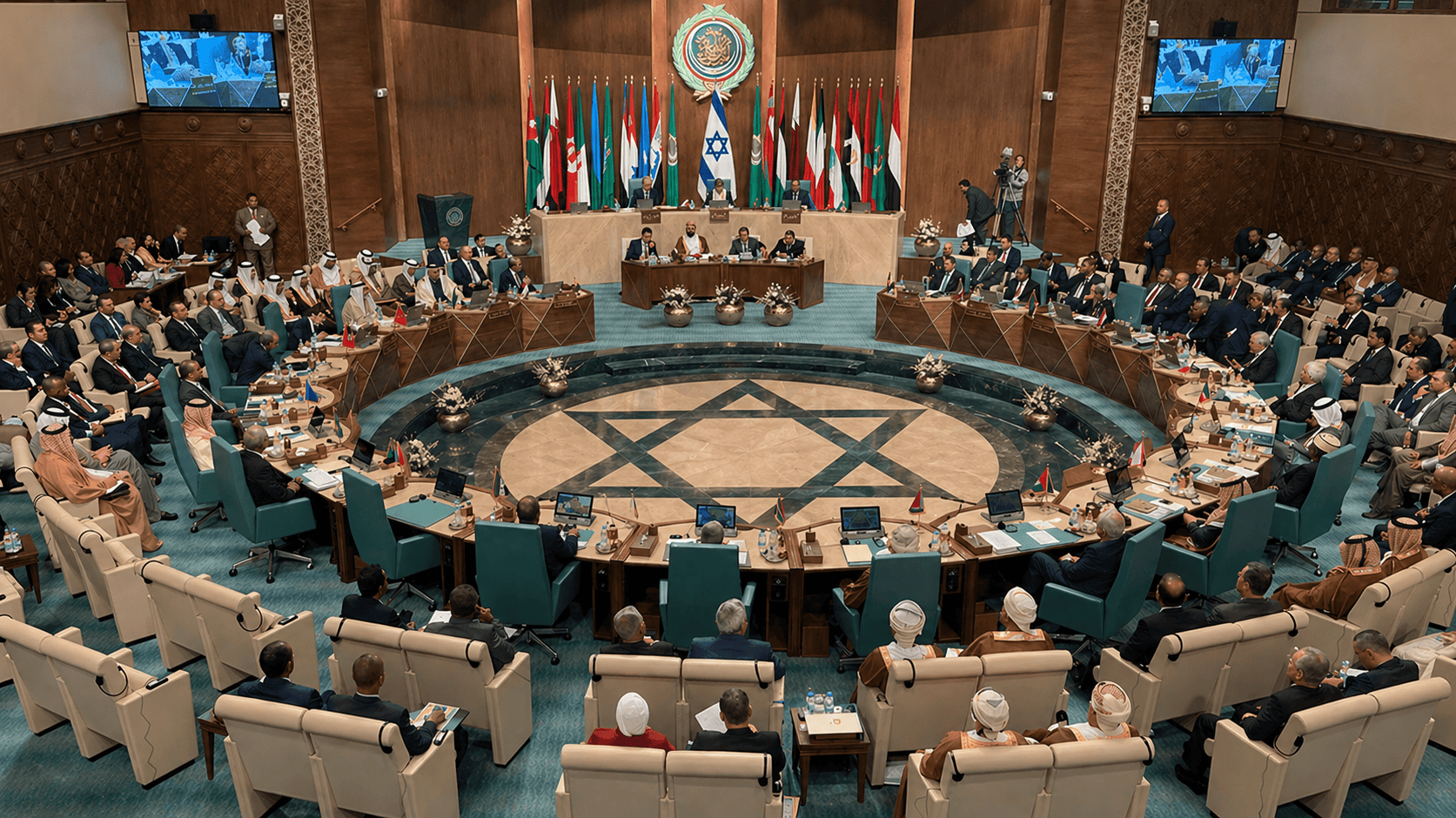
And here is where my idea comes in, Israel as a non-Islamic and non-Arabic power is incredibly well positioned in order to play the judge of a truly stable Middle East. Israel with its combination of military power and inability to threaten the state integrity of its neighbors as it lacks the ability to utilize a Pan-Arab or Pan-Islamic angle is uniquely positioned to secure peace and stabilize in the region in cases of discord. For that it would need to eliminate the Palestinian question as a political thorn, and once it does, it could form the heart of a new Arab League, with disputes between Arab and Muslim states in the region being henceforth solved in Jerusalem. Or rather a Middle East League of Cooperation. For that it would also need to stop allying itself with the weakest/peripheral forces as it has done till now (Jordan, Turkey before Erdogan, Iran before the revolution, pro Wester states such as Jordan, and now the UAE) and instead position itself as the tie breaker, judge, and enforcer of regional peace and stability. It needs to be mentioned that in general the forces in the middle east that align themselves with the west and then become likely allies for Israel themselves do that due to regional weakness, not strength.
It’s impossible to say whether that is truly the direction we are heading. For such a shift to occur, several things would have to change. Israel would need to show greater willingness to rely on diplomacy rather than military force, and the Palestinian question would need to be resolved. At the same time, broader public acceptance across the Middle East would have to emerge, recognizing that the Zionist project is not only here to stay but forms an integral part of the region.
For the Middle East to become stable, Israel cannot continue to exist as a “villa in the jungle.” Achieving that would require a mutual shift in perception, both among those inside the “villa” and those in the surrounding “jungle.”