
Middle East Affairs | Political Theology | Defending Judeo-Christian Values
Israel’s PR Defeat Is the West’s Strategic Crisis
For the past two years, the political class in the United States has been under immense pressure to distance itself from Israel. Yet, despite relentless protests, media campaigns, and international condemnation, Israel has managed to conclude the war without losing American support. The question now is, will that support endure?
Keep Congress pro-Israel and the rest would hold. That is the formula Israel and it’s allies followed, they assumed that elites shape public opinion, but in the digital age, the causality has reversed, public opinion shapes elites. Political leaders follow polls, not alliances. Their moral vocabulary is supplied by universities, media, and the online attention economy. Israel’s outreach to congressional committees preserved the mechanics of support but ignored the cultural soil that sustains it.
Policy is not self-sustaining; it is a political product that must be renewed by consent. Every contract must be reauthorized by legislators who answer to voters. Every military partnership depends on governments that survive elections. Every veto in the United Nations depends on domestic legitimacy. When a generation grows up morally alienated from Israel, policy will follow culture. Israel’s leaders behaved as if diplomacy were insulated from democracy. It is not. Culture writes law with a delay.
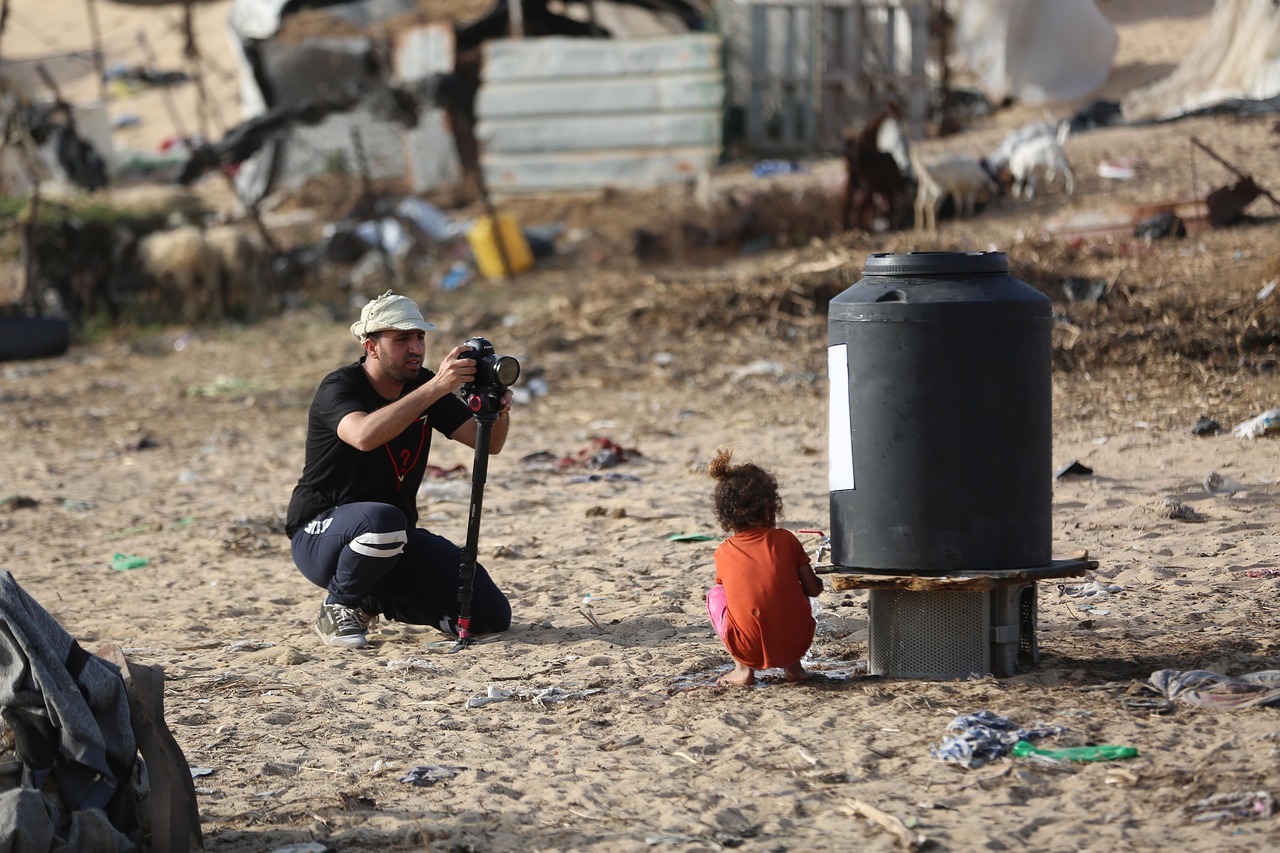
Israel’s communication strategy relied on press releases and briefings. It sought to prove legality; its enemies sought to provoke empathy. In the moral marketplace, legality loses every time. When images of rubble and children dominate screens, the viewer’s brain supplies its own verdict: complexity is cruelty, simplicity is virtue. The side that bleeds publicly wins the moral frame.
The new media battlefield runs on velocity, emotion, and simplicity. TikTok, Instagram, and short-form video compress moral judgment into seconds. During the Gaza campaign, researchers found roughly seventeen pro-Palestinian videos for every one pro-Israel post in Western feeds. That imbalance created an emotional monopoly.
On top of that the intellectual foundation of the anti-Israel movement was laid in Western universities long before the war. Post-colonial theory recast every conflict as a power dynamic between oppressor and oppressed. Within that lens, Israel could never appear as a victim. Departments that once produced diplomats now produce activists fluent in “decolonization,” “settler colonialism,” and “apartheid.” Their graduates fill media, NGOs, and policy staffs. By 2024, this vocabulary had become the lingua franca of moral legitimacy. Israel found itself judged by a template that pre-decided its guilt.
Palestine: A Vehicle for Jihad
As Israel was demonized in the cultural battlefield, Islam stepped in to occupy the moral vacuum. The Palestinian narrative became the perfect vessel for ideological smuggling, racial, colonial, and emotional all at once. Into that vessel, Islam poured its theological content, transforming a territorial conflict into a moral crusade.
The radical left and political Islam share little theology but much psychology. Both define identity through victimhood, both view Western civilization as corrupt, and both replace moral universality with tribal justice. Marxist anti-imperialism needed a new oppressed subject after the Cold War; Islam offered one. The Palestinian cause became the left’s last sacred revolution, and Islam gained a Western megaphone.
Each side instrumentalized the other. The left gained a global oppressed class to justify its moral posture; Islam gained moral laundering in liberal vocabulary. Through this exchange, religious supremacy was rebranded as resistance, and centuries-old theological animosity toward Jews was repackaged as anti-Zionism.
By the 2020s, “intersectional” activism had fused Islamic and Marxist motifs into a single ideological machine. The hijab was recast as a feminist symbol, jihad as liberation, and sharia as cultural authenticity. Under this framework, theology hid behind the language of human rights, and anti-Western ideology hid behind empathy.
“Pro-Palestine” soon became a moral password, a way to signal virtue without moral scrutiny. It provided Islam with an unchallenged entry into Western discourse. The word Palestine functions as a floating signifier: undefined, emotionally loaded, and universally redeeming. To be “for Palestine” is to be good; to question it is to be cruel.
Under that banner, Islamic activists advanced theology through cultural language. Concepts like Ummah (the global collective of believers) were repackaged as “solidarity.” The Qur’anic call for jihad fi sabil Allah (struggle in the path of Allah) was translated into “resistance.” And antisemitic doctrines, deeply rooted in Islamic theology, were sanitized and reintroduced as “anti-Zionism.”
What emerged was a seamless ideological alliance, a convergence of resentment and religion. The radical left supplied the emotional tools; Islam supplied the metaphysical certainty. Together, they built a coalition where jihad was moralized, conquest was humanized, and theology disguised itself as justice.
The Laboratory of Jihad
The failure to name Islam’s political core allowed the war in Gaza to be reframed as a moral contest between a colonizer and an occupied people. Israel’s war for survival was reduced to a territorial dispute with a stateless population. Every Israeli strike became “genocide,” and every civilian casualty, “ethnic cleansing.”
That distortion persists because the West does not understand what Israel is actually fighting. To the uninformed viewer, it appears a local tragedy, an anomaly, a conflict about borders, not belief; about policy, not theology. Jihad is treated as a regional pathology rather than a global ideology.
However, to those familiar with Islamic theology, it is a chapter in a long civilizational struggle, one that seeks not statehood but the restoration of the caliphate. As long as that motive remains hidden, the Western imagination will be ruled by emotion, and emotion will always favor the weaker side.
This unwillingness to confront Islam’s political nature stripped the West of interpretive defense and made it vulnerable to manipulation through images and emotions. But the consequences go way beyond that. For eight decades, Israel has been the laboratory of jihad, the testing ground where Islam’s political ambitions met the resistance of a democratic, non-Muslim state.
Every method later exported to the West, terrorism justified as “resistance,” propaganda disguised as humanitarianism, was first practiced against Israel. The West now stands where Israel once did, only without Israel’s clarity. It faces an adversary that exploits compassion, hides behind freedoms, and manipulates guilt. Israel learned that appeasement feeds aggression; the West has yet to learn that lesson.
Truth: The West’s Last Line of Defense
Israel can’t restore its moral legitimacy through better marketing. It can only do so by exposing what it is actually fighting, not Palestinians, not Arabs, but a theological system that has never accepted coexistence with any non-Islamic sovereignty.
When the West finally understands that, everything changes. The accusation of genocide collapses, because one can’t commit genocide against an ideology that seeks one’s annihilation. The charge of colonialism evaporates, because the Jewish return to its ancestral land precedes Islam by a millennium. The illusion of moral equivalence shatters, because the conflict ceases to look like two nations fighting and begins to appear as it truly is: a war between a civilization that sanctifies life and one that sanctifies conquest.
Exposing Islam’s political ambition does not mean vilifying all Muslims. It means refusing to let a theocratic ideology hide behind humanitarian rhetoric. It means telling the West that what Israel faces today, it will face tomorrow, the same infiltration, the same weaponized guilt, the same exploitation of moral weakness.
Truth provides immunity against emotional propaganda. Once people understand the theological framework, the idea of jihad as permanent obligation, the goal of reviving the caliphate, the subordination of non-Muslims, images lose their manipulative power. A photo of rubble no longer automatically signifies aggression; it raises the question of cause. A chant for “liberation” no longer sounds virtuous; it echoes imperial theology. Context breaks hypnosis.
That is why exposing Islam is not Islamophobia. It is moral vaccination, protecting the West from propaganda by giving it understanding. The more the public knows about Islam’s real doctrines and ambitions, the harder it becomes to hijack emotion. And when the West regains moral clarity, Israel’s reputation will repair itself. The world will finally see Israel not as a colonizer but as the front line of a shared defense.
Israel is not an exception; it is a preview. What the Jewish state faces in concentrated form, delegitimization, infiltration, moral inversion, the West is beginning to face in diffuse form. The same slogans, the same tactics, the same alliances of religious absolutism and cultural relativism that isolate Israel are now destabilizing Western societies.
Exposing Islam’s political theology provides the West with a language of self-defense it has forgotten. It reminds the free world that compassion without context is suicide and tolerance without discernment becomes submission.
Related Topics