Israel’s Recognition of Somaliland: Hypocrisy Exposed
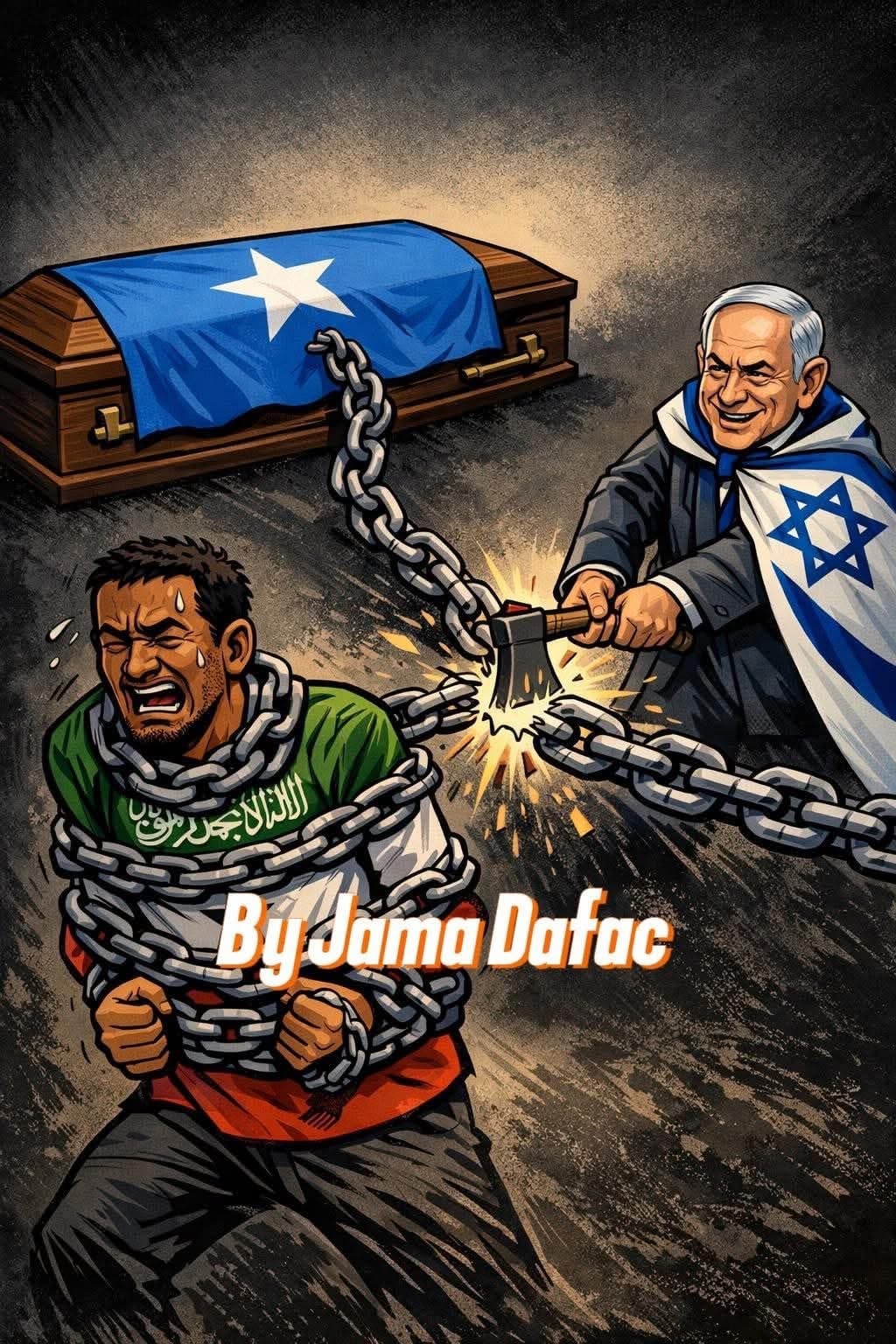
Israel’s decision to extend diplomatic recognition to Somaliland has provoked outrage in some quarters of the Islamic world. Yet beneath the noise, indignation, and ritual denunciations lies an uncomfortable truth that many Muslim-majority states would rather avoid. This recognition has not created a new injustice; it has exposed a long-standing one. It has laid bare a deep hypocrisy within parts of the Islamic world—one that proclaims solidarity, justice, and human rights in theory, while in practice shielding dictatorships, excusing mass atrocities, and punishing societies that choose peace, democracy, and accountability.
Somaliland’s political story is neither obscure nor legally implausible. It is, in fact, one of the clearest cases of interrupted statehood in post-colonial Africa. From 1884 until June 26, 1960, Somaliland existed as a British Protectorate with clearly defined colonial boundaries. On that date, it attained independence as a sovereign state, recognized by more than thirty countries. Only days later, driven by pan-Somali idealism rather than constitutional prudence, Somaliland voluntarily entered into a hurried and legally dubious union with Italian-administered Somalia, which became independent on July 1, 1960 to form the now defunct Somali Republic.
That union was never ratified through a mutually agreed and properly enacted legal framework. Power was centralized in Mogadishu, Somalilanders were marginalized politically and economically, and dissent was met with repression. The experiment in unity collapsed spectacularly. By the late 1980s, the Somali state turned its weapons on its own citizens in the north. Between 1988 and 1990, cities such as Hargeisa and Burao were systematically bombed, tens of thousands of civilians were killed, and hundreds of thousands were displaced. What occurred was not an unfortunate by-product of civil war; it was a deliberate campaign of collective punishment that meets every credible definition of genocide.
One might have expected the Islamic and Arab worlds—so often vocal about Muslim suffering elsewhere—to rise in defense of Somaliland’s civilian population. They did not. On the contrary, many Muslim-majority states either openly sided with the Somali regime responsible for the atrocities or chose silence and diplomatic evasion. Even when evidence of mass killing was presented before international forums, solidarity was extended not to the victims but to the perpetrators, in the name of preserving a fictional unity. Based on credible reports from international human rights organizations, Israel brought the issue of the Isak genocide to the attention of the United Nations General Assembly.
This was not an isolated moral failure. History offers other stark examples. In 1971, when the Pakistani army carried out mass killings against Bengali civilians following Bangladesh’s declaration of independence, much of the Muslim world again looked away—or worse, defended the aggressor. It was a non-Muslim country, India, that intervened militarily to stop the slaughter and subsequently recognized Bangladesh as a sovereign state. Similarly, during the late 1980s, when Somaliland’s population fled aerial bombardment, it was Ethiopia—not Arab or Muslim states—that hosted refugees and provided limited material support. In both cases, moral action came from outside the self-proclaimed fraternity of Islamic solidarity.
After the collapse of the Somali Republic, the contrast between Somalia and Somaliland could not have been sharper. Somalia fragmented into armed fiefdoms, became dependent on foreign troops for the survival of its central government, and turned into fertile ground for extremist violence. Decades later, thousands of foreign peacekeepers remain deployed to protect a fragile administration in Mogadishu that cannot function without external military and financial support. Terrorism flourishes in this environment, feeding on lawlessness, grievance, and institutional decay.
Somaliland chose a different path. Rather than relying on foreign intervention or externally designed peace conferences, it embarked on a locally owned, bottom-up reconciliation process. Clan elders, community leaders, and civil society actors negotiated ceasefires, resolved grievances, and gradually disarmed militias. Former fighters were integrated into a newly formed national army and police force. This was not a cosmetic peace imposed from above; it was a deeply rooted social contract built through compromise, restraint, and collective responsibility.
The results speak for themselves. Somaliland has remained free from terrorism, not because of foreign troops or massive security budgets, but because it cultivated a political culture that denied violent extremism the social space to thrive. Peace was followed by institution-building. A constitution mandating a multiparty democratic system was drafted and approved by referendum in 2002. Since then, Somaliland has conducted multiple presidential, parliamentary, and municipal elections, all assessed by international observers as broadly free and fair. Power has changed hands peacefully, including from incumbents to opposition parties—an achievement that remains uncommon across much of Africa, the Arab and the Islamic world. Courts function. Parliament debates. The press operates with a degree of freedom rare in the region.
Yet despite these achievements, Somaliland has been systematically punished by the international community—particularly by Arab and Muslim states—for refusing to submit to a failed union. Diplomatic recognition has been withheld not because Somaliland lacks the attributes of statehood, but because acknowledging its success would force an uncomfortable reckoning with decades of misplaced loyalty and moral inconsistency.
Instead, the fiction has been maintained that Somalia exercises sovereignty over a territory it has not controlled for more than three decades. This has had tangible and often humiliating consequences for Somalilanders. Livestock exports—the backbone of the economy—have been obstructed when Saudi Arabia demanded written authorization from Mogadishu, which charges fees for animals it neither raises nor inspects. Members of the Somaliland diaspora have been forced to obtain e-visas from a government that does not administer Somaliland’s airports, ports, or borders. These practices amount to a diplomatic chokehold, one that has constrained Somaliland’s economic growth and international engagement.
Israel’s recognition of Somaliland disrupts this unjust status quo. It does not erase history; it acknowledges it. It does not undermine international law; it aligns with it. Recognition affirms that borders inherited at independence matter, that genocide has consequences, and that peaceful, democratic societies deserve legitimacy. More importantly, it removes a symbolic and practical stranglehold, allowing Somaliland to breathe politically and economically.
The furious reaction from some quarters of the Islamic world says less about Israel and more about those who protest the loudest. It reveals a selective morality that condemns certain injustices while excusing others, depending on who commits them. It exposes a preference for authoritarian solidarity over ethical consistency. And it highlights a deep discomfort with the idea that a Muslim society can find recognition and respect outside traditional alliances when those alliances have repeatedly failed it.
For the people of Somaliland, gratitude toward Israel is neither ideological nor theological. It is moral and historical. When others dismissed their suffering, ignored their achievements, and upheld a failed state’s fictitious claims over their lives, Israel chose acknowledgment. That decision resonates deeply with a society that rebuilt itself from rubble without external rescue, that chose ballots over bullets, and that proved stability in the Horn of Africa is possible without perpetual guardianship.
Critics may scoff at Somalilanders who wave Israeli flags, but symbolism matters. It reflects a collective memory of who stood aside and who stepped forward. It is an expression of dignity reclaimed after decades of marginalization. Recognition does not rewrite alliances overnight, nor does it absolve Israel—or any state—of criticism where criticism is due. But it does affirm a basic principle that the Islamic world, in its official posture, has too often abandoned: that justice should not be contingent on convenience, and that solidarity should never serve as a shield for oppression.
If there is discomfort today, it is because a mirror has been held up. Somaliland’s story forces a reckoning with uncomfortable questions. Why are dictators defended while democratic societies are ignored? Why is unity prized even when it is enforced through mass killing? And why is recognition denied to those who have earned it through peace, restraint, and self-governance?
Israel’s recognition of Somaliland does not create a moral crisis. It exposes one that has existed for decades.
Abdullahi Hussein Daud is a Ph.D. candidate in Peace and Development Studies and teaches Public Policy as well as Ethics in Government at Civil Service Institute in Hargeisa, Somaliland. He can be reached at abhussein1988@gmail.com