Israel’s recognition of Somaliland is a monumental move
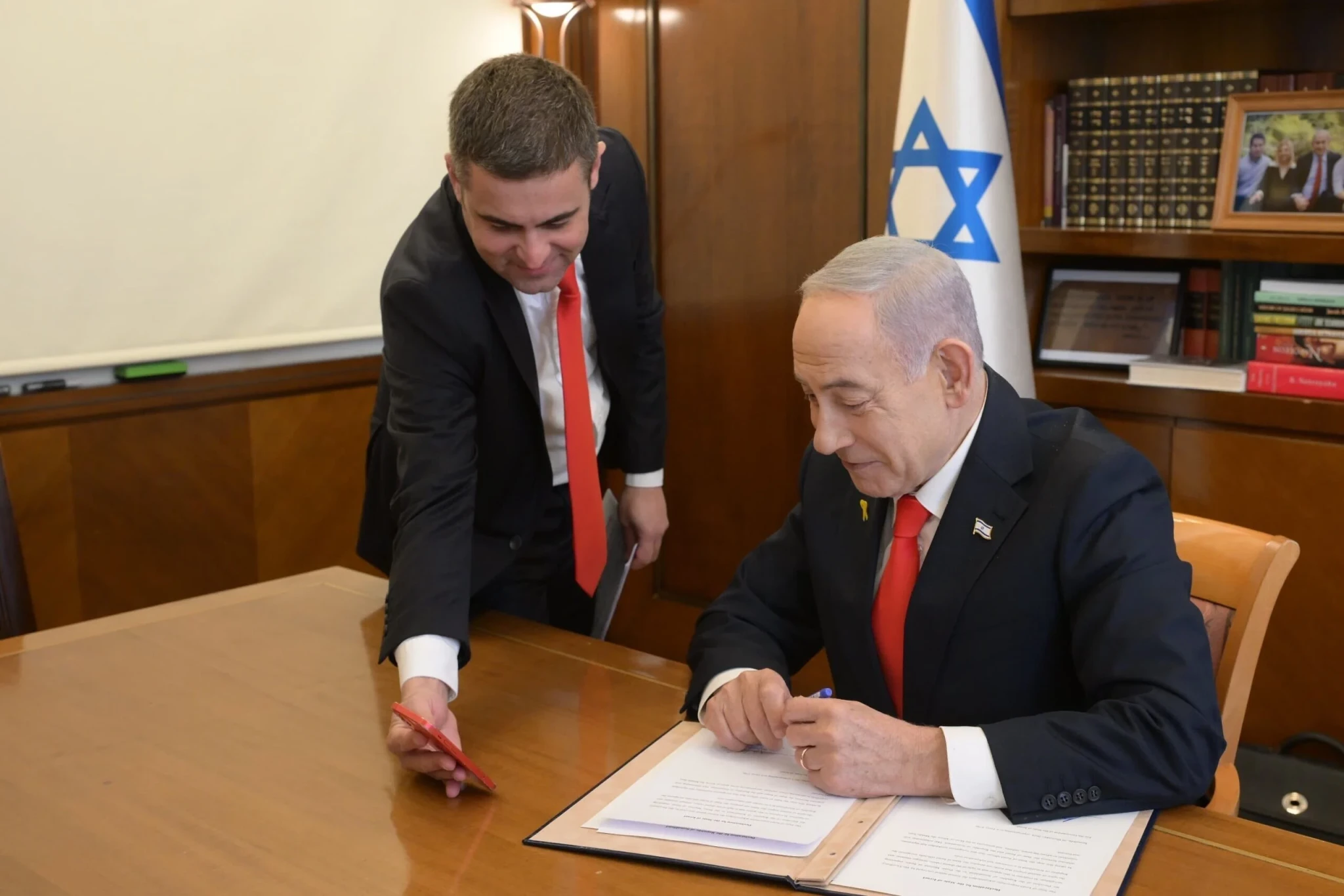
On Friday, Israel became the first country to recognize Somaliland as an independent country since the unification of Somalia and Somaliland in the 1960s. This comes after several months of secret meetings between Israeli and Somaliland officials, including meetings with Foreign Minister Gidon Sa’ar.
The announcement came via X, with Prime Minister Benjamin Netanyahu sharing a video chat with Somaliland President Irro while signing the recognition agreement. This agreement was framed in the context of the Abraham Accords, with President Trump’s approval. Over the past year, the US president and Republicans in Congress have spoken publicly and positively about engagement with Somaliland. The announcement also occurred simultaneously with a high-level American diplomatic and military visit – the second in recent months.
The Prime Minister announced today the official recognition of the Republic of Somaliland as an independent and sovereign state.
Prime Minister Netanyahu, Foreign Minister Sa'ar, and the President of the Republic of Somaliland signed a joint and mutual declaration. pic.twitter.com/M0AeTs5oxY
— Prime Minister of Israel (@IsraeliPM) December 26, 2025
Despite the many challenges it poses, this decision opens up significant opportunities for Israel, Somaliland, and their allies in the wider region.
For many, the recognition announcement comes as a surprise. With Israel diplomatically isolated in the wake of the Gaza war, a bold and possibly disruptive move like this could stir up unwanted attention. Moreover, Egypt, Türkiye, and Qatar, all key actors in President Trump’s post-war plan for Gaza, are close allies of Somalia. This move could drive a wedge between these countries and Israel at a delicate time when close cooperation is needed. Additionally, at a time when recognizing an independent Palestinian state is front and center in the international arena, it might seem counterproductive for this particular Israeli government, which is staunchly opposed to Palestinian statehood, to recognize another unrecognized republic.
However, given Israel’s isolation and the stalemate over post-war planning in Gaza, combined with internal political chaos within his coalition and an impending election season, the Netanyahu-led government is eagerly seeking any diplomatic win, particularly one that could be as prosperous as an alliance with Somaliland.
For Israel, Somaliland is an exceptionally strategic partner. Somaliland’s coast stretches 850 km along the Gulf of Aden, one of the busiest and most profitable shipping routes in the world, with 30% of global trade passing through the region annually, according to the World Economic Forum.
Additionally, Berbera port serves as a promising trade point of entry, with a corridor being developed through Somaliland and into Ethiopia and beyond. Earlier this year, Israeli President Isaac Herzog visited Africa, opening a new Embassy in Zambia and deepening ties with the Democratic Republic of the Congo. Somaliland could serve as another road to deepening ties between Israel and the continent.
From a security perspective, Somiland sits across from Yemen and is a prime base of operation to counter aggression from the Houthis, one of Israel’s prime adversaries over the past two years. Somaliland also maintains deep commercial and security ties with the UAE, one of Israel’s prime partners in the region, including a $400 million investment by DP World in Berbera port.
For Somaliland, recognition itself is a major breakthrough after 30 years of struggling to gain international support. However, the benefits of relations with Israel are far beyond symbolic. Israel is a global powerhouse in agriculture, water management, and healthcare technologies. At a time when Somaliland is facing severe drought, Israeli tech could provide life-saving solutions. Beyond that, cooperation between security forces and intelligence agencies could help address myriad regional challenges.
In the coming days and weeks, watch for other countries to join the fray of recognition. Similar to the Abraham Accords in 2020, Israel’s recognition of Somaliland could pave the way for others to follow suit. Already isolated by the international community, Israel could take the brunt of criticism for this move, making it easier for others to move forward with their own recognition. Ethiopia, which signed an important memorandum of understanding with Somaliland in 2024, could be close behind, along with Kenya, the UAE, the UK (Somaliland’s closest European partner), and even the US.
Significant risks
Despite the positives of this development, many risks do remain. For years, the African Union has refused to recognize Somaliland out of fear that this could open a Pandora’s box on the continent, fueling other separatist movements and leading to destabilization. Many worry that this could further destabilize Somalia proper. There is already an ongoing power struggle between the Federal Government of Somalia and regional states, such as Puntland and Jubaland, and an independent Somaliland could further empower them to seek distance from Mogadishu.
This move could also further inspire Al-Shabaab and the Houthis to take decisive action against Israel or Somaliland. With their cooperation and the possible delivery of long-range missiles to Al-Shabaab, the security threat should not be understated.
Perhaps the two most important countries to watch at the moment are Egypt and Türkiye. Both countries are staunch allies of Somalia on cultural, financial, and military levels. Both countries, along with Somalia and Djibouti, have already condemned Israel’s move to recognize Somaliland. We have also seen strong condemnation from the Qataris, Saudis, Arab League (of which Somalia is a part), and the Organization of Islamic Cooperation. At a time when Israel needs the support of the Arab world in the post-war planning and reconstruction of Gaza, this new wedge will not be helpful.
Türkiye, in particular, might leverage the move to gain greater influence in Gaza. Türkiye has expressed a strong desire to have a military presence in the enclave, playing a crucial role in the ISF and in Gaza reconstruction. This had been a hard red line for the Netanyahu government, but given recent reporting that Israel is reconsidering its opposition, Türkiye might be able to use this situation to its advantage.
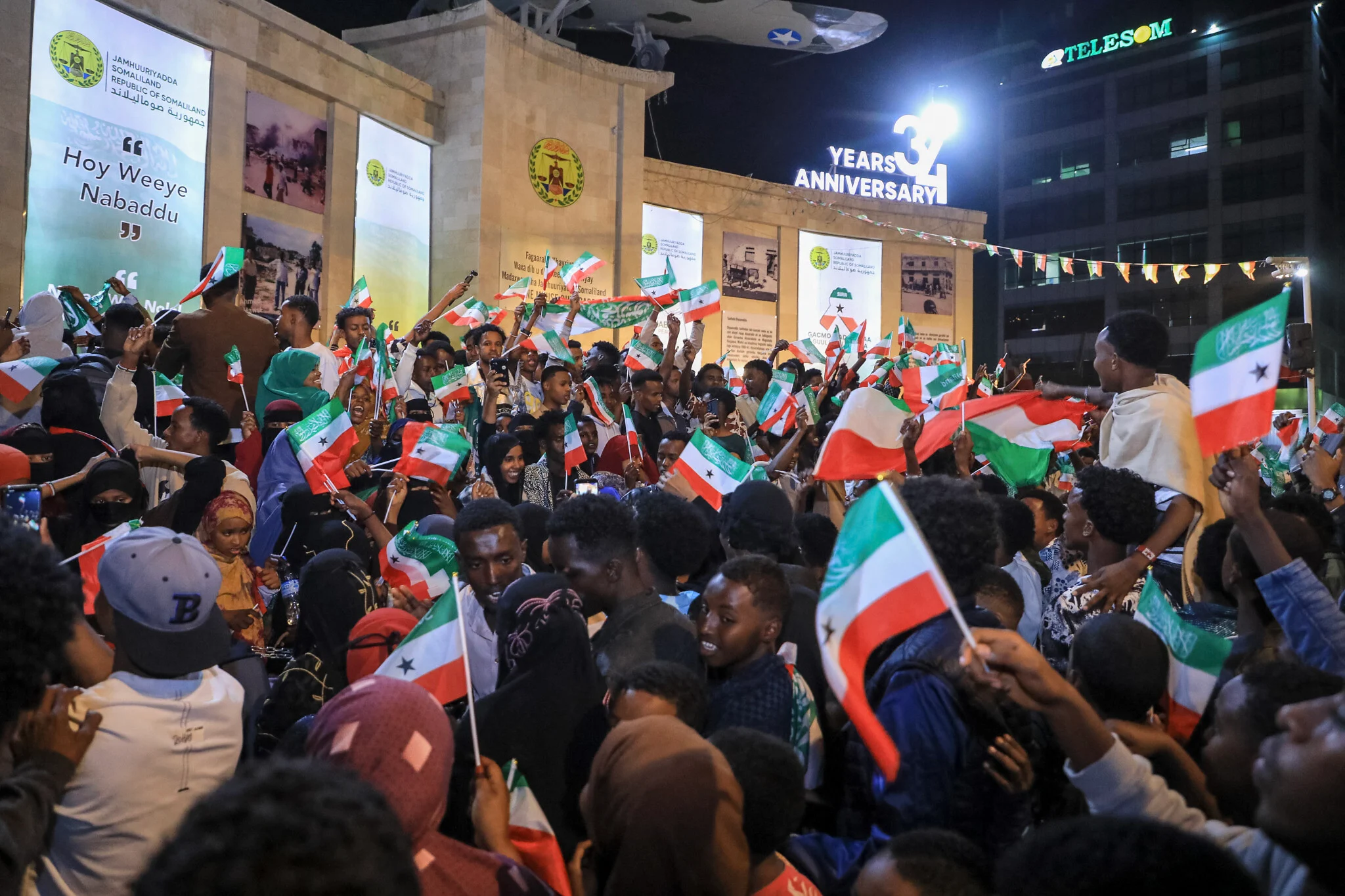
Finally, one must watch internal Somaliland dynamics around this moment. While a majority of the country appears jubilant at this move, with celebrations erupting from Hargeisa to Erigavo, the Somaliland people are sympathetic to the Palestinian cause and have been highly critical of Israel over the past two years. Some in the country worry that, as a part of this deal, Somaliland could be used as a means to forcefully displace Palestinians from Gaza. There is already deep speculation that part of this deal would include a clause regarding the relocation of Palestinian refugees. While Somaliland has been a destination for refugees in the past, and willing Palestinian refugees would certainly be welcome, any act seen as permanently displacing Palestinians from Palestine would be met with strong opposition from many in Somaliland.
Moreover, Somaliland has its own internal conflicts to manage, with clan conflicts on both its east and west borders.
Even with the challenges at hand, Israeli recognition of Somaliland is monumental, providing a final geopolitical shift to the Red Sea security arena at the end of 2025. The coming weeks and months will be critical, as opportunities for trade and partnership between the two nations open up, and the world begins to respond to its newest country. Of course, at the core of all of this lies President Trump, an ally of Israel and Somaliland, and the architect of a new world order we’re seeing in the Middle East and Africa. How this plays into his regional ambitions, ties into his post-war plans for Gaza, and leverages the Abraham Accords is yet to be seen, but observing how the US acts in this moment should be on everyone’s agenda.