Israel’s Small Businesses Need a Big Break
From shawarma shops to family farms, Israel’s SMEs are crying out for support. It is time someone answered.
These are not the easiest of days for Israel’s small and medium-sized businesses (SMEs). In fact, they may be among the hardest. Yet amid shuttered storefronts, collapsing supply chains, and dwindling compensation, one thing shines through – the indomitable spirit of Israeli entrepreneurs.
I’m talking about the corner falafel joint. The family-run mango farm. The independent carpenter who has not taken a vacation in three years. The mom-and-pop grocer, the tech consultant, the neighborhood hairdresser. In other words: the backbone of Israeli life.
And today, that backbone is bending under enormous weight.
Take Dudu and Bat-sheva Argaman, for example. For more than five decades, the couple has grown lemons and mangoes on a quiet moshav in northern Israel. On October 7, they were doing what they have always done – working the land. But in the hours and days that followed the Hamas massacre, orders for their fruit disappeared. Restaurants closed, customers vanished, and prices dropped below production costs. They did not just lose income, they lost a lifeline.
The Argamans are not alone. From the southern towns impacted by rocket fire to northern communities rattled by Hezbollah and Iranian attacks, Israel’s SMEs have been fighting a two-front war: one against violence, the other against bureaucracy.
And while help has trickled in, from social lenders like Koret, or surprise grants from generous companies like Wolt, it has not been enough. Even a recently unveiled government plan, designed to compensate small businesses impacted by the Iran conflict, is often too little, too late. Many owners are discovering that what is offered barely covers 5% of their losses, and that eligibility criteria exclude the very businesses the plan claims to protect.
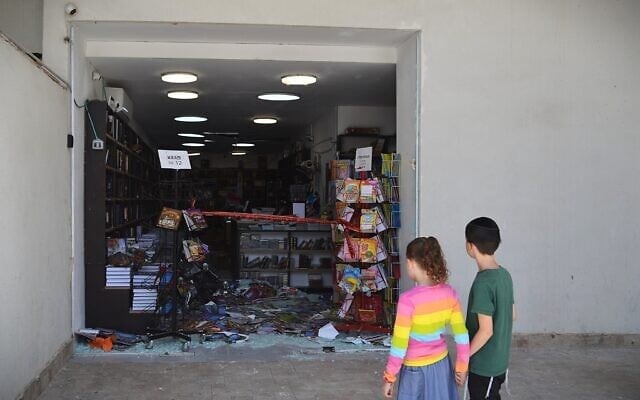
One business owner, Roli Smulevitch, saw his Rehovot-based shawarma restaurant flattened by a missile strike. Fifteen years of sweat equity and community spirit reduced to rubble. When he reached out to the Israeli Tax Authority, the response was chilling: he was “just a general citizen,” not part of a designated war zone, and thus entitled to limited compensation. No help for operational losses, no real support for rebuilding. Only a loan, with interest—and a prayer.
He is not giving up. But he is waiting. And waiting is costly.
Let us be honest: Israel’s SMEs are not asking for miracles. They are asking for clarity, consistency, and compassion. Many are forced to rely on GoFundMe pages to survive, because applying for state aid means hiring underwriters and economists they cannot afford. The process is so complex that some local municipal advisors are reportedly telling business owners not to rebuild until an assessment is complete.
This is not how a nation treats heroes of its economy.
And yes, they are heroes.
You see, small businesses in Israel are more than economic engines. They are cultural hubs. Social lifelines. Places where the hummus is perfect, the gossip is warm, and the credit is flexible. They are what makes a town feel like home. And their survival is not just about GDP, it is about resilience and renewal.
In a country where war is never theoretical, these businesses embody Israel’s daily strength. They innovate not with venture capital, but with grit. They build not with algorithms, but with heart. They do not just survive adversity, they teach us how to live through it.
I have met a decent number of these unsung heroes in my travels – shopkeepers in Tel Aviv who offered discounts to soldiers, food truck owners in Haifa donating meals to displaced families, market vendors in Jerusalem reopening just days after missile strikes. This, too, is what it means to innovate the future of Israel.
But even the strongest need support. And now, more than ever, the government must step up. Not with slogans, but with systems that work. With frameworks that do not lump micro businesses with corporations. With access to aid that does not require a lawyer, a spreadsheet, and a miracle.
Let us also give credit where it is due. Initiatives like Koret’s social lending model, and social enterprises like Andrew Keene founded-ESEK are making a difference. They are mentoring, coaching, and connecting struggling SMEs to whatever relief they can. They are trying to hold the line where others have faltered.
But the government must match their urgency.
Because it a race against time.
More than 60,000 businesses shuttered in Israel last year. That number is expected to climb to 80,000 by the end of this year. And behind every closure is a human story, a family dream paused, a livelihood lost, a community disrupted.
So here is my appeal: let us remember that helping small businesses is not just economic policy. It is national defence. It is social resilience. It is emotional infrastructure.
Let the government moves faster, simplify access, and ensure that no entrepreneur is left behind simply because they could not find the right form to fill.
And to the shop owners still holding on: we see you. We admire you. Your courage is not unnoticed. You are the beating heart of Israel.
To those building again from scratch, like Roli and the Argamans, may the months ahead bring brighter days. And may the society rally around you, not just with hashtags, but with practical help.
Rebuilding a shawarma stand is not just about reopening a business, it is about reclaiming a sense of normalcy, dignity, and hope. Even in the aftermath of destruction, it stands as a quiet yet powerful declaration, that society chooses life, chooses each other, and chooses to move forward.