Meanwhile back home...
It’s 1982 All Over Again
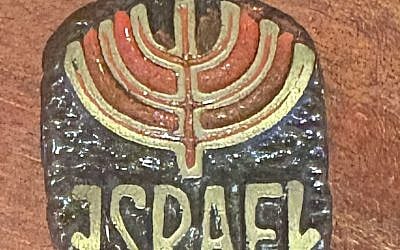
Yehuda Katz (z”l) came home today. Forty-four years after the battle at Sultan Yacoub, Yehuda Katz’s remains were returned to Israel. I am thinking of his family today, their sorrow laid bare once again and, I hope, some closure. So much has transpired since 1982 and the first Lebanon War – in Israel, the region, the world. When I read the news that his remains had been found and returned, I was transported to Lebanon, 1982 and all that I knew, painfully true, about the first Lebanon War.
I was an idealistic graduate student in Canada, studying political science. It had been several years since my first trip to Israel and I was still longing to return. I was passionate about Middle East politics and international relations. Despite the fact that the graduate department’s specialization was Canadian public policy, I was determined to write my Masters thesis about Israel. On that very impactful first trip to Israel in high school I met an Israeli boy on a kibbutz above Kiryat Shmona, at the Lebanon border. (At the time, the “Good Fence.”) We kept in touch and then, only a couple of years later, it was 1982 and he went to fight in Lebanon. It was the first Israeli war that I was old enough to remember and yet, all I really knew about it was that it had changed him from a happy-go-lucky jokester into an intense, cynical young man. Years later in graduate school, I thought about my friend and how little I knew about the reality of living in Israel. It was then that I decided to write my Masters thesis about the Lebanon War.
It was an academic challenge, yes, but more importantly it was a personal challenge. The 1982 war had made its mark on Israel’s history and it was a turning point for many Israelis and Israel supporters. It was a different kind of war. I was further challenged by my graduate advisor. In a graduate department of scholars of Canadian politics and policy, I could find no one to serve as my advisor on my chosen topic, except for a newly minted faculty member whose primary interest was multiculturalism and Islam.
I was relieved to find an advisor but learned very quickly that Professor M. did not share my views on Israel (and as it turns out, Jews). He challenged me academically, pushed me to check my assumptions and conduct my research with a critical eye. And I did. I read everything I could about the Lebanon War. (This was long before the internet, which meant that I spent many hours hunting down sources before I ever sat down to reading.)
I knew more about the war than I needed to, and then some. I read about Sultan Yacoub and the three missing Israeli soldiers. I could only imagine but I began to sense what had changed for my friend, my dear friend from a kibbutz on the Lebanon border. I began to understand the loss of innocence, for in my own way, through this very academic pursuit, I had begun to feel it for myself.
I wrote my thesis and never spoke of it again. A hard copy, in its blue binding with gold lettering, is stored away in a box in the cupboard in my office. Today, that chapter of my life reopened. Forty-four years; has it been that long? I am older and wiser, still passionate about Middle East politics and Israel. And Yehuda Katz (z”l) is home. May his memory be a blessing.
Related Posts