
Leadership With Heart
Journeys of Faith in an Uber Ride
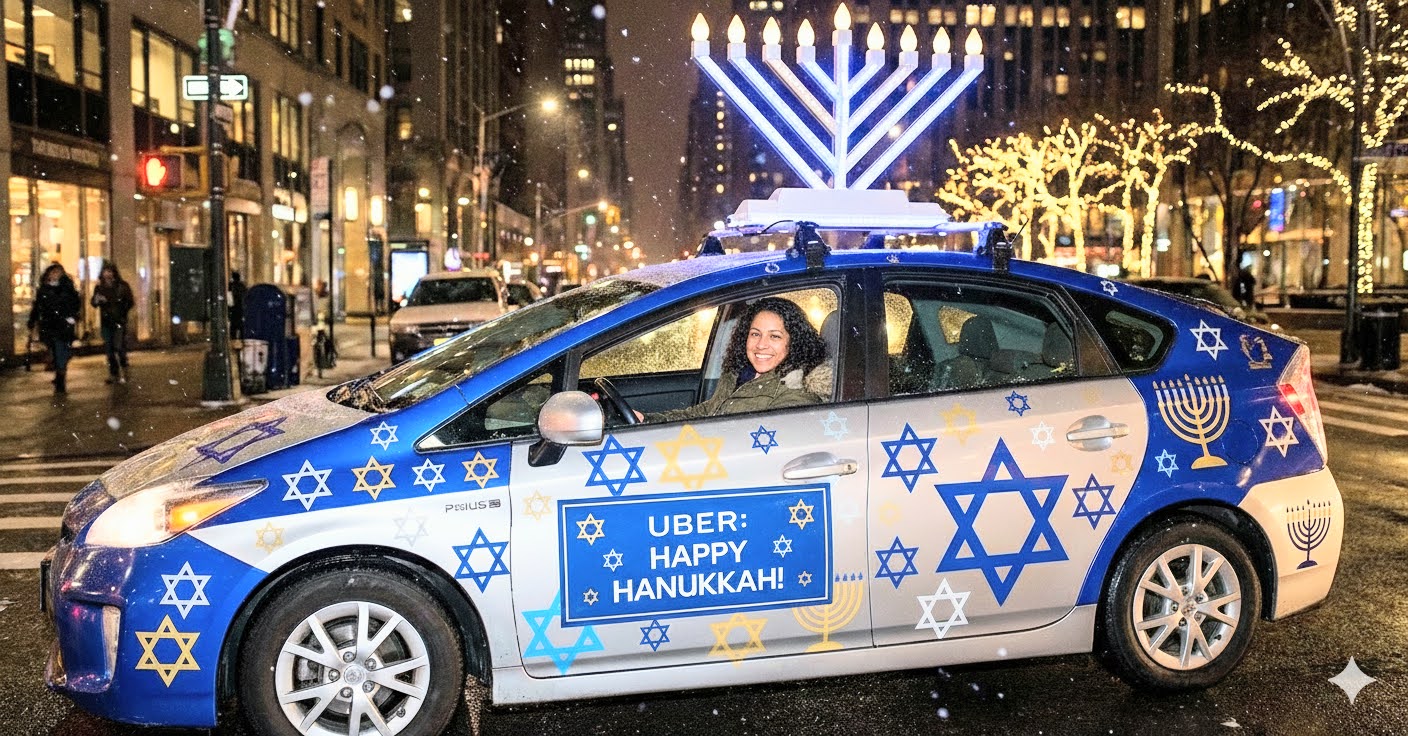
AI generated image via Gemini
The other week, after attending a Hanukkah event at a local Chabad synagogue, my family and I took an Uber back to our hotel. Our driver was an older woman who, upon learning where we had been, shared that she too was Jewish—but hadn’t been to synagogue in decades.
As we talked, I told her that Chabad welcomes everyone, regardless of background or level of observance. She seemed genuinely moved and admitted that though she’d become distant from formal Jewish life, she still loved celebrating Hanukkah and Passover with her grandchildren. Her face lit up as she described lighting the menorah and preparing a Seder, though she confessed those were the only traditions she still kept.
Her story was deeply familiar—the quiet tale of Jewish assimilation across generations, where cultural memory lingers even as religious practice fades. And then she said something that stayed with me: “I don’t know a lot about it, but I love being Jewish.”
That statement carried both beauty and paradox. How can one love something they feel they barely know? Perhaps it speaks to something profoundly human: the enduring pull of identity, memory, and belonging. Even when knowledge dims, love for one’s heritage can endure as a flicker of light that refuses to be extinguished.
I share this not as judgment, but as reflection. The Jewish people have spent nearly two thousand years scattered across the world, striving to maintain our faith while engaging with modern life. The driver’s words reminded me of how many in the diaspora still feel an ember of connection, quietly yearning for something deeper—a rediscovery of meaning, community, and faith.
Not long after that uplifting conversation, another story emerged—one that cast a shadow over the same season of light. In Kew Gardens, an antisemitic act shocked the community: someone tore a menorah off a car parked outside a food pantry and desecrated it. That simple yet hateful act carried familiar echoes of darkness, of a hatred that refuses to die.
The menorah has always symbolized hope and divine light triumphing over despair. Its flames represent the spread of knowledge, faith, and moral courage—the eternal light of Hashem’s presence in the world. Yet when that symbol is desecrated, it forces us to confront the painful truth of a rising tide of antisemitism that threatens not just Jewish safety, but the very spirit of tolerance and humanity.
In one week, I encountered both ends of the Jewish experience. In the soft glow of a conversation with a lapsed believer, I saw yearning and love—a quiet testament to faith’s enduring power. In the hateful destruction of a menorah, I saw danger and desecration—a reminder that our light is still challenged by darkness.
Together, these moments crystallized a truth: Judaism’s survival depends not only on defending ourselves from external threats but on rekindling the inner flame of identity and learning. We cannot afford to lose either fight—against hate from without or indifference from within.
Every Hanukkah, as Jews across the world light their menorahs, we proclaim that darkness does not win. We ignite the same sacred light our ancestors carried through exile, oppression, and uncertainty. Each candle is both remembrance and defiance—a statement of faith, resilience, and the unbreakable bond between a people and their Creator.
So whether through small conversations in an Uber or standing firm against acts of hate, we must continue to light the world with understanding, courage, and love. Because to be Jewish is not only to remember—but to renew.
Related Topics
Related Posts