
Humble with a declining sense of humor.
Just When the World Needs Clarity from Washington, It Gets Chaos
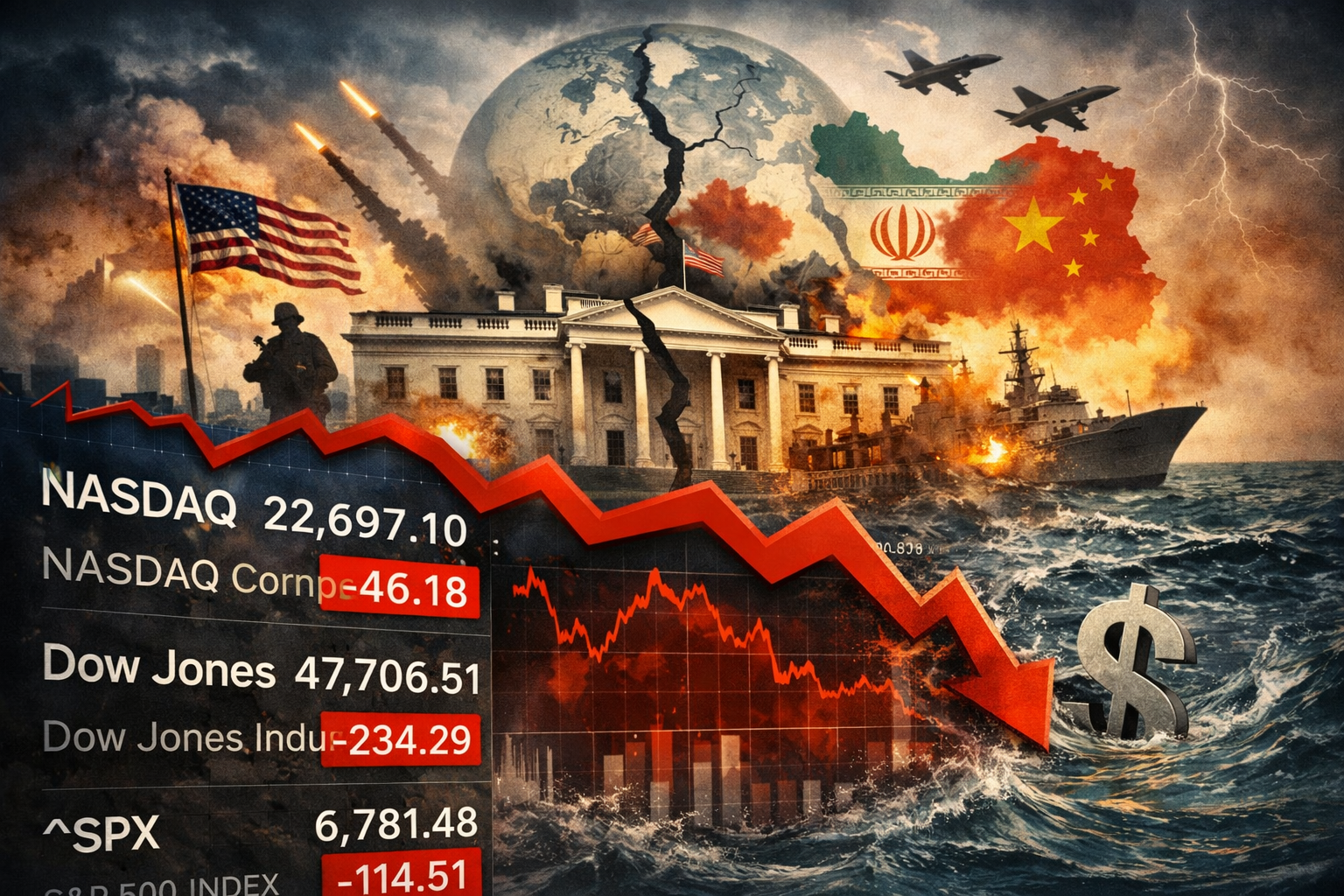
Computer-generated graphic by A.P. Gross
Confidence is the most fragile asset in the global economy. Markets run on it. Alliances depend on it. Deterrence requires it. And right now, the United States—the country that has long supplied much of that confidence to the world—is projecting the opposite.
The problem begins with a simple but dangerous reality: there is no clear message coming from the White House. When the president of the United States speaks, the world expects direction. Instead, it often hears something closer to improvisation. Policy pronouncements are vague, sometimes contradictory, and frequently followed by clarifications—or outright contradictions—from members of the administration.
This confusion is not a minor communications failure. It is a strategic liability.
In a functioning administration, cabinet officials and senior advisers reinforce the president’s message. They amplify it, explain it, and implement it. Today, however, different components of the administration often appear to be operating in parallel universes. One official signals restraint, another signals escalation. One department hints at economic caution, another promises aggressive policy shifts. The result is not merely mixed messaging; it is a vacuum of credibility.
Markets notice. Investors do not demand perfection from governments. They demand predictability. Even unpopular policies can be absorbed by global markets if they are clearly explained and consistently implemented. But unpredictability is something else entirely. When investors cannot tell what policy will look like next week—or even tomorrow—they price in risk. Capital retreats. Volatility rises. Confidence drains away.
It increasingly appears that the administration did not anticipate how quickly its actions and rhetoric would reverberate through global markets. American markets, in particular, have reacted with unease. Economic policy that seemed politically satisfying at the moment of announcement has collided with the reality of interconnected financial systems that punish uncertainty.
At the same time, Washington faces continuing military confrontation with Iran. War—or even the credible prospect of it—adds another dangerous layer of instability. Energy markets react instantly to tensions in the Middle East. Global trade routes become vulnerable. Strategic calculations from Moscow to Beijing can shift overnight.
This is precisely the moment when disciplined leadership and coherent messaging are essential. Instead, Washington appears improvisational, reactive, defensive, and unprepared for the consequences of its own signals.
For Israel, the stakes could not be higher. Israel depends not only on American military support but also on the credibility of American power. Deterrence in the Middle East works in part because adversaries believe the United States knows what it is doing and will follow through on what it says. When that credibility erodes, the entire regional balance becomes more fragile.
Economic consequences are just as troubling. If confidence in American leadership continues to deteriorate, the U.S. economy will not remain insulated. Markets eventually reflect political reality—and political chaos rarely produces economic stability.
The United States remains the most powerful economy in the world. Its institutions are strong, its private sector innovative, and its long-term potential enormous. But even the strongest economy cannot defy gravity indefinitely.
History shows that markets can tolerate bad policy for a time. What they cannot tolerate is confusion. When leadership replaces strategy with improvisation, the bill eventually arrives—in lost confidence, weakened alliances, and economic decline.
And when that bill comes due, it will not be paid only by Washington. The entire world—including Israel—will feel the cost.
Related Topics
Related Posts