Killing in the Name of God
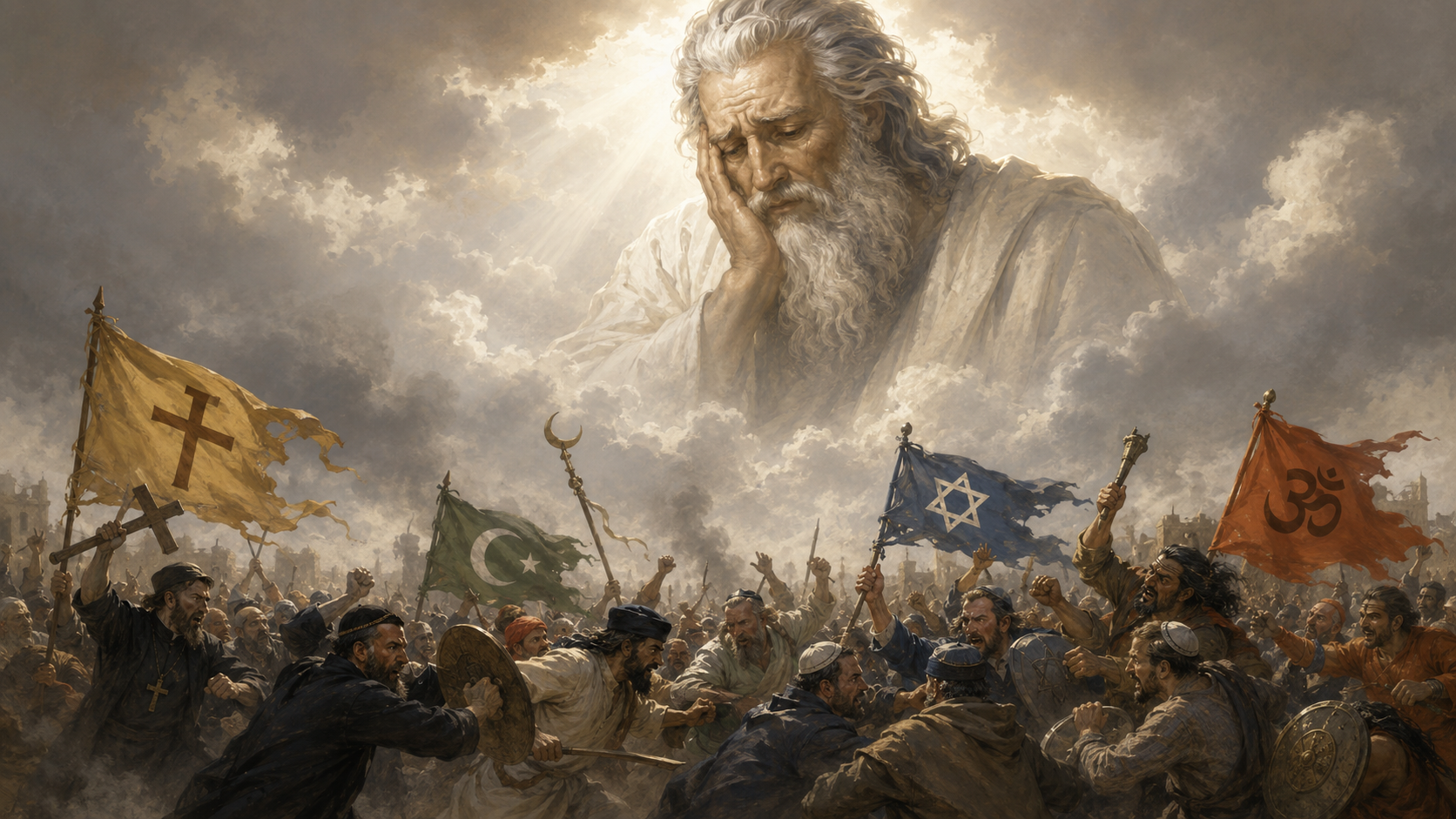
The science-fiction writer Arthur C. Clarke suggested that killing in the name of God might be a fairly good definition of insanity.
Sounds reasonable. If God created the world, then we are all His creations. And the idea that God wants us to kill some of His creations in His name sounds more like madness than faith. Whether the killing is for justice, revenge, honor, or land.
Yet I think Clarke had it backward. Killing in the name of God is not a definition of insanity. Sadly, it is the definition of normal, of being human. This is not an argument against self-defense. It is an argument against laundering violence through holiness.
From its earliest chapters to this morning’s headlines, history makes the point. Wars are waged everywhere. Always, in the name of religion, morality, justice, and truth. Each side is certain it is fighting for survival, for values, for the sake of humanity.
Of course it is. God is on their side.
The stories change, but the machinery is the same. We believe in something divine, and use it to justify what we already set out to do. Marx called religion the opium of the people, but faith provides real comfort: it offers meaning amid suffering and moral clarity in a bewildering world. Whole civilizations were built on it.
The moment our actions carry a divine stamp, it’s open season all around. Violence turns into sacrifice. War turns into a necessity. Killing turns into an obligation. God is not the cause of the violence; He is merely the means of justifying it.
And here is the irony. Religion casts God as the creator and disciples as clay in His hands. In practice, we have reversed the roles: we create God in our own image far more than He creates us in His. The scriptures themselves describe a strikingly human-like God: angry, jealous, regretful, demanding loyalty, and repeatedly disappointed by His creations.
Spinoza argued that God did not merely create the world, but is part of it — heresy enough to get him excommunicated. But perhaps it wasn’t. Joan Osborne once wondered, “What if God were one of us?” Honestly, the scriptures don’t quite rule it out.
Years later, Nietzsche announced that God was dead. Not to provoke, but to remind us that we are the ones responsible for making sense in this world. The joke, in the end, was on Nietzsche. He died too.
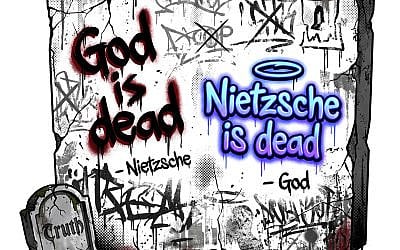
* Image created by the author
But principles outlived people. And the responsibility is ours. Whether we believe in God, reason our way to our principles, or absorb them from those around us, the one who finally interprets them — who decides when to show mercy and when to kill — is always a human being. Not God. Not faith. Not the philosophers.
The problem was never belief itself; there is much in it that is beautiful and necessary. The problem is that belief becomes a license. And the most disturbing part: this is almost never the work of madmen, at least not clinically. It is the work of perfectly ordinary people, sincerely convinced they are doing the right thing.
Not crazy. Just humans.
Don’t get me wrong. I am not a pacifist. Real evil exists, and sometimes it must be met with force, war, and killing. There are enemies who must be stopped, some eliminated to protect the innocent. An old warning puts it sharply: whoever is merciful to the cruel ends up cruel to the merciful. But even then, we must not turn necessity into holiness. A just war is no cause for celebration. There are no victory parades, no marching bands. A justified strike is not a miracle. The need to defend life is no proof that God countersigned the order.
Contrary to Clarke, I believe insanity is believing that we have God’s permission. That the Creator is fine with harming the work of His own hands because the victim is an enemy, a heretic, a sinner, an infidel, or just on the wrong side; circle whichever applies. That He rejoices when we “must” destroy a particularly wicked creation; that He wants another faith’s houses of prayer razed in the name of our truth.
Unfortunately, even that is not madness. It is simply the easy way we choose to survive our own lives: to lift the unbearable weight of doubt, uncertainty, and responsibility from our shoulders. A friend, a rabbi I am lucky to converse with, calls the very phrase “holy war” a form of idolatry. He is right: what we worship, when we worship our own certainty, is an idol we have replaced God in the name of tranquility.
Maybe God, Nietzsche, the nation, and any other grand idea are not as different as we care to admit. Each provides us meaning. And ideas don’t die; we only modify them to fit the things we want to do.
In the end, we all choose whether to shrug off responsibility or carry it humbly — even when we have a perfectly noble excuse to do otherwise. Those who carry it will not necessarily be happier. But they may at least be able to face the mirror without pretending that heaven made them do it.
–
*My thanks to Rabbi Marc Kline and Dr. Craig S. Miller, whose insights and perspectives provoked and inspired this piece.