
Mikhail Salita

Lech Lecha: A Letter to Abraham — From a Son to His Spiritual Father

Rabbi Moshe ben Yisrael Shlita (Mikhail Salita)

My dear father Abraham,

I write to you with reverence and love. You are the father of our people, and thus you are also my spiritual father. When I read in the Torah the words spoken by the Almighty — “Lech Lecha” — “Go to yourself” — I feel that they are addressed to me as well. You were the first to hear them, yet they echo in every generation, in the heart of every soul that seeks truth.

You left the house of your father — not out of rebellion, but out of faithfulness to the One Truth. You turned away from idols, yet you did not reject your father. You ascended spiritually, and in doing so, you elevated his name.

And so I understand: when a person walks toward Heaven, he does not destroy his past — he redeems it.

You were a shepherd. That is no coincidence.

A shepherd is one who bears responsibility for life entrusted to him.

Moses and David were shepherds before they became leaders of Israel.

It teaches that one who can care for the silent is worthy to guide those who speak.

I think of this when I care for the living beings that cross my path — human and animal alike.

Today I am studying to serve as a chaplain — a comforter of souls, a spiritual shepherd.

And I feel that this, too, is part of the path you began — to recognize the Divine breath (nishmat chayim) in every creature.

As it is written in Tehillim (Psalm 36:7):

“You save, O Lord, both man and beast.”

Not because they are equal, but because both live by His mercy.

You went forth to the land of Canaan, and through you it became the place of the Covenant.

And now, thousands of years later, I live far away — in Brooklyn — yet even here I feel traces of your journey.

On my own path, I have encountered the Canaani cats — born in the very land where you once walked.

And I see in this a quiet sign: holiness does not vanish; it simply changes form.

The name Canaan lives on in Kanaani, and the letter Mem shining on their foreheads recalls mysteries: Moshe, Mashiach, Mishnah, Malkhut, Mitzvah.

All are rays of the same light you kindled when you said “Yes” to the voice of Heaven.

You taught us that faith is movement — that Lech Lecha is not only a call to leave one’s land, but a call to journey inward, to the depth where the soul begins.

And when a person walks that road — even slowly, even stumbling — the Almighty walks beside him.

I do not know where I am on that path.

I am a rabbi formed in a world that teaches to see goodness in all people.

But the further I go, the more I feel drawn to the root — to the living Torah that flows from your covenant.

Perhaps everything I learn now is only preparation for returning to that fullness, to the light you set in motion.

You are a mirror for every generation.

You remind us that faith begins with a step,

and that to go toward oneself is to go toward God.

Thank you, my father Abraham, for opening the way.

Thank you to the One who said to you: “Lech Lecha.”

May He grant me the strength to keep walking — without turning away, without weariness, without losing the light.

With love, reverence, and a son’s gratitude —

from me, together with my rabbi Zalman Liberow

and our community at Chabad Lubavitch of Flatbush.

Rav Moshe ben Yisrael Shlita

Brooklyn, Parashat Lech Lecha, 5786
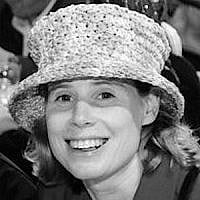
About the Author
Rabbi Moshe (Mikhail) Salita is a Brooklyn-based rabbi, legal scholar, and emerging animal chaplain whose work unites Jewish spirituality, international law, and compassion for all living beings. He holds a Master’s in International Law (with honors) from the National University “Odesa Law Academy,” where he is currently a PhD student researching the restitution of unlawfully confiscated Jewish communal property in Soviet Ukraine. He also earned a Master’s in Library and Information Science from Pratt Institute (New York) and a Master’s in Education and Special Education from Touro University, with graduate certificates in Applied Behavior Analysis (ABA) and Bilingual Education. Rabbi Salita is an ordained rabbi of the Jewish Spiritual Leaders Institute (JSLI), a Doctor of Ministry student in Jewish Spirituality at the Graduate Theological Foundation, and an Animal Chaplain-in-Training with the Compassion Consortium in New York. His mission is to weave together justice, mercy, and creation care into one sacred path of Tikkun Olam — healing the moral and spiritual wounds of the world. He serves as Executive Director of the Salita Foundation, originally founded by his brother, Dmitriy Salita — former WBF World Champion boxer, and inductee of both the New York Boxing Hall of Fame and the Jewish Sports Hall of Fame. Today, Rabbi Salita leads the Foundation toward a broader vision — uniting humanitarian ethics, environmental awareness, and cultural restitution. Through the Foundation, he has launched the “Eco-Kosher Initiative,” a global program encouraging support for businesses and individuals who respect the environment, animals, and their communities. For him, “eco-kosher” is not limited to food — it is a moral philosophy of living in balance with creation, where sustainability and holiness walk hand in hand. He is also devoted to preserving and gaining international recognition for the rare Israeli cat breed Kanaani — a living symbol of harmony between Jewish heritage and the natural world. A descendant of Sruel ben Aharon Lekhtman, a Ruzhiner Hasid and brick-factory owner in Kitai-Gorod, Kamianets-Podilskyi — once a spiritual heart of the Ruzhin Hasidic movement in Tsarist-era Ukraine — Rabbi Salita continues his ancestor’s legacy of faith, integrity, and bridge-building. Sruel Lekhtman served as a close friend and estate manager for Pan Dembitsky, a Polish landowner remembered with respect in both Jewish and Ukrainian memory. Their friendship, crossing lines of faith and culture, remains a profound symbol of coexistence — especially meaningful for Ukraine today. Although Rabbi Salita received Reform rabbinic education in the spirit of Jewish Universalism, he maintains a deep spiritual connection with Chabad, whose living Hasidic tradition unites intellect, compassion, and joy. Following the example of the prophets — from Adam, the first caretaker of creation, to King Solomon, who understood the language of animals, and to Rav Papa, the sage who spoke kindly of cats — Rabbi Salita teaches that true holiness is revealed through compassion for all living beings. His life’s work is to show that caring for animals and serving God are one and the same sacred breath.
Related Topics
Related Posts
Sign in or Register
Please use the following structure: example@domain.com
Or Continue with
By registering you agree to the terms and conditions
Register to continue
Or Continue with
Log in to continue
Sign in or Register
Or Continue with
check your email
Check your email
We sent an email to you at .
It has a link that will sign you in.