
Life Member, Hadassah Westchester, Hadassah Writers' Circle
Lifechanging: Rebekah’s Moment
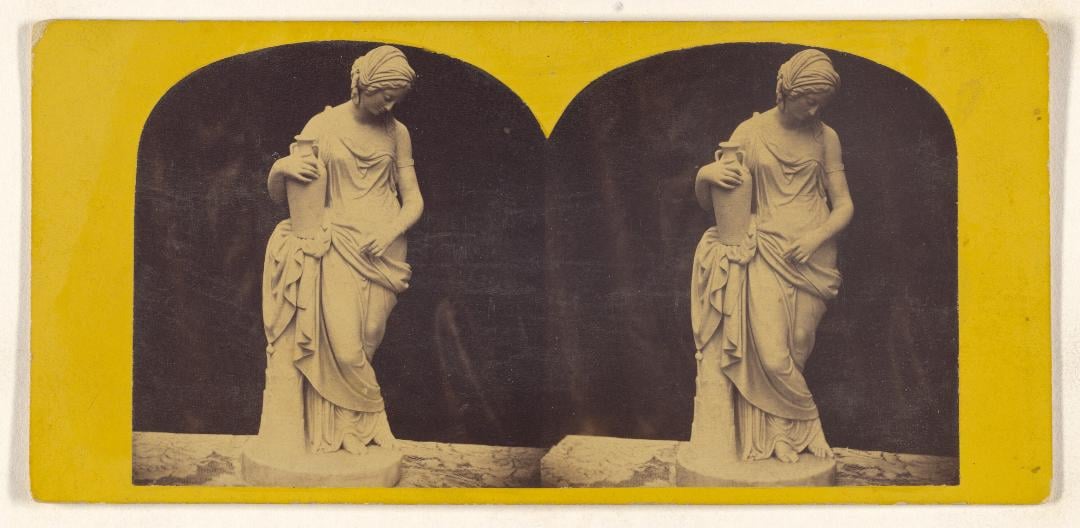
Image courtesy of the Metropolitan Museum of Art.
In non-biblical writings that invoke the Hebrew Bible’s matriarchs — Sarah, Rebekah, Rachel and Leah — Sarah seems to get the most attention. Leah gets no respect: Heck, in the order in which these women are typically listed, she’s left for last, even though she is older than sister Rachel. And Rebekah? Her, I rarely see mentioned other than for a significant role in one episode in her son Jacob’s narrative. Then, she helped . . . er, coached Jacob into usurping his brother’s inheritance. But digging into her story, as told in Genesis, reveals an interesting woman caught between traditional expectations and a chance to find her voice.
This, then, is Rebekah’s story: After Sarah dies, Abraham decides it is time to find a wife for their son Isaac. Accordingly, Abraham sends his most trusted servant back to his family’s home to search out an appropriate candidate, admonishing him not to “take a wife for my son from the women of the Canaanites, among whom I am settled; rather, you are to go to my land and to my kindred, and take a wife for my son, for [Isaac].” (Genesis 24:3-4)
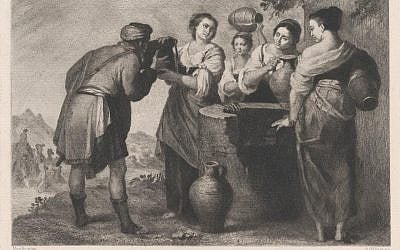
The servant loads ten camels with “all kinds of good things” that demonstrate Abraham’s wealth and travels to Aram-Naharaim, where Abraham’s brother, Nahor, lived. On reaching this settlement, the servant goes to the local well as the sun is setting, the time of day when women come out to draw water for their households and flocks. Once there, the servant soon meets a polite and hospitable “maiden [who] was exceedingly fair to look at, a nubile girl—no man had known her.” She offers water to both the stranger and his camels, whereupon the servant gifts her jewelry and asks about a place to stay the night.
This attractive and helpful woman turns out to be Rebekah, Nahor’s granddaughter, that is, Abraham’s grandniece and Isaac’s second cousin. Needless to say, the servant is welcomed into the household, where he explains his mission. Rebekah’s brother, Laban, and her father, Bethuel, promptly offer her up as the sought-after bride.
Isaac weds Rebekah, at which point the text reassures the reader that “Isaac loved her.” Rebekah endures a difficult pregnancy, but eventually births twin sons, the “older” so designated by having thrust a hand out of Rebekah’s womb (and having drawn it back in) before either boy is fully born. Years later, when the boys, Esau and Jacob, reach some level of maturity, the aging and now-blind Isaac decides that it’s time to name and bless his successor. The text implies that Esau, as the designated first born, will succeed Isaac.
This next bit, I imagine, is probably the best known part of Rebekah’s story: She organizes a ruse through which Jacob will be named heir and receive Isaac’s blessing, leaving no inheritance for the “older” Esau. While Esau is out hunting wild game to make Isaac’s favorite stew, Rebekah cooks up a young kid from the flock that Jacob tended. She covers Jacob’s arms with the kid’s fuzzy hide to simulate Esau’s hairy arms. Then, she sends Jacob (pretending to be Esau) to see Isaac. Confused, Isaac asks why the person bringing the stew has the voice of Jacob but the hand of Esau, but ultimately gives Jacob the blessing and inheritance intended for Esau.
Now, there are moral and ethical reasons to condemn Rebekah for tricking the elderly and fading Isaac. And there are undoubtedly good reasons for following the community practice through which eldest sons inherit. At the very least, it makes it clear from the get-go who will take over leadership and, theoretically, reduces competition among offspring.
At the same time, there are also moral and ethical reasons for defending Rebekah’s actions to enable Jacob to inherit leadership of the clan that Abraham founded. There’s no reason to assume that an oldest son would be a better leader than any subsequent offspring. In addition, in tricking Isaac, Rebekah may simply have been fulfilling a destiny already laid out for her. The biblical text brings God’s voice into the leadership progression: At an exceptionally difficult moment in her pregnancy, God had given Rebekah advance notice that her second-born son should inherit, saying:
“Two nations are in your womb,
two separate peoples shall issue from your body;
one people shall be mightier than the other,
and the older shall serve the younger.” (Genesis 25:23)
Thus, Rebekah shares responsibility — along with Jacob, who executed the plan, and with God — for keeping the outdoorsy and apparently less thoughtful Esau out of the leader’s role, while putting the more complex Jacob —later renamed Israel — in position to spawn the Israelite nation.
Rebekah’s actions that promote Jacob over Esau eternally change the lives of Abraham’s and Sarah’s descendants. She did what the narrative needed her to do. But, I think, the narrative also shows Rebekah as more than the story’s pawn. Rebekah was offered a lifechanging moment and shows her strength of character by grasping it fully.
Back in Aram-Naharaim, when Rebekah’s brother and father notice the indications of Abraham’s material wealth flashed by his servant, the text provides no indication that Rebekah was consulted before being offered up for marriage. Rather, the offer sounds peremptory:, “Then Laban and Bethuel answered, ‘Here is Rebekah before you; take her and go, and let her be a wife to your master’s son.’” Was this the best that a young, marriageable woman could expect?
The following morning, nominally only one day after arriving in town, the servant announces his intention to return to Abraham and Isaac, bringing the promised bride. Laban and Rebekah’s mother reject this timeframe and insist that the servant (and, therefore, Rebekah) linger for 10 days. The text does not explain the reason for the delay. Perhaps it reflected a traditional waiting period following a betrothal, perhaps time to recant the marriage decision or perhaps time to compile Rebekah’s trousseau. In any case, their conversation finally provides an opportunity for us to hear from Rebekah. Finally, “they said, ‘Let us call the girl and ask for her reply.’ They called Rebekah and said to her, ‘Will you go with this man?’ And she said, ‘I will.’”
Rebekah does not hesitate. She does not ask for time to consider the offer, to consult her mother, to gather belongings or to bid farewell to family or friends. At this moment, she speaks up and asserts a role in setting her own destiny. The text’s simple “I will” is Rebekah’s defining, lifechanging moment.
Ultimately, whether for noble or personal reasons, Rebekah fulfills her designated role in directing leadership of the nascent Israelite people. Her actions eternally set the course that established the Israelite and, later, the Jewish people.
This Genesis narrative is an example of how the Hebrew Bible invites us to explore complex characters, to learn what makes them tick, to see them as fully human — with strengths and flaws. Rebekah’s story highlights her lifechanging moment, when a young woman shows her strength by grasping an opportunity, speaking up and entering her own life.
The author does not speak on behalf of Hadassah and the views expressed herein are the author’s own and not necessarily those of Hadassah.
Michele is a member of the Hadassah Writers’ Circle, a dynamic and diverse writing group for leaders and members to express their thoughts and feelings about all the things Hadassah does to make the world a better place. It’s where they celebrate their personal Hadassah journeys and share their Jewish values, family traditions and interpretations of Jewish texts. Hadassah members are proud of their Zionist mission and their role as keepers of the flame of Jewish values, traditions and beliefs as well as advocating for women’s empowerment and health equity for all. Since 2019, the Hadassah Writers’ Circle has published nearly 800 columns in The Times of Israel Blogs and other Jewish media outlets. Interested in writing? Please contact hwc@hadassah.org.
Related Topics