Russian-American-Israeli Palestinian. Palestine is Israel.
Lifespan in the Torah
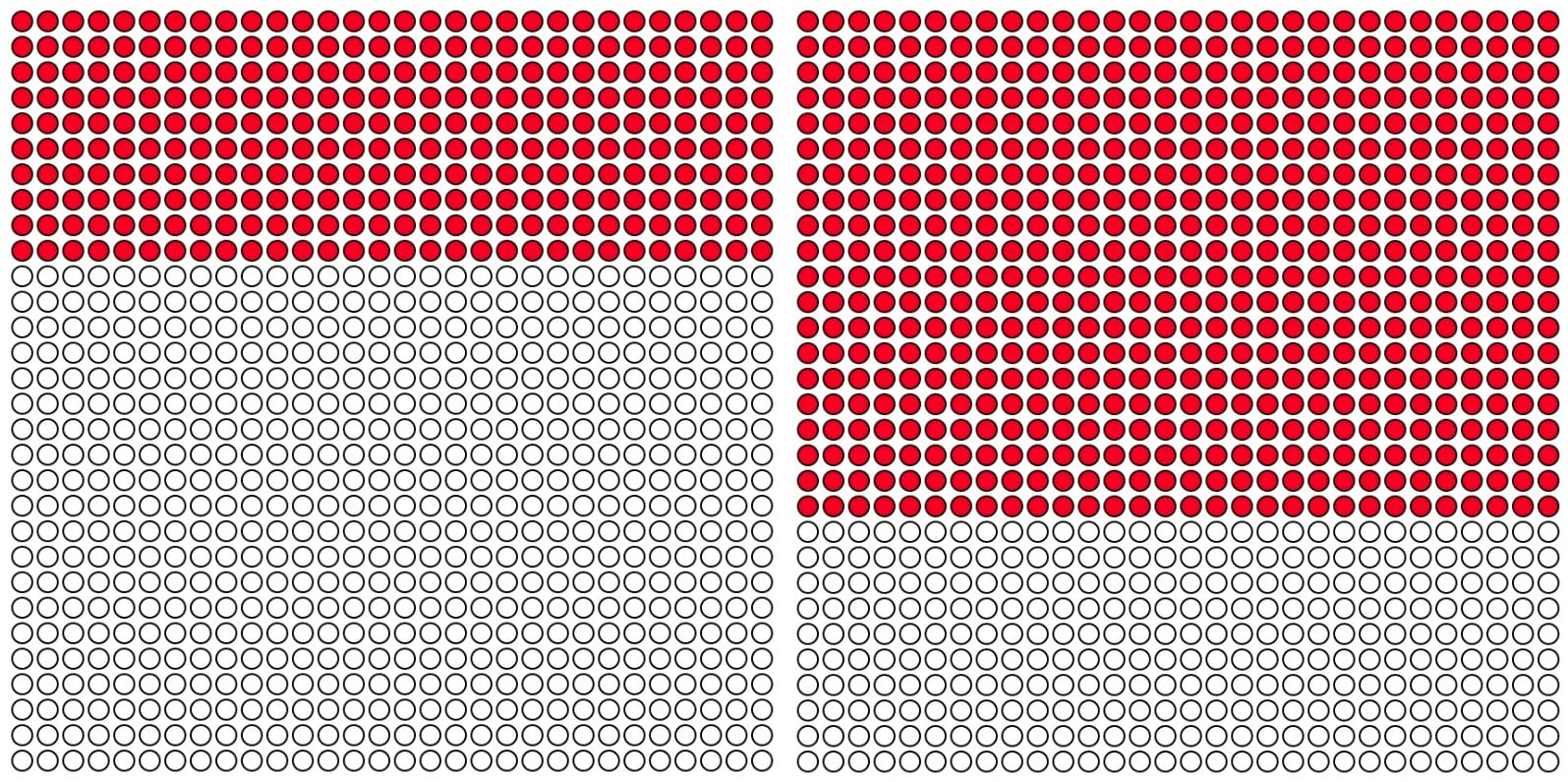
Life in the 900-Month Concept. At 25 years old, you have already "spent" 300 months, leaving 600 in your personal "life bank." By age 50, you have already "spent" 600 months, leaving just 300. Image © Ivan Bassov, 2026. Licensed under CC0 (public domain dedication).
Methuselah lived 969 years. Or did he?
The Torah records lifespans that seem extraordinary—far beyond anything we observe today. Adam lives 930 years. Methuselah reaches 969. Noah, 950.
Taken at face value, these numbers appear impossible. They challenge not only modern biology but also our intuitive sense of time.
But what if the question is not how long they lived, but how time itself was measured?
In a previous article, Life Remaining: Rethinking Time and Perspective, I explored a simple idea: when life is measured in smaller, countable units—months instead of years—it becomes tangible, finite, and visible. That same shift in perspective opens an unexpected way to look at these ancient numbers.
Life in 900 Months (Revisited)
In Life Remaining, I presented the 900-month concept: an average 75-year lifespan consists of roughly 900 months (75 × 12). Each month becomes a discrete unit of life.
This simple reframing leads to powerful visualizations:
- The Lifetime Grid: Imagine a 30×30 grid. Each square represents one month of a 75-year life. Filled squares are months already lived; empty squares are months remaining.
- Time Management: By visualizing life in months, it becomes clear that every month counts. At 25 years old, you have already “spent” 300 months, leaving 600 in your personal “life bank.” By age 50, you have already “spent” 600 months, leaving just 300.
Life stops feeling abstract. It becomes countable.
The Life Remaining Calculator
In Life Remaining, I also introduced a small Python program—the Life Remaining Calculator—designed to make this idea concrete.
The example below shows my own life progress as a 52-year-old male:
Expected lifespan : 82 years (984 months)
Life remaining    : 30 years (360 months)
Life already lived: 52 years (624 months)

Life progress:

[⣿⣿⣿⣿⣿⣿⣿⣿⣿⣿⣿⣿⣿⣿⣿⣿⣿⣿⣿⣿⣿⣿⣿⣿⣿⣀⣀⣀⣀⣀⣀⣀⣀⣀⣀⣀⣀⣀⣀⣀]

64% already lived, 36% life remaining
This is not a philosophical abstraction. It is a measurable structure.
And once you begin to think this way, something interesting happens when you return to ancient texts.
Lifespan in History
Before turning to the Torah, it is worth clarifying a common misconception.
Human lifespan has been remarkably consistent over millennia. What has changed is life expectancy at birth, largely due to high infant mortality.
When historical sources say the “average lifespan was 30 years,” they include those who died in childhood. Adults who survived early years often lived into their 60s or 70s—much like today.
We often overestimate how short life was in the past simply because of these skewed averages.
Lifespan in the Torah
The Torah presents lifespans that appear radically different:
- Adam: 930 years
- Methuselah: 969 years
- Noah: 950 years
At face value, these figures seem incompatible with human biology.
But they invite a different kind of question: what if the unit of measurement is not what we assume?
A Different Way to Read “Years”
One possible approach is to apply the same framework introduced earlier—measuring life in months instead of years.
If the pre-flood “years” were understood as months, the numbers become strikingly familiar:
- Adam ≈ 77 years
- Methuselah ≈ 80 years
- Noah ≈ 79 years
This is not a claim about what the text must mean. It is a shift in perspective.
When time is measured in smaller cycles, long, symbolic numbers can align with realistic human lifespans. More importantly, life becomes something countable—just as in the 900-month model.
Post-Flood Lifespans
After the flood, the Torah describes a sharp decline in lifespan, though the numbers remain high:
- Abraham: 175 years
- Sarah: 127 years (she gave birth to Isaac at 90; Abraham was 100)
If these “years” represent a different unit—such as half-years—the figures again fall into a familiar range:
- Abraham ≈ 87 years
- Sarah ≈ 63 years
- Sarah giving birth at ≈ 45, Abraham at ≈ 50
Under this interpretation, the transition is not from “impossible” to “normal,” but from one system of measurement to another.
A Gradual Shift in Timekeeping
The Torah itself does not explain the dramatic change in reported lifespans. However, the pattern suggests not only a decline in longevity, but possibly a shift in how time was measured.
One way to read this progression is as a gradual normalization of units:
- Pre-flood: “years” may reflect months
- Early post-flood: “years” may reflect half-years or seasonal cycles
- Later periods: “years” align with full solar years
Under this interpretation, the transition is not from extraordinary human biology to ordinary biology, but from one system of counting time to another.
The numbers change. The underlying human lifespan does not.
Time, Language, and Perspective
The Hebrew word most commonly translated as “year” is shanah (שָׁנָה). Its root, ש־נ־ה (sh-n-h), carries meanings such as “to repeat,” “to change,” or “to cycle.”
This suggests that shanah originally referred to a recurring cycle—not necessarily a fixed, standardized unit like the modern solar year.
In biblical usage, the term can denote:
- A seasonal or agricultural cycle
- A calendar year
- A general recurring period
Related expressions, such as shanim (years) or mi-yamim yamimah (“from days to days”), reflect a flexible and context-dependent way of describing time.
This linguistic background leaves room for interpretation. What is translated as “years” may not always correspond exactly to the modern year. In earlier contexts, it may have referred to cycles—monthly, seasonal, or otherwise.
A Finite Number of Cycles
Whether or not one accepts these reinterpretations, a broader point emerges.
Ancient texts and modern tools converge on the same insight:
Time is not an abstraction. It is a sequence.
When we shift from vague “years” to concrete units—months, cycles, moments—life becomes visible. Countable. Finite.
Not endless time, but a limited number of repetitions.
Not an open horizon, but a measurable span.
A finite number of cycles.
And that is precisely what gives life its weight.
—
See Also
Related Topics