The Miser, the Cheapskate, and the Missing Check
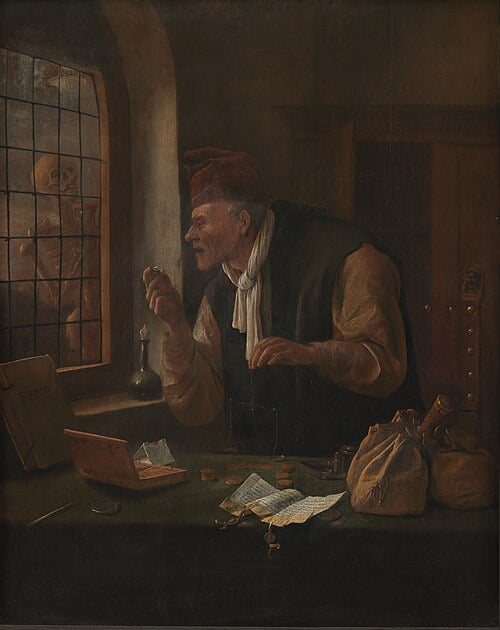
“I think I read it during my freshman year at UM. I love Singer and his short stories. Why do you ask?” Moshe replied.
“Well, yesterday, for the third day in a row, you neglected to pick up the check. Once again, I paid for our breakfast, and Singer’s story came to mind.
“It got me thinking about misers, cheapskates, penny-pinchers, and shekel hoarders. I started wondering what makes these people tick. How much joy do they get from counting their shekels? And how do they fail to understand the pleasure of actually spending some of them?”
“Are you calling me a miser?”
“No, my friend. I’m merely conducting a literary investigation. But don’t forget to pick up today’s check.”
“Okay, I’ll start. Benny is so cheap that the first thing he does every morning, even before taking a leak, is check the value of his investment portfolio. It’s the high point of his day. If his stocks are up, he has a wonderful breakfast. If they’re down, his wife gets the cold shoulder and a lecture about inflation.”
“Laura is just as bad,” Mordechai continued. “She refuses to give her children money unless she attaches strings to it. And not little strings, either. We’re talking industrial-strength cables. Now her kids rarely speak to her. I guess she finally succeeded in saving money on birthday presents, phone calls, and family dinners.”
“Remember George?” Moshe asked. “We both thought he was finally going to pick up the check. He reached across the table, grabbed the salt shaker, and passed it to me. Apparently, he thought the check was too expensive to touch.”
“And then there’s Billy. He buys an almost-new Lexus, parks it in his garage like a valuable oil painting, and rarely drives it. He’s afraid of putting miles on the odometer. The poor man owns a luxury automobile but travels everywhere in a fifteen-year-old car. At this rate, he’ll leave his heirs a pristine Lexus and a lifetime supply of unopened air fresheners.”
Moshe stirred his coffee.
“So, Mordechai, what have we learned about our financially challenged acquaintances?”
“That they love hoarding money more than enjoying it,” Mordechai replied.
“That they use money to control other people.”
“And that they love spending other people’s money almost as much as they love finding a bargain.”
“Exactly,” Moshe said. “They’ve mastered the art of accumulating wealth while remaining spiritually bankrupt.”
Moshe took the last sip of his coffee, picked up the check, and stood.
“Mordechai, if I ever forget to pay my fair share of breakfast, please remind me on the first day.”
“Of course,” Mordechai replied.
“And if you forget?”
“I’ll remind you on the second day.”
“Why not the first?”
Mordechai smiled. “Because, my friend, I don’t want you to think I’m cheap.”