
Retired Board-Certified Clinical Psychologist/Author
Living Under Continuous Threat
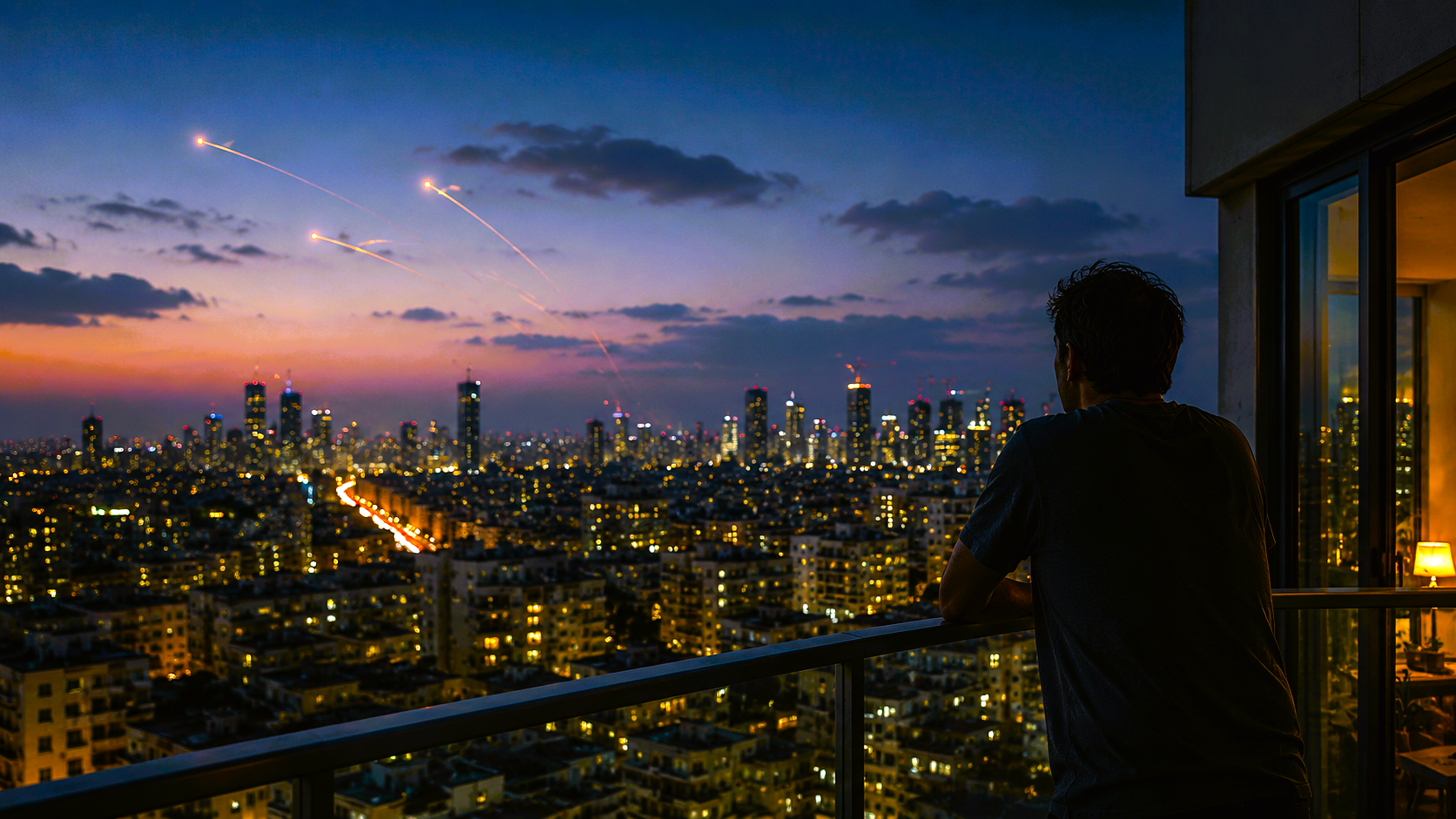
Living Under Continuous Threat: The Emotional Reality of Israel Today — and How People Can Protect Their Psychological Well-Being
There are periods in history when a society is not merely experiencing stress, but living inside an altered emotional reality. Israel today is one such society.
What makes the current period particularly difficult is that it is neither war nor peace. Ceasefires hold on most fronts; the underlying threat does not. The nervous system registers that distinction whether or not anyone names it.
What outside observers often miss is that prolonged conflict does not simply create “fear.” Acute fear is only one component, and over time it becomes one of the smaller ones. What emerges is something far more complex: a chronic condition of heightened vigilance, emotional fatigue, anticipatory anxiety, grief, and adaptation, all occurring simultaneously. People continue to work, parent, study, argue, celebrate birthdays, and plan futures — while carrying a persistent awareness that catastrophe may again intrude into ordinary life without warning.
This produces a psychological state that clinicians recognize in individuals exposed to prolonged trauma: the nervous system never fully powers down, the future becomes emotionally uncertain, safety begins to feel conditional rather than given, emotional exhaustion accumulates quietly beneath the surface, and ordinary life and existential threat begin to coexist inside the same day, sometimes the same hour.
The remarkable reality is not that people are distressed. The remarkable reality is that they continue functioning at all.
The Psychology of “Living Normally” During Ongoing Threat
One of the most misunderstood aspects of prolonged national trauma is that people do not usually remain in visible panic. Human beings adapt. But adaptation should not be confused with absence of emotional impact.
Many Israelis today live in what might be called mobilized normalcy — functioning externally while carrying tension internally, oscillating between routine and alarm, trying to preserve ordinary life while their nervous systems quietly prepare for disruption. It is an extraordinary act of psychological labor, performed largely unconsciously, and it is exhausting in ways most people cannot articulate.
Over time, mobilized normalcy produces a recognizable cluster of effects: emotional numbing, irritability, difficulty concentrating, chronic fatigue, hypervigilance, disrupted sleep, increased conflict within families, social withdrawal, and feelings of helplessness or fatalism that arrive without warning. Many people experiencing these reactions mistakenly believe something is wrong with them. In reality, these are understandable nervous-system responses to prolonged uncertainty and threat exposure. They are not signs of weakness. They are signs that the system is working — perhaps too hard, for too long, without adequate recovery.
The Hidden Emotional Burden: The Future Itself Begins to Feel Fragile
One of the deepest psychological consequences of prolonged conflict is not the fear of immediate harm. It is the gradual erosion of confidence in the future itself.
People begin asking questions they did not have to ask before. Will this ever end? Is stability still possible? What kind of country will remain when this is over? What emotional burden are our children absorbing while we are too tired to notice? How long can a population sustain this level of tension before something gives?
When societies enter prolonged periods of uncertainty, emotional energy shifts. It moves away from growth and toward protection. People become more reactive, more exhausted, more polarized, more emotionally defensive. This is not simply political behavior. It is neuropsychological. Under chronic stress, the brain prioritizes survival over nuance. Subtlety, patience, and the capacity to hold complexity all become harder to access — not because people have lost those qualities, but because the underlying machinery is being asked to do something else.
Why Emotional Exhaustion Often Appears as Anger
Populations under chronic strain often express their distress through irritability, cynicism, rage, blame, polarization, impatience, and a kind of emotional hardening that can be mistaken for character change. This is one of the most painful features of prolonged national stress, because it strains the very relationships people most need.
Anger is psychologically easier to tolerate than helplessness. This is true for individuals and it is true for societies. It helps explain why wartime populations often become emotionally volatile even among people who deeply love their country and their communities. Beneath much of the anger is something quieter and harder to face: grief, fear, exhaustion, disappointment, eroded trust, and a longing for safety and coherence that feels increasingly out of reach.
Understanding this does not eliminate division. But it can reduce dehumanization — both of others and of ourselves.
What Actually Helps Psychologically During Prolonged National Stress
From a clinical perspective, people often make the mistake of believing they must eliminate anxiety entirely. Under real-world threat, that is neither realistic nor psychologically necessary. The goal is not the absence of anxiety. The goal is preventing anxiety from consuming the entire emotional system.
Several evidence-based principles become especially important during prolonged periods of societal stress.
- Preserve Structure and Routine
The nervous system stabilizes through predictability. Even small routines matter — regular meals, consistent sleep, exercise, family rituals, Shabbat dinners, the daily walk, school attendance, the predictable phone call to a parent or friend. Routine is not trivial during crisis. It is neurological stabilization. The smaller and more dependable the anchors, the more reliably the system can return to them when something larger gives way.
- Limit Continuous Exposure to Distressing Media
Continuous exposure to emotionally charged media can create the illusion that the nervous system must remain permanently activated. Many people today are not only living the crisis — they are re-living it repeatedly through endless scrolling, breaking-news alerts, and speculative commentary. Clinically, this worsens hypervigilance, anxiety, sleep disruption, helplessness, and emotional exhaustion. Remaining informed is important. But no nervous system was designed for uninterrupted exposure to traumatic imagery and crisis speculation, and treating consumption as a moral duty does no one any good.
- Protect Children From Emotional Contagion
Children do not merely absorb events. They absorb adult emotional states. This does not mean parents must appear emotionless or unrealistically calm — children see through that quickly, and it teaches them that difficult feelings are unspeakable. What protects children is the presence of adults who communicate honestly, steadily, and with realistic reassurance, and who are visibly able to contain their own distress without being overtaken by it. Children are protected not by the absence of fear in the household, but by the presence of emotionally regulated adults within it.
- Stay Socially Connected
One of the strongest protective factors during crisis is human connection. Isolation magnifies fear. People consistently underestimate how psychologically protective it is simply to eat with others, talk openly, check on neighbors, attend communal events, volunteer, maintain friendships, and participate in shared rituals — religious, cultural, or simply familial. Humans do not regulate emotion alone. We regulate it collectively, and we always have.
- Maintain a Sense of Agency
Helplessness is psychologically corrosive. Even modest forms of contribution help restore emotional dignity — helping displaced families, volunteering, donating, supporting soldiers, mentoring younger people, caring for elderly neighbors, creating art or music or writing. The specific action matters less than the act of choosing one. Action counters paralysis, and paralysis is one of the most damaging long-term effects of chronic threat.
- Recognize That Emotional Fatigue Is Not Weakness
Many people living under prolonged stress criticize themselves for reduced patience, emotional numbness, fatigue, difficulty concentrating, or the need to withdraw periodically. But nervous systems under prolonged activation eventually require recovery periods, and pretending otherwise only delays the cost. Rest is not betrayal. Recovery is not selfishness. Emotional limits are not moral failures. The people who endure longest are usually the ones who allow themselves to recover most honestly along the way.
The Importance of Meaning
History repeatedly shows that societies can endure extraordinary hardship when suffering remains connected to identity, purpose, community, moral coherence, and a sense of the future. People deteriorate psychologically not only from pain, but from pain that feels meaningless. This is why storytelling, faith, memory, family continuity, and cultural identity become psychologically crucial during prolonged conflict. They do not make the suffering smaller. They make it bearable by placing it inside something larger than itself.
For a society like Israel, this is not a metaphor. It is a clinical reality with thousands of years of historical confirmation.
Holding a Concrete Vision of What Comes After
Of everything people can do to tolerate prolonged suffering, one practice stands out for both its clinical evidence and its historical confirmation: the deliberate holding of a concrete, specific vision of the desired outcome.
Survivors of the camps, prisoners of war held for years, and others who endured prolonged captivity or protracted conflict have shown this consistently. Those who endured longest were not always the physically strongest, nor the most generally optimistic. They were the ones who could vividly picture something specific waiting on the other side — a particular face, a particular conversation, a particular room, a lecture they intended to give, a child they intended to hold. The vision did not have to be guaranteed. It had to be concrete.
This is psychologically different from hope in the abstract. Abstract hope tends to evaporate under sustained pressure. A concrete vision functions almost like a coordinate. It gives the nervous system a destination, and a destination changes the meaning of the journey. Pain without direction is intolerable. Pain in service of a clearly imagined outcome becomes something the human system can carry, sometimes for astonishing lengths of time.
For people living through this period in Israel, the practice can be deliberate. Picture the specific moment you want to live in. The hostages home, and which face you will see first. The Shabbat table without empty chairs. The siren that does not come. The grandchildren who will not flinch at the sound of an aircraft overhead. The conversation you will have when the worst is behind you. The walk through a quiet neighborhood at night. The friend you will call to say, we made it.
This is not denial, and it is not magical thinking. It does not require believing the vision is guaranteed, or even likely on any particular timeline. What it requires is the discipline of returning to the image — repeatedly, deliberately, against the pull of catastrophic imagination, which, left unchecked, will occupy the same mental territory with disaster scenarios instead.
Concrete vision is one of the few psychological tools observed to help human beings tolerate even the most extreme conditions. It costs nothing. It requires no equipment. And it is available at any moment, including the worst ones.
Final Thoughts
The emotional condition of Israel today cannot be reduced to a single word like fear or resilience. It is both. And it is more. It is exhaustion mixed with determination. Grief mixed with adaptation. Anger mixed with vulnerability. Hypervigilance mixed with ordinary life. All of it carried, often quietly, by people doing the work of staying human while history asks them to do something harder.
The psychological challenge for individuals — and for the society as a whole — is not merely surviving danger. It is preserving emotional humanity while doing so.
History suggests that the societies most likely to endure prolonged adversity are not those that suppress emotion completely, nor those consumed by it. They are the societies that find ways to carry fear together, without allowing fear to become their entire identity.
Related Topics
Related Posts