
Making geopolitics personal.
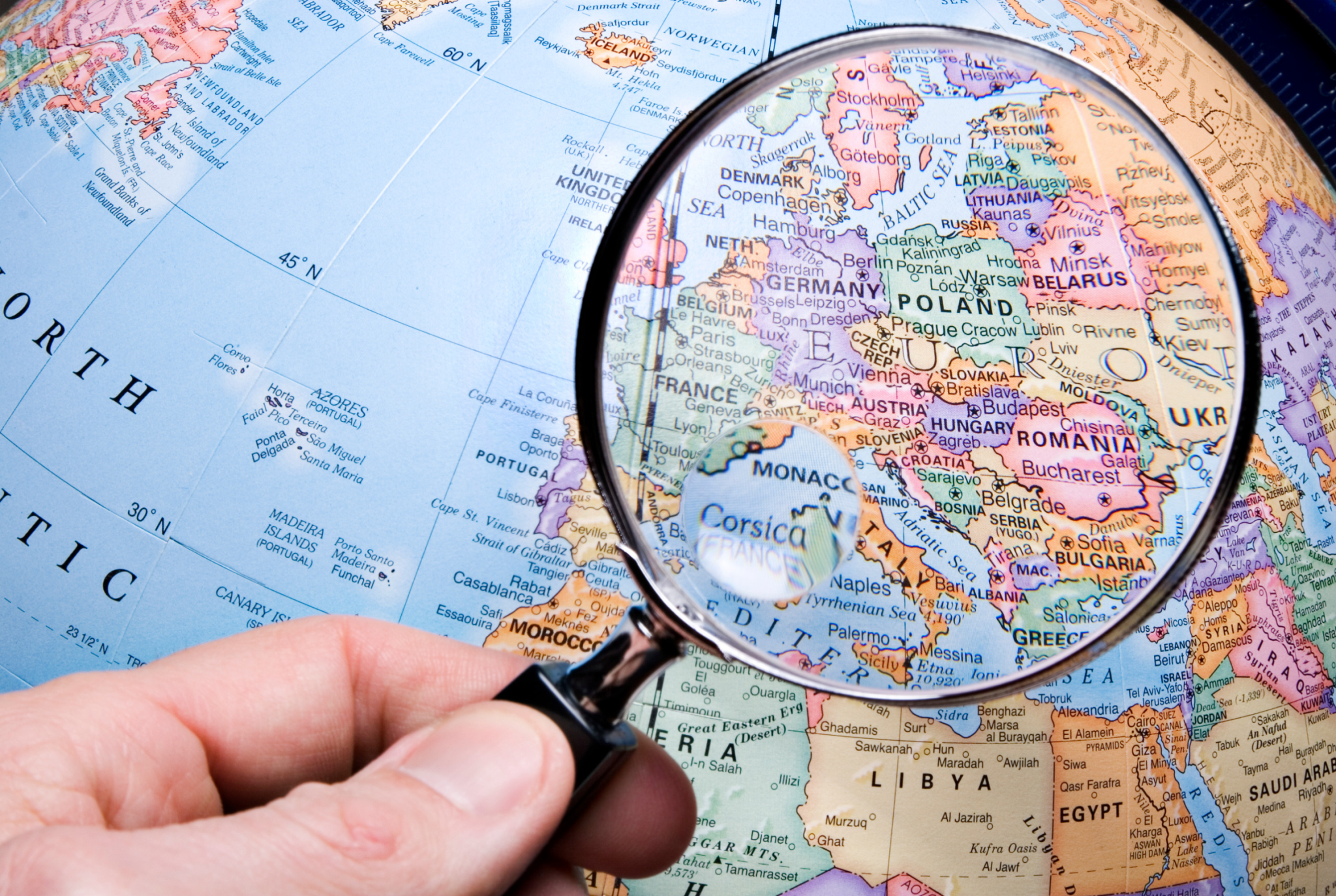
Look closer at Europe. You’ll find friends.
A strange thing happens when you work on Israel–Europe relations from Warsaw. You read one set of headlines in the morning and spend the rest of the day speaking to an entirely different Europe.
According to much of the international coverage, Europe’s relationship with Israel is in a state of almost permanent crisis. Diplomatic disputes, protests, academic boycotts, demands for sanctions. There is plenty of evidence to support that picture.
But it is far from the whole story.
On November 22-23, more than 150 senior Europeans, including parliamentarians, government officials, and representatives of key ministries, are gathering in Jerusalem for the first ELNET Jerusalem Summit. Some of the most interesting figures are coming from Central and Eastern Europe. They are traveling at a time when renewed confrontation with Iran is once again making headlines. They understand the risks. Many have demanding political schedules at home. Yet, they are making the journey because they believe the relationship with Israel is worth their time, attention, and political capital.
I find that rather encouraging. And I think Israelis should, too.
For years, Israel’s attention in Europe has understandably focused on Berlin, Paris, London, and Brussels. These capitals remain essential. But look at Europe’s eastern flank, from Poland and Czechia through the Baltic states to Finland, and you will find countries whose strategic importance is growing, whose experience is increasingly relevant to Israel, and whose leaders have shown a remarkable willingness to engage.
To understand why, we need a little history.
In Poland, there is a saying from the Six-Day War in 1967: “Our Jews beat their Arabs.” It sounds peculiar in English. It probably sounded peculiar in Polish, too. But the sentiment was unmistakable. Under communist rule, Poland was expected to support Moscow’s Arab allies. When Israel defeated them in six days, many Poles quietly celebrated. An Israeli victory was also a Soviet humiliation. And for people who had spent decades being told what to think by Moscow, that was particularly satisfying. Sadly, the history was considerably uglier than that little joke suggests. In 1968, Poland’s communist authorities launched a vicious antisemitic campaign that forced some 13,000 Polish Jews to leave their country. Our history contains both the sympathy expressed in that 1967 saying and the shame of what happened the following year. We should be able to acknowledge both.
One Polish anecdote can’t explain an entire region, since our countries have different histories and relationships with Israel. Still, there is something important in our shared experience of living next to, or under the influence of, a much larger power. We know what it means to have our sovereignty questioned. We remember when decisions about our future were made elsewhere. And we understand why small and medium-sized countries sometimes develop an unusually sharp sense of danger.
That experience helps explain why conversations between Israelis and Central and Eastern Europeans often move quickly past diplomatic pleasantries. We recognize many of the same anxieties, and increasingly, our security threats are connected. We may face different enemies on different borders, but those enemies are increasingly working together.
Just nine days after the October 7 Hamas attacks, the chairs of the foreign affairs committees of the Estonian, Latvian, and Lithuanian parliaments arrived in Israel together. They were among the first foreign parliamentarians to visit. They were followed by presidents, prime ministers, foreign ministers, defense officials, and parliamentary delegations from across the region. Estonian President Alar Karis visited in February 2025. Lithuanian Foreign Minister Kęstutis Budrys came in June 2026. Finland’s Foreign Minister Elina Valtonen visited in February, followed by its defense minister in September. Just this week, Czech Prime Minister Andrej Babiš arrived with a substantial delegation that included his foreign and defense ministers and the chief of the general staff. These visits do not mean that every leader agrees with every Israeli decision. Quite the opposite. Some have openly expressed concerns about Israeli policies while continuing to engage with the country’s leadership. That is how serious relationships work.
I have always believed that personal presence matters in diplomacy. A statement of support is welcome. Getting on a plane, sitting across the table, asking difficult questions, and listening to the answers can lead to something much more lasting.
And increasingly, those conversations are about the future of European security.
Since 2021, Central and Eastern European countries have signed contracts worth more than $6 billion for Israeli defense and security solutions. Romania has invested in Israeli air defense systems, Czechia is deploying SPYDER batteries, and Finland has selected David’s Sling to protect its citizens. Across the region, governments are turning to Israeli expertise in drones, cybersecurity, border protection, and civil defense. Israel is becoming part of Europe’s security infrastructure in ways that would have been difficult to imagine a generation ago. These are long-term commitments, involving training, maintenance, technological cooperation, and relationships that extend far beyond the political lifespan of any government.
But my Israeli friends should not assume this is a one-way street. Israel has extraordinary experience in managing emergencies and maintaining essential services under attack. Yet Finland’s comprehensive approach to national preparedness, Estonia’s digital resilience, and the Baltic states’ experience with societal defense and cognitive warfare offer valuable lessons of their own. We have plenty to learn from one another.
Latvia as a non-permanent member of the UN Security Council for the 2026–2027 term. Poland is closer than ever to joining the G20. Lithuania will hold the rotating presidency of the Council of the European Union in the first half of 2027.
These countries have a voice in institutions where decisions affecting Israel are made. They participate in shaping European policies, budgets, regulations, and strategic priorities.Their influence on Europe’s agenda will matter to Israel on issues ranging from security cooperation to the future of its participation in Horizon Europe, the EU’s flagship research and innovation program. Their experience matters increasingly to other Europeans, including those who may see Israel very differently. For Israel, there is both an opportunity and a responsibility here. It is worth understanding what these countries need, what concerns them, and how their priorities are changing. They have their own national interests, political disagreements, and difficult decisions to make.
And we should not pretend that everything is wonderful. Antisemitism remains a serious problem in Central and Eastern Europe. Jewish communities still face hostility, threats, and harassment. Academic and cultural boycotts of Israel have gained supporters, including in places where governments maintain good relations with Jerusalem. In Finland, student organizations have called for universities to sever institutional ties with Israel. Elsewhere, anti-Israel campaigns have entered cultural and academic debates. The scale and character of these problems vary considerably from country to country. In many places, the political atmosphere remains more open to cooperation with Israel than in parts of Western Europe. But a friendly government does not automatically mean a friendly society, and a supportive parliamentary vote does not guarantee that Jewish students or Israeli academics feel welcome.
I would never dare to ask someone experiencing antisemitism to take comfort in the fact that their government happens to have good relations with Israel. Nor should criticism of Israeli government policy automatically be treated as hostility toward Israel or the Jewish people. Friends can disagree, and sometimes they should. What matters is whether those disagreements leave room for respect, honest discussion, and continued cooperation. This is one of the reasons I believe so strongly in bringing people together. This is precisely why personal connections matter.
Over the years, I have watched relationships develop between politicians, military officers, diplomats, and experts who initially seemed to have very little in common. They disagree about politics, history, and sometimes the Middle East itself. Yet, once they begin talking about the challenges their countries face, they often discover how much they can learn from one another. The most valuable results are rarely the photographs or official statements. They are the conversations that continue afterward. The expert who answers a call months later. The parliamentarian who reaches out to a colleague. The official who knows exactly whom to contact when a crisis begins. These things take time, trust, patience, and occasionally a little chutzpah.
Which brings me back to Jerusalem. The last comparable European parliamentary gathering in Jerusalem took place in 2011. Fifteen years later, ELNET is bringing another major European gathering to Jerusalem, under circumstances that are arguably even more complicated. The timing is particularly meaningful. Israelis have just elected a new Knesset, with dozens of new members beginning their parliamentary careers. For many of the Europeans arriving next week, it will be an opportunity to meet them, establish personal relationships, and begin conversations that may shape bilateral and regional cooperation for years.
For me, that is perhaps the most important purpose of the summit. Political relationships are easier to rely on when they have been built before they are urgently needed. You cannot create trust overnight, especially during a crisis. You build it through repeated encounters, difficult discussions, shared experiences, and the willingness to keep talking even when the headlines suggest otherwise.
I hope the Israelis attending the summit will be as curious about their European guests as those guests are about Israel. Ask the Estonians about what happens when an entire country’s digital infrastructure becomes a target. Ask the Finns how they prepare their society for a prolonged emergency. Ask the Poles and Lithuanians how European security thinking has changed since Russia’s full scale invasion of Ukraine. Ask what keeps them awake at night. You may discover that Israel has as much to learn as it has to offer.
And perhaps, after the Summit is over, some Israeli policymakers will look at the European map a little differently. Europe is changing. So is its relationship with Israel. Some partnerships are under strain, others are becoming stronger, and new ones are developing around shared security needs that neither side can afford to ignore.
Israel has friends in Europe who want to work with it, challenge it when necessary, and build something useful together. Many of them are in countries that rarely receive the attention they deserve in Jerusalem.
They’re coming to meet you, despite the looming threat of another war with Iran.
Make sure you get to know them.
Related Topics
Related Posts