The views expressed herein are solely mine.
Maghreb on Fire: Morocco’s Brewing Arab Spring
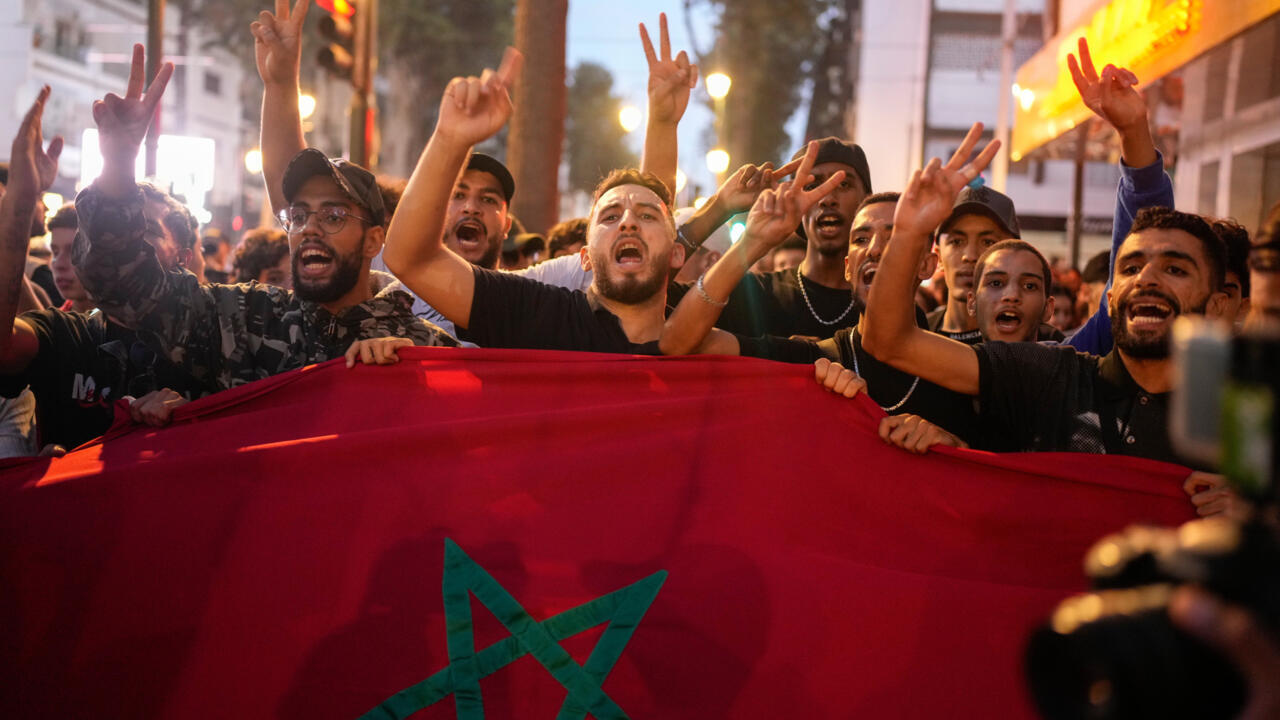
People protest against corruption and calling for healthcare and education reform, in Rabat, Morocco, Thursday, Oct. 2, 2025. Mosa'ab Elshamy/AP
Morocco is burning—and not because of summer heat or football fever. The country once hailed as the most stable place in Northern Africa is trembling under the weight of its own contradictions. The protests now sweeping Casablanca, Rabat, Tangier, and Agadir are not random outbursts of youth frustration. They are the inevitable explosion of pressure long ignored by a complacent monarchy and a corrupt state. And make no mistake: the first spark was lit months ago—during the massive pro-Palestinian demonstrations that flooded Morocco’s streets, denouncing normalization with Israel. What began as chants for Gaza has become a roar against Rabat.
The new generation leading these demonstrations calls itself “Gen Z 212,” a digital-age revolt coordinated through Discord and TikTok. At first, their demands seemed routine: better hospitals following a string of tragic deaths, decent schools, fair wages, and a government that would allocate more resources to citizens than to stadiums for the 2030 World Cup. But as the regime cracked down, their anger deepened. In just weeks, the protests have turned violent. At least three young Moroccans are dead, hundreds are injured, and countless others were arrested. The same police forces that once strutted as guardians of stability now act like the instruments of fear they were trained to be.
Yet the real story is not only about hospitals or jobs. It is about trust. Moroccans feel betrayed—by a monarchy that cozied up to global powers while its people suffered. The seed of this uprising was planted when thousands protested against Morocco’s normalization with Israel. Those rallies were not merely anti-Zionist—they were anti-elite, anti-hypocrisy, anti-everything the palace has become. The public saw its rulers trading “solidarity with Palestine” for geopolitical favors, and now the blowback has arrived.
After signing onto the Abraham Accords in 2020, Morocco became one of Israel’s most strategic Arab partners. Washington rewarded Rabat with the diplomatic jewel it had long craved: recognition of Moroccan sovereignty over Western Sahara. Israel followed suit in 2023, even signaling potential consular offices in Dakhla. Mossad’s fingerprints are believed to be all over this quiet realignment—intelligence cooperation, counter-terror coordination, and defense procurement stitched the alliance together. Even Spain—once firmly opposed to Moroccan control of the Sahara—flipped its position after years of political blackmail, Pegasus surveillance, and pressure from Rabat. It was a masterclass in statecraft, or manipulation, depending on your perspective.
But now the façade is cracking. Morocco has managed to secure recognition of its claims from the United States, Israel, and Spain—yet its domestic foundation is rotting. The irony is staggering: Europe happily buys agricultural goods from Moroccan-occupied Western Sahara while refusing to import from Israel’s West Bank. The same continent that lectures the world about “international law” has no problem with Moroccan tomatoes from disputed territory. Hypocrisy has never tasted so fresh.
Behind the scenes, however, King Mohammed VI’s once-carefully curated image as a modernizer has withered. He is seen as distant, detached, and absent—a monarch more interested in Paris and Gabon than in his own people. His intelligence services, riddled with corruption and political vendettas, act less like protectors of the realm and more like a mafia enforcing royal decrees. And as state legitimacy erodes, a familiar enemy waits in the shadows: the Muslim Brotherhood.
For decades, the Brotherhood and its ideological cousins have bided their time in Morocco—operating through mosques, student groups, and front organizations. Their official political arm, the Justice and Development Party (PJD), was humiliated in recent elections. But ideology never dies; it just mutates. Now, amid the chaos, Brotherhood sympathizers see their opening. Exactly like in Egypt in 2011. Their agenda is as old as it is dangerous: topple secular regimes, hijack legitimate protest movements, and replace them with Islamist theocracies draped in the language of “justice” and “reform.”
And they are not alone. The Brotherhood’s lifeline runs straight to Doha. Qatar and its propaganda arm, Al-Jazeera, are once again fanning the flames—turning local grievances into ideological war. Every broadcast, every viral clip, every talking head plays the same script: delegitimize the monarchy, glorify the “people’s revolution,” and smear Morocco’s ties with Israel as betrayal of Islam. Qatar wants chaos; it thrives on weak monarchies and broken alliances. An unstable Morocco means a weaker Western front against Iran and less regional support for Israel.
If these forces succeed, the consequences will be seismic. The fall of Morocco’s pro-Western monarchy would ripple across North Africa. Algeria would cheer. Tunisia’s Islamists would rise again. Europe would face another wave of instability just across the Mediterranean. And Israel—already surrounded by hostility—would lose its most valuable Arab partner in the Maghreb.
This is how it starts: with disillusioned youth, a corrupt elite, a complacent monarch, and a well-funded Islamist network waiting in the wings. The Arab Spring began in Tunisia with a single act of despair. Today, it might begin again in Morocco—with a digital generation that no longer believes in the old order.
The palace still holds the crown, but it is slipping. And if Morocco falls, it won’t just be a domestic crisis—it will be another front in the war for the moderation of the Middle East.
Related Topics
Related Posts