The views expressed herein are solely mine.
Maher Al-Assad: Looting General, Cartel Boss
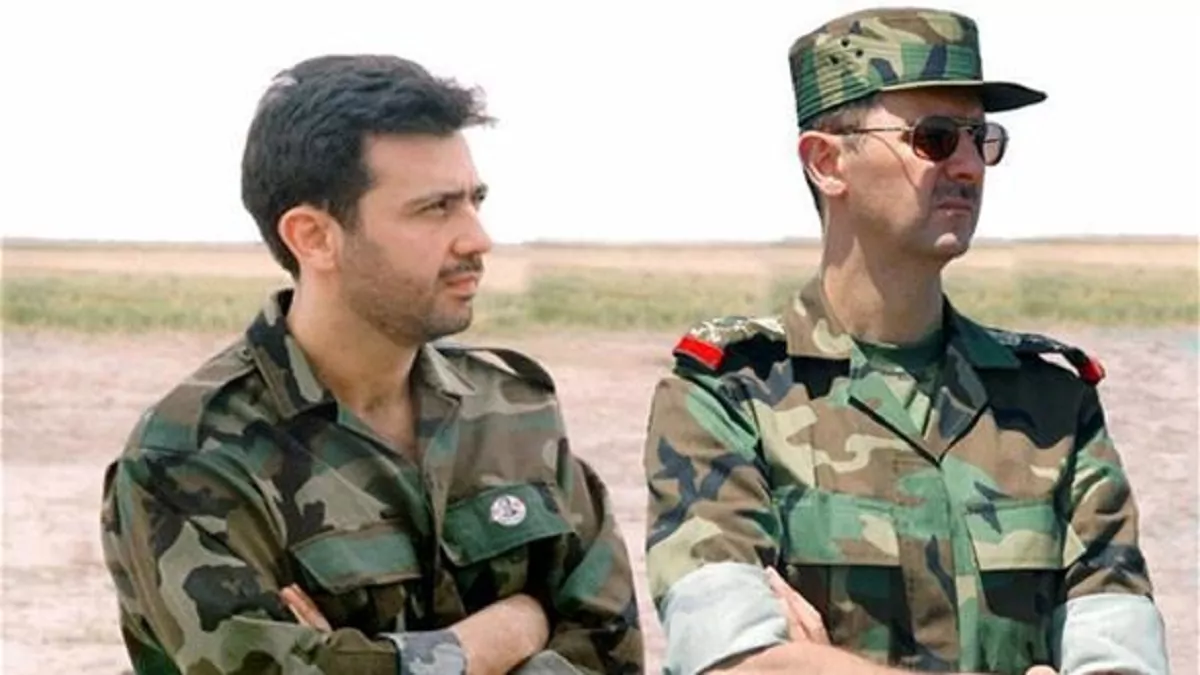
Maher Al-Assad (L) head of the Republican Guard responsible for the defence of Damascus with Bashar. Credit: Wikipedia/GNU Free Documentation License
Maher al-Assad was never a soldier. He was a gangster in uniform. As Bashar’s brother and head of Syria’s 4th Armored Division, he did not just fight—he looted. His troops manned checkpoints like mafia toll booths, shaking down civilians, stripping metal, and funneling cash through regime plants. He turned the Syrian army into a crime syndicate that used to cash in around two to three billion dollars per year.
But theft was only the beginning. Maher graduated to become the world’s most dangerous drug lord. Under his protection, Syria became the hub of Captagon—cheap amphetamines that wrecked Arab youth and spilled into European cities. His 4th Division masterminded the racket, while Hezbollah moved the product across the Lebanon border. Damascus produced the poison, Hezbollah trafficked it. Together, they bankrolled terror.
The evidence was undeniable. In July 2020, Italian police at Salerno seized 84 million pills—14 tons worth nearly €1 billion—all traced back to Syria’s Latakia port. Europol concluded Syria was the primary source of Captagon flooding Europe. Less than a year later, Saudi customs seized 5.3 million pills hidden in pomegranates. Riyadh’s Interior Ministry called it what it was: Assad’s state-protected cartels feeding Hezbollah’s veins.
The West knew it, too. In 2021, the U.S. Treasury Department sanctioned Maher al-Assad, naming him kingpin of Syria’s narco-state. The DEA blasted his racket as “state-sponsored narcotics smuggling” tied directly to Hezbollah. Europol and German customs piled on with cases linking Assad’s war economy to Hezbollah terror financing. This was not a rumor—it was an indictment.
Captagon was not a side hustle. It was the Assad economy. Every pill that left Syria funded barrel bombs, Iranian influence, and Hezbollah rockets. Billions of dollars turned a failing regime into a cartel empire, with Maher at the center.
That nightmare ended with the rise of Ahmad al-Sharaa. He pledged to smash the Syria–Lebanon drug corridor—and he did. His government raided Captagon factories, shut border pipelines, and seized millions of pills. For the first time in years, Hezbollah’s narco-lifeline was cut. The 4th Division’s cartel empire was dismantled.
Maher al-Assad’s legacy was simple: loot your people, drug your neighbors, and arm your militias. Al-Sharaa’s legacy is the opposite: dismantle the cartel, choke Hezbollah, and give Syria a chance at legitimacy with the West.
Maher was the general of a cartel state. Al-Sharaa buried it. And the West should make sure it never rises again.
Related Topics