Solicitor & foreign policy adviser
Mamdani’s reckless politics of lawfare
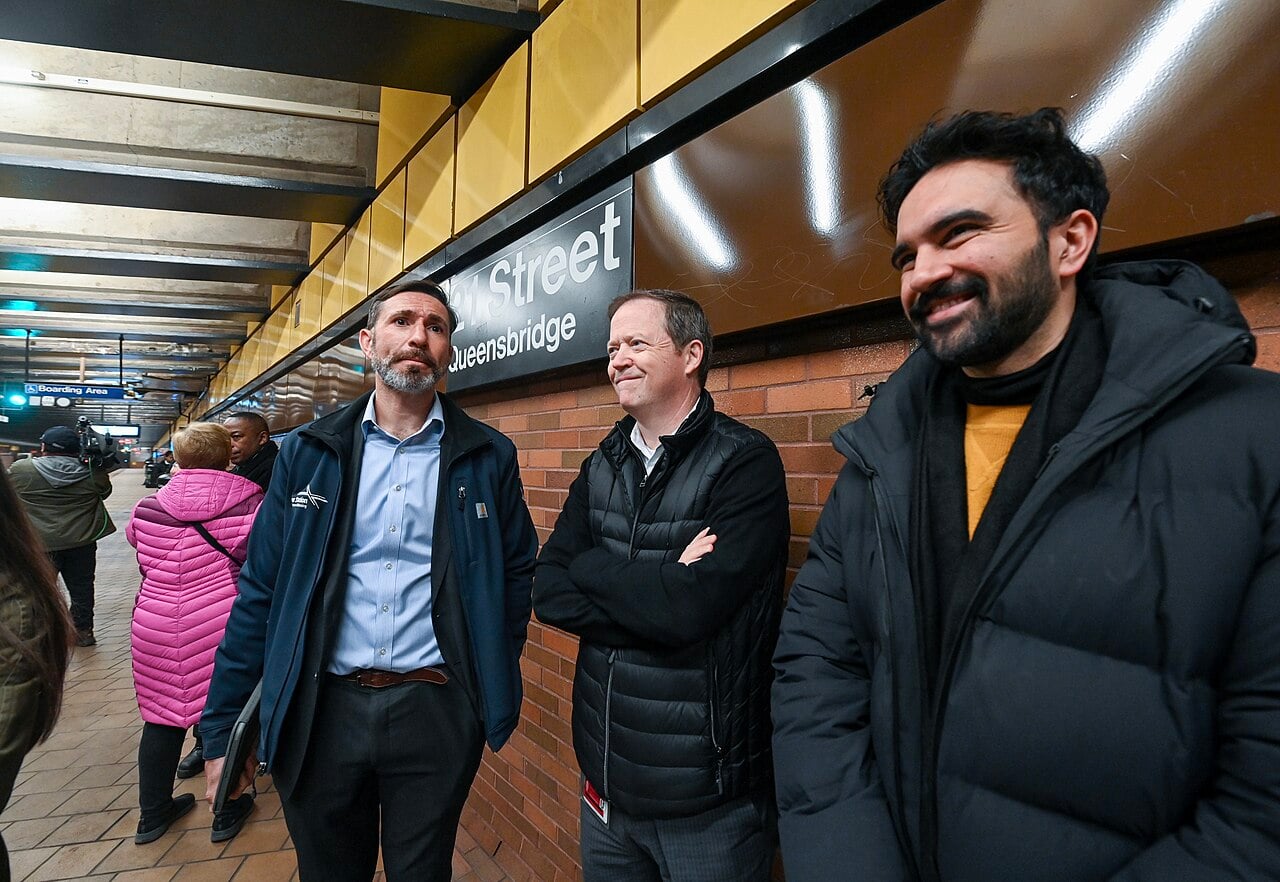
Photo By Metropolitan Transportation Authority (Wikipedia Commons)
Zohran Mamdani’s suggestion that he would seek the arrest of Benjamin Netanyahu if the Israeli prime minister came to New York for the United Nation’s General Assembly in September is far more than an exercise in political theatre. It exposes a deeply troubling conception of public office: one in which the mayor of America’s largest city imagines himself as an international magistrate rather than the chief executive responsible for public safety, infrastructure and municipal governance.
The contradiction is striking. Mamdani invokes international law when it suits his political preferences, yet proposes to wield local executive power as though it were unconstrained by constitutional limits, federal authority or diplomatic immunity. He presents himself as a defender of legal norms while advocating an act that would plunge New York into a constitutional and diplomatic crisis. The rule of law requires institutions to remain within their legal competences. It does not license elected officials to invent powers they do not possess.
Mamdani is using the language of international law to justify a political stunt. The law is invoked selectively, stripped of jurisdictional limits, and turned into a weapon against an adversary. Such conduct weakens respect for legal institutions because it suggests that legal processes exist primarily as instruments of political wrestling. Once law becomes another arena for partisan performance, confidence in its impartiality inevitably suffers.
The implications reach well beyond Israel. A mayor openly contemplating the arrest of the leader of a close American ally projects an image of a country unable to conduct coherent foreign policy. Allies would wonder whether diplomatic engagement in New York as the home of the United Nations depends on federal authority or on the ideological preferences of whichever politician happens to occupy City Hall. Rivals would welcome the spectacle. Great powers do not outsource foreign policy to municipal politicians seeking headlines.
Mamdani’s politics also reflect a broader worldview that is increasingly detached from the civic traditions that made New York successful. Identity politics is elevated above citizenship, activism above administration, and ideological solidarity above constitutional restraint. The result is a politics in which symbolic confrontation takes precedence over governing.
His critics are therefore justified in asking whether this represents a new ethical framework altogether. The distinction between democratic accountability and activist mobilisation becomes blurred. Public institutions cease to be neutral arbiters and become vehicles for ideological campaigns. Municipal government becomes another platform for global political struggles that city voters neither authorised nor expect their mayor to conduct.
Reasonable people can disagree over Israel, Gaza or the International Criminal Court. What ought to unite constitutional democrats is the conviction that public power must remain bounded by law, institutional competence and constitutional order. A mayor threatening to arrest the prime minister of an allied democracy abandons those principles in favour of spectacle.
Ultimately, this episode says less about Benjamin Netanyahu than about Zohran Mamdani. It reveals a politician who appears more interested in performing global revolutionary politics than governing New York. That may satisfy activists. It would leave one of the world’s great cities diminished, America’s credibility weakened, and the rule of law reduced to little more than a slogan deployed whenever politically expedient.
The stunt will pass. The mindset behind it should worry everyone.
Related Topics
Related Posts