
Mandy Patinkin’s Cheap One-Night-Only Performance
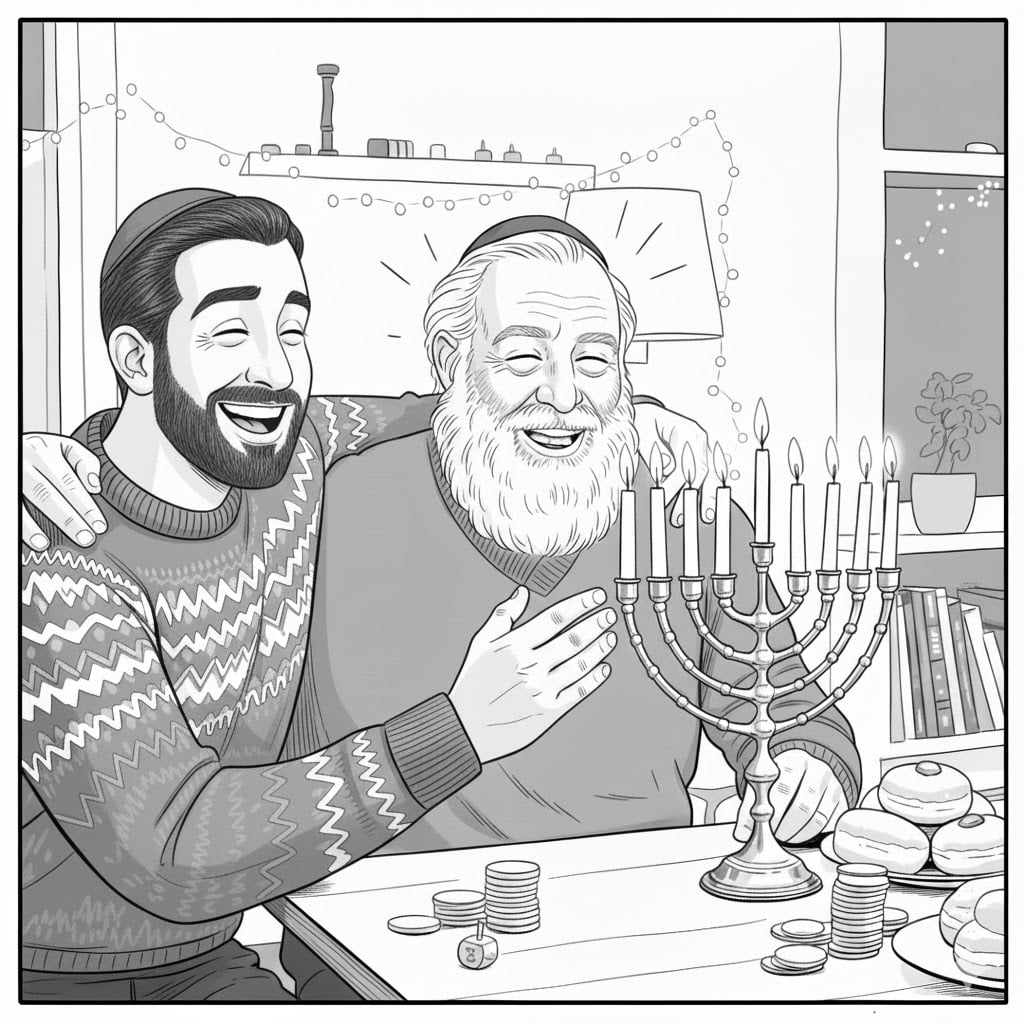
Mamdani and Mandy Share a (Camera-Ready) Menorah Moment
There are many ways to support a public figure. One can argue for their positions, defend their record, or contest critics directly. One can explain why accusations are misplaced, why objections are unfair, or why a candidate’s strengths outweigh their flaws. All of that requires effort: intellectual labor, moral risk, the willingness to engage disagreement.
What is cheaper is laundering someone’s moral standing through someone else’s identity.
That is what happened when Mandy Patinkin chose to turn a private religious moment—Chanukah—into a public video featuring Zohran Mamdani, New York City’s mayor-elect, whose statements on Israel have drawn sharp criticism from mainstream Jewish organizations. The video was circulated not to explain Mamdani’s views, but to reassure an audience unsettled by them. It did not make an argument. It made a claim of legitimacy.
But the performance did not stop at visual symbolism. Patinkin went further. On camera, he recited the shehecheyanu blessing—a Jewish prayer thanking God for new beginnings—and consecrated Mamdani’s mayoral tenure—in his words, “your mayoral tenure… has now been blessed.” Patinkin has been very explicit about not believing in God. So what, exactly, is happening here? Who is he praying to? In his own words: “I don’t believe in God. I believe that energy never dies.” Those are his words. The shehecheyanu requires no authority to recite—but it is a prayer of gratitude to God. Here, it was repurposed: transformed from private thanksgiving into public consecration, from spiritual practice into political theater. Jewish liturgy became campaign content.
This is not an objection to Patinkin’s political views. He is of course entitled to them. Nor is it an objection to endorsing Mamdani. Endorsements are part of democratic life. Nor is disbelief the issue. Patinkin need not believe in G-d. But why trivialize belief—or instrumentalize prayer—on behalf of a political performance? Why use Jewish ritual, Jewish presence, and Jewish prayer as transferable moral credentials? Call it koshering by association—a shortcut masquerading as solidarity.
Many Jews invite non-Jews to share traditions, rituals, and even mark Jewish holidays together—and rightly so. What transforms connection into cheap theater is function, not the fact of participation. Having it recorded and distributed, replacing argument with imagery—it is cheap.
The video does not clarify what Mamdani believes or how he responds to criticism. It does something far more efficient. It short-circuits judgment. The message is not “here is why his record deserves support,” but look who is standing next to him. Look at the menorah. Look at the warmth. Look at the Jewish-looking Jew smiling. Listen to the blessing.
That is the schlock, the cheap entertainment.
The image—and now the prayer—does the work that explanation would otherwise have to do. Visual and liturgical symbolism operate below the level of debate. They reassure before they persuade. They tell viewers—especially non-Jewish viewers—that whatever concerns exist have already been vetted. If a Jew is present, blessing the moment and invoking God, the thinking has presumably been done. Moral scrutiny is quietly outsourced. Judgment just disappears.
The prayer is presumably not offered upward—it is offered to approval ratings. The benediction becomes transactional, not theological.
There is also something quietly absurd about the whole exercise. Chanukah is not a photo-op holiday. Historically and theologically, it commemorates resistance to imposed authority and the refusal to conscript Jewish life for someone else’s purposes. It is a holiday about turning toward faith, not away from it through secularization. The menorah becomes a prop, the candles a backdrop, the blessing a soundbite. A holiday of defiance becomes nothing more than mood lighting.
Jewish ritual and Jewish presence have long been mobilized not to advance an argument, but to foreclose one. As commentator Eli Lake has astutely observed, the phrase “As a Jew” does lazy rhetorical work; the video now does it visually—and more cheaply. Identity substitutes for reasoning; proximity stands in for principle.
It is not only manipulative. It is cheap. Cheap because it substitutes optics for argument. Cheap because it turns prayers into content. Cheap because it uses Jewish ritual to spare an audience the harder work of judgment. And cheap because it turns Jewish identity and Jewish prayer into stage props—stripped of obligation, stripped of meaning, and put to work for other peoples’ comfort.
Related Topics