
Writing on Jewish life, relationships, trauma, and resilience
Marriage Counseling to Military Strategy: Israel Needs to Say ‘When,’ Not ‘No’
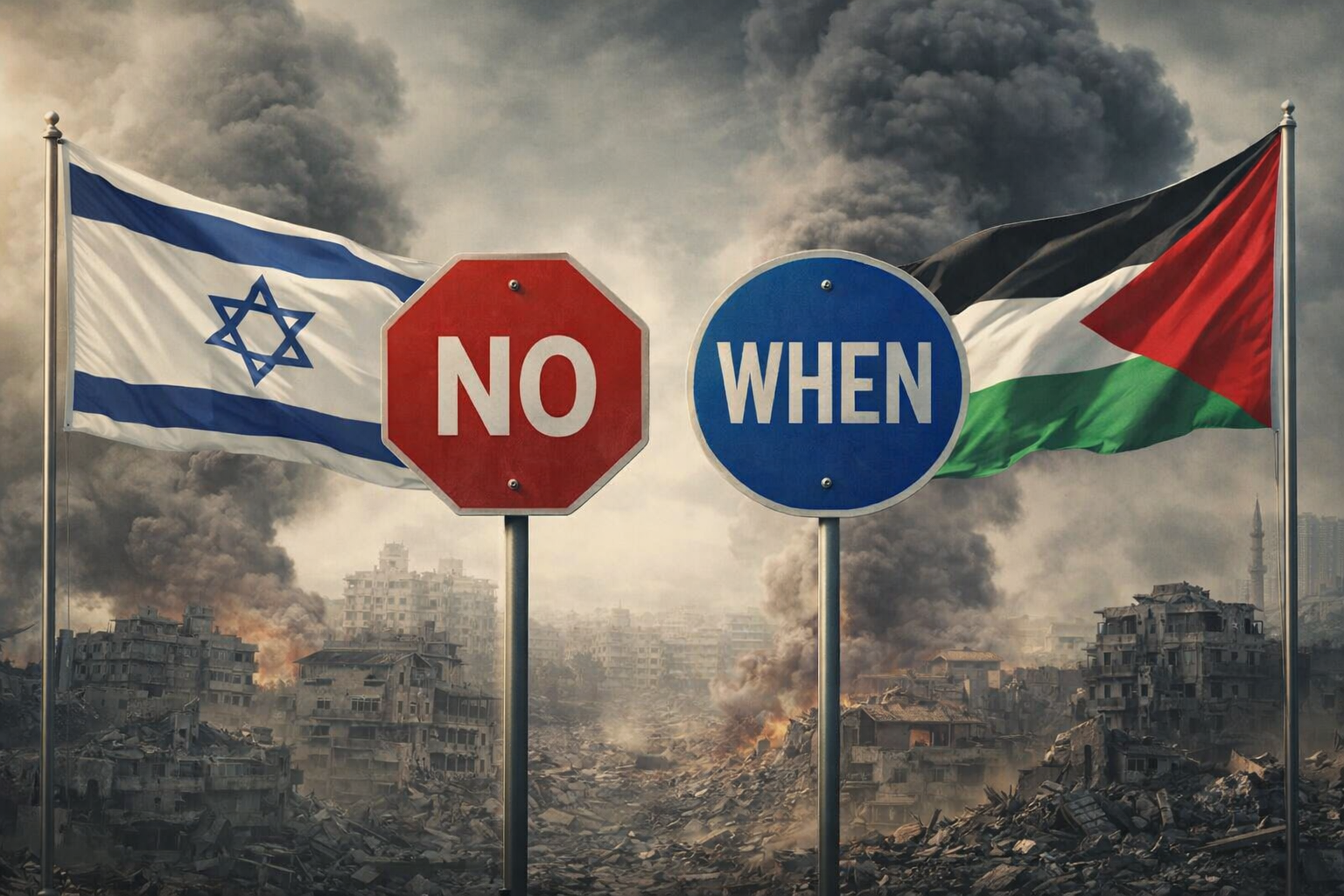
Illustrative: AI image created by the author.
One of the most counterintuitive lessons in marriage education is learning to replace the word “no” with the word “when.”
It does not mean surrender.
It does not mean weakness.
It means boundaries paired with responsibility, timing, and leverage.
In healthy relationships, “no” often escalates conflict. It closes doors, triggers fear, and hardens opposition. “When,” by contrast, preserves agency while keeping the system open: not now, not under these conditions—but not never.
That same distinction is increasingly relevant to Israel’s foreign and security policy, particularly in Gaza.
Recent debate highlights this tension. A former navy chief’s proposal to rebuild Gaza east of the Yellow Line acknowledges an uncomfortable truth: Israel cannot simply wish away Gaza’s humanitarian collapse without paying a strategic price. Reconstruction, however constrained, is not a question of if—but under what conditions. Meanwhile, the defense minister’s declaration that Israel “will never withdraw from Gaza” reflects a very different posture: absolute refusal, intended to project strength.
Both positions are understandable. Only one is sustainable.
In relationship systems—from families to nations—absolute “no” statements tend to backfire. They eliminate leverage, invite defiance, and convert negotiable problems into permanent wars of identity. “When” statements, by contrast, anchor power in conditionality: when terror infrastructure is dismantled; when governance changes; when demilitarization is verified; when responsibility replaces rejection.
Israel’s security doctrine has always relied on conditionality. Peace with Egypt was not a “yes” born of trust, but a “when” born of verification. Oslo collapsed not because conditions existed, but because they were violated. Deterrence works best not when the future is foreclosed, but when it is contingent.
Declaring that Israel will “never” withdraw from Gaza may feel clarifying in the wake of October 7. But strategic clarity is not the same as strategic wisdom. Permanent statements remove Israel’s ability to trade territory for compliance, access for demilitarization, reconstruction for governance. They also hand adversaries exactly what they want: a narrative of eternal occupation rather than conditional responsibility.
Rebuilding Gaza east of the Yellow Line is not capitulation. It is a classic “when” strategy: reconstruction tied to geography, security control, and enforceable limits. It signals strength without surrender, compassion without naivety, and deterrence without nihilism.
In marriage education, couples learn that saying “no” too often leads to escalation, while “when” preserves dignity and power on both sides. The same applies to nations locked in asymmetric conflict. Strength is not measured by how loudly one refuses the future, but by how effectively one shapes it.
Israel does not need to say “yes” to Gaza.
But it would be wise to stop saying “never.”
“The riddle of relationships,” wrote PAIRS founder Lori Heyman Gordon, “is that systems can spiral downward—or upward—depending on knowledge, skill, and goodwill.” Nations are no different.
Israel’s challenge is not choosing between occupation and illusion. It is choosing whether to govern this conflict as a closed system—or a conditional one.
Related Topics